Market diversification crucial for rice sector: Experts

Although Vietnamese rice has been exported to 150 countries and territories, markets for the product are mainly Asian countries and thus need to be diversified, according to experts.
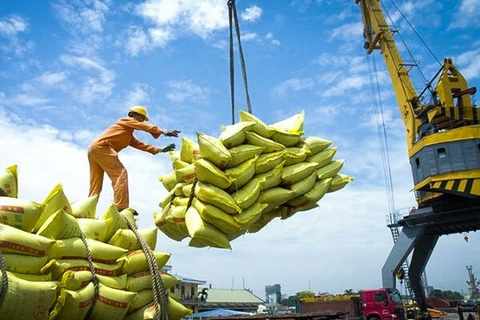
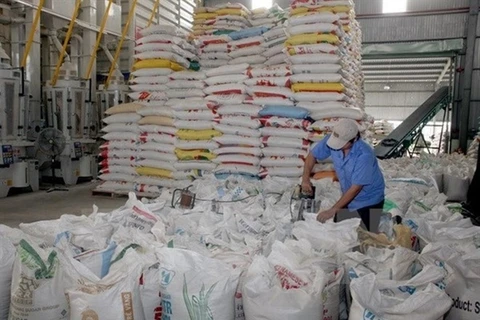
Market diversification crucial for rice sector: Experts ảnh 1The Asian region has been the largest market of Vietnamese rice, consuming over 60% of the country's total exported volume. (Photo: VNA)

Hanoi (VNA) - Although Vietnamese rice has been exported to 150 countries and territories, markets for the product are mainly Asian countries and thus need to be diversified, according to experts.

Currently, the Asian region has been the largest market of Vietnamese rice, consuming over 60% of the country's total exported volume. It is followed by Africa with 22%, America 8%, Europe 5%, and other regions 5%.

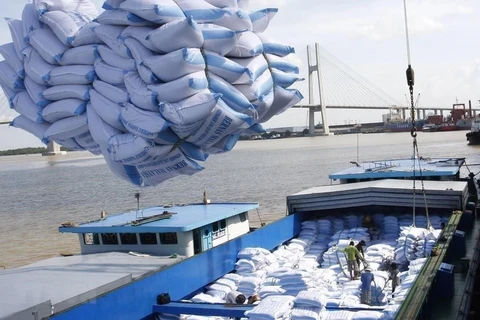
In the first six months of this year, Vietnam exported 4.27 million tonnes of rice for 2.3 billion USD, up 22.2% in volume and 34.7% in value over the same period last year. Those are the highest growth rates of the rice sector in the recent 10 years.

This year, rice export volume is forecast to stand at a similar volume as last year when 7.35 million tonnes of rice was shipped abroad.

In a recent report, the US Department of Agriculture also predicted that Vietnam's rice export will exceed 7 million tonnes this year, mostly due to rising demands in Asian markets.

Market diversification crucial for rice sector: Experts ảnh 2In the first six months of this year, Vietnam exports 4.27 million tonnes of rice for 2.3 billion USD. (Photo: VNA)

In this scenario, Vietnam will rank third in the world in rice exports after India and Thailand.

Deputy Director of the Department of Asian-African Markets under the Ministry of Industry and Trade (MoIT) To Ngoc Son said that high demands from traditional markets such as the Philippines, China, Indonesia and African countries are creating opportunities for Vietnam to increase exports.

Particularly, Indonesia and Africa have announced plans to import a large amount of rice this year to ensure national food reserves.

Indonesia said it needs 2.4 million tonnes, while Africa plans to import about 17.7 million tonnes.

The MoIT underlined that from now to the end of this year, Vietnam should continue to seek new rice markets, while optimising traditional markets of China and the Philippines.

Vu Ba Phu, Director of the Trade Promotion Agency said that the agency will continue to connect domestic firms and their foreign importers through various forms, while making full use of free trade agreements, and foster connections between domestic exporters and Vietnam Trade Offices abroad.

He said that the MoIT is building a project to build and promote the trademark of Vietnamese rice. He advised local firms to strengthen their linkage and cooperation with farmers to form a closed production chain.

In order to support businesses in expanding markets, the MoIT has coordinated with the Ministry of Agriculture and Rural Development to strengthen trade promotion in new markets such as Africa, the Middle-East, Western and Southern Asian countries, and Turkey.

Although the rice demands in these markets are not higher than traditional ones, they are promising markets for high-quality rice types, which can help Vietnam increase rice export value, according to the MoIT./.
VNA

See more

Head of the Vietnam Trade Office in Australia Tran Thi Thanh My (Photo: VNA)

Vietnam, Australia eye 20 bln USD trade target

The head of the Vietnam Trade Office in Australia hoped that the visit by Party General Secretary and State President To Lam will mark a new milestone, opening the door for firms on both sides to forge stronger links and launch concrete cooperation agendas, helping hit that 20 billion USD trade goal sooner rather than later.

Phu Quoc pepper products, granted three stars under the OCOP programme in An Giang province, are displayed at an exhibition of outstanding OCOP products from the Mekong Delta. (Photo: VNA)

Phu Quoc leverages OCOP programme to take local specialities global

Better known as one of Vietnam’s premier island destinations, Phu Quoc is leveraging its “One Commune, One Product” (OCOP) programme to transform traditional specialities into internationally recognised products, integrating local agriculture, food processing and tourism to promote sustainable economic growth.

Production at an FDI enterprise in Tay Ninh province. (Photo: VNA)

FTA Index 2025 to be unveiled later this month

The index is designed to provide valuable information not only for State management agencies but also as an important reference for businesses, foreign investors, and industry associations in planning investment and business activities in Vietnam.

Air Premia, a carrier of the Republic of Korea, will resume flights between Incheon and Ho Chi Minh City from November 5. (Photo: The Courtesy of Air Premia)

Air Premia to resume Incheon–Ho Chi Minh City route from November

Flights will depart Incheon International Airport at 6:40 pm (RoK time) and arrive at Tan Son Nhat International Airport in Ho Chi Minh City at 11 pm (Vietnam time). Return flights will leave Ho Chi Minh City at 12:30 am on Mondays, Tuesdays, Thursdays, Fridays and Sundays, landing in Incheon at 7:40 am.

Production at Viet Hai High-Tech Structure Production Company Limited in Vung Ang Economic Zone. Ha Tinh province aims to develop Vung Ang Economic Zone into a regional centre for industry, energy, seaports and logistics (Photo: VNA)

Revised master plan of Vung Ang EZ approved

The adjustment aims to create a more rational development framework to maximise the zone’s potential and advantages while providing a legal foundation for construction management and ensuring sustainable development.

Illustrative image (Photo: VNA)

Vietnam looks to domestic market to sustain wood industry growth

Vietnam’s wood sector has long been a top foreign-currency earner. Exports of wood and wooden products neared 17.3 billion USD in 2025, reaching more than 160 countries and territories and clearing the high bars set by the US, the European Union and Japan.

Delegates at the event (Photo: VNA)

Vietnam remains key market for Polish food producers

The campaign promotes selected European Union agricultural and food products, including fresh, chilled and frozen beef and pork, fresh apples, apple juice and dried apples, targeting consumers, importers, distributors, retailers and the hospitality sector.

Wei Xiaoli, a representative of Shandong Jindafeng Machinery Co., Ltd., in an interview granted to the Vietnam News Agency. (Photo: VNA)

Chinese firms see strong potential for agricultural mechanisation cooperation with Vietnam

Business representatives said mechanisation not only helps reduce reliance on manual labour but also improves production efficiency, shortens planting and harvesting times, reduces post-harvest losses and enhances the quality of agricultural products. For rice-producing countries like Vietnam, they noted, accelerating mechanisation is an inevitable trend to strengthen the competitiveness of the agricultural sector.

Community-led fisheries groups have become frontline defenders of coastal fisheries. (Photo: VNA)

Community-led fisheries groups strengthen IUU fight in Ha Tinh

With a long coastline and abundant inshore fishing grounds, Ha Tinh has long identified the marine economy as a key growth driver. However, growing fishing pressure and destructive practices have posed major management challenges. Community-led self-management initiatives are now providing an effective solution.

At the VIFC-HCMC (Photo: VNA)

700 bln USD for net zero: Vietnam bets on VIFC

Assoc. Prof. Dr. Nguyen Huu Huan, Vice Chairman of the Executive Board of VIFC-HCMC, said the VIFC will focus on building market infrastructure needed to bridge the gap between big investment pledges and bankable projects.

A view of the launch ceremony for the expanded Vietnam–China cross-border QR payment service. (Photo: NAPAS)

Over 1 billion Weixin Pay users can make QR code payments in Vietnam

NAPAS, Weixin Pay, and BIDV will study the rollout of the reverse payment service, enabling users of Vietnamese banking applications and e-wallets to make QR code payments in China, with the aim of completing a comprehensive cross-border payment ecosystem between the two countries.