Measures sought to increase export competitiveness in agriculture

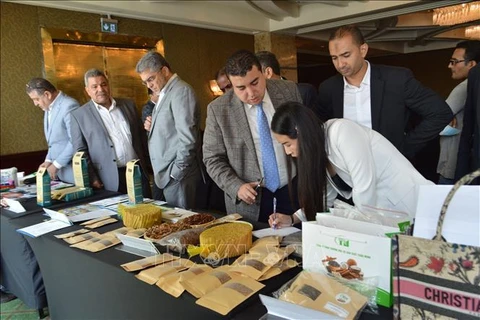
A seminar themed “Technology application and innovation for export competitiveness enhancement in the agricultural sector of Vietnam” was held by the Vietnam Chamber of Commerce and Industry (VCCI) in Hanoi on September 27.
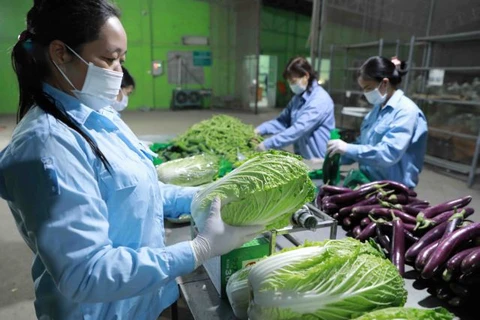
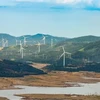
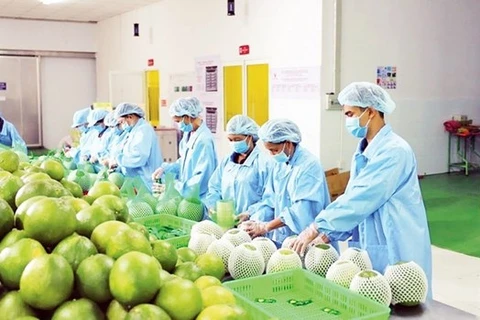
Measures sought to increase export competitiveness in agriculture ảnh 1Illustrative image (Photo: VNA)
Hanoi (VNA) – A seminar themed “Technology application and innovationfor export competitiveness enhancement in the agricultural sector of Vietnam”was held by the Vietnam Chamber of Commerce and Industry (VCCI) in Hanoi onSeptember 27.

The event is part of activities in the framework of the project "Enhancingthe Export Competitiveness of Vietnamese Small and MediumEnterprises in Spice, Fruit and Vegetable Sub-Sectors" (SFV-Export) and a project to promote bilateral trade and investmentcooperation between Vietnam and important and strategic partner countries.

It aims to assist businesses in raising the added value of Vietnameseagricultural products, building sustainable brands and boosting export capacity to key markets such as the EuropeanUnion (EU) and other countries.

Addressing the seminar, Pham Duc Nghiem, DeputyDirector of the Market Development and Science-Technology Enterprises Department under the Ministry ofScience and Technology, provided insights into the research and application ofscience and technology, and innovation in the agricultural sector, which has received more and more attention nationwide.

He also pointed out difficulties facing the application ofscience and technology and innovation efforts in the agricultural sector, including small-scale production and a lack of policies to encourage businessesto engage in innovation and technology transfer in agricultural production.

According to Nguyen Van Hoi, Director of the Institute for Strategy and Policy Research under the Ministry of Industry and Trade (MoIT), the totalexport turnover of agricultural products in the first eight months of 2023 hit16.9 billion USD, up 11.5% year-on-year. Of which, the export of vegetables andfruits, rice, cashew nuts, and coffee reached 3.55 billion USD (up 61.8%), 3.17billion USD (up 36.1%), 2.23 billion USD (up 8.9%), and 2.94 billion USD (up2.3%), respectively.

Despite integration achievements, agricultural exporters’readiness for integration remains modest, and the exploitation ofopportunities from international economic integration and the implementation ofcommitments in free trade agreements (FTAs) for developing the agriculturalexport market has not yet proved effective, he noted.

Vietnam still lacks policies to encourage and strengthen linkagesbetween agricultural exporters and FDI enterprises to improve the combinedstrength in terms of capital, technology, and management expertise when joiningglobal supply chains, Hoi stressed.

Participants emphasised the need for businesses, cooperativesand cooperative groups to strongly spur the application of technologies, IT,and AI in smart agricultural production, and in managing the production processin line with the value chain in association with traceability.

Hoi proposed solutions to expand the export of spices,vegetables and fruits, saying that attention should be paid to developing logisticsservices, reducing logistics costs, and increasing the application of IT inlogistics activities for spices, vegetables, and fruits exports./.

VNA
See more

Children visit President Ho Chi Minh's hometown and learn about his childhood. (Photo: VNA)

Vietnam's tourism sector faces labour shortage

A 2026 survey by Hoteljob.vn found that nearly 90% of tourism businesses planned to recruit. In Ho Chi Minh City alone, 89.7% of businesses were hiring, while 71.8% said recruitment was difficult or very difficult. The biggest shortages were among frontline workers, particularly in housekeeping, engineering, food service, front-office operations, and kitchens.

Octopus processing for export at Huy Nam Company in An Giang province. (Photo: VNA)

New opportunities for Vietnam’s seafood exports

The Vietnam-EFTA Free Trade Agreement brings together two groups of highly complementary economies. EFTA members Switzerland, Norway, Iceland and Liechtenstein have strengths in technology, innovation, finance, clean energy and sustainable development, while Vietnam is one of Asia’s most dynamic economies and is emerging as a major regional manufacturing, trade and investment hub.

The saponin content of Lai Chau ginseng can reach as high as 23.85% in its natural state, a remarkably high level compared to many other ginseng species. (Photo: baolaichau.vn)

Lai Chau ginseng development gains momentum

Blessed with rare and distinctive ecological values, the northern mountainous province of Lai Chau is stepping up efforts to conserve and develop its native ginseng, with the medicinal plant expected to play a growing role in the forest-based economy and local livelihoods.

The Vietnamese delegation poses for a group photo at the third meeting of the Vietnam-Canada Joint Economic Committee (Photo: VNA)

Vietnam, Canada broaden economic cooperation beyond trade

Vietnam is currently Canada’s largest trading partner in ASEAN. Building on the Comprehensive and Progressive Agreement for Trans-Pacific Partnership (CPTPP), the two countries are expanding bilateral economic ties into higher value-added areas such as clean energy, critical minerals, advanced technology, manufacturing and value-chain linkages.

The Index of Industrial Production (IIP) rises 14.4% in August and 11.9% in the first eight months compared to a year earlier. (Photo: VNA)

More momentum needed for economic growth in year-end race

To build momentum for the year-end race, one of the top priorities is to accelerate public investment disbursement, ensuring 100% of the allocated plan is disbursed without allowing funds to be concentrated in the final months of the year.

Vietnamese enterprises showcase products at the Vietnam Pavilion during the Foodist Istanbul 2026 fair. (Photo: Vietrade)

Vietnamese goods gain export opportunities in Türkiye, Spain

Vietrade said the programme helped businesses gain practical market information, identify potential products and partners, and better understand requirements on quality, pricing and distribution. Such direct connections are expected to help companies adapt their products and develop more effective export strategies.

Prime Minister Le Minh Hung (left) receives WTO Director-General Ngozi Okonjo-Iweala in New Delhi, India on September 12 (Photo: VNA)

PM Le Minh Hung calls on WTO to continue support for Vietnam

Vietnam actively and responsibly participates in the WTO’s agenda and supports its coordinating role in promoting inclusive and balanced global trade for peace, cooperation and development, while effectively responding to global challenges, said Prime Minister Le Minh Hung.