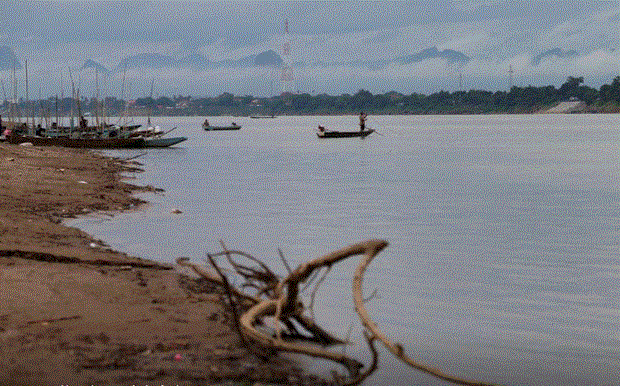
Fishermen catch fish on the Mekong River (Photo: AFP/VNA)
 Vientiane (VNA) – The Secretariat of the Mekong River Commission (MRC) has called on the six countries along the Mekong to urgently solve the problems of low flows in the region, abnormal changes in water levels, and drought in the context of record low flows in the lower Mekong River basin for the third consecutive year.
According to the MRC’s report titled ‘Mekong Low Flow and Drought Conditions in 2019–2021’, which was released on January 13, over the last three years, flows on the Mekong mainstream have decreased to levels not seen in more than six decades. This has resulted in knock-on impacts on fisheries and agriculture and the people’s livelihoods of the Mekong Delta. These conditions have persisted through to the wet seasons of 2020 and 2021.
According to An Pich Hatda, Chief Executive Officer of the MRC Secretariat, the six countries along the Mekong River – China, Myanmar, Thailand, Laos, Cambodia and Vietnam – should take immediate steps to mitigate the crisis.
These include establishing a common notification mechanism for unexpected fluctuations of water levels and studying the possibility of coordinating in the operation management of reservoirs and hydroelectric dams.
He also suggested those countries consider building more reservoirs to handle emergency drought and flood situations./.
According to the MRC’s report titled ‘Mekong Low Flow and Drought Conditions in 2019–2021’, which was released on January 13, over the last three years, flows on the Mekong mainstream have decreased to levels not seen in more than six decades. This has resulted in knock-on impacts on fisheries and agriculture and the people’s livelihoods of the Mekong Delta. These conditions have persisted through to the wet seasons of 2020 and 2021.
According to An Pich Hatda, Chief Executive Officer of the MRC Secretariat, the six countries along the Mekong River – China, Myanmar, Thailand, Laos, Cambodia and Vietnam – should take immediate steps to mitigate the crisis.
These include establishing a common notification mechanism for unexpected fluctuations of water levels and studying the possibility of coordinating in the operation management of reservoirs and hydroelectric dams.
He also suggested those countries consider building more reservoirs to handle emergency drought and flood situations./.
VNA