National Steering Committee: COVID-19 regulations can’t be loosened as risk remains

The National Steering Committee on COVID-19 Prevention and Control emphasised on April 13 the need to keep regulations in place as there is a high risk that the disease may spread further.
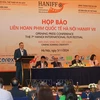
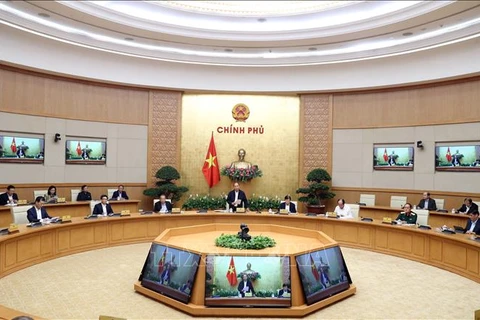
National Steering Committee: COVID-19 regulations can’t be loosened as risk remains ảnh 1At the latest meeting of the committee (Photo: VNA)

Hanoi (VNA) - The National Steering Committee on COVID-19 Prevention and Control emphasised on April 13 the need to keep regulations in place as there is a high risk that the disease may spread further.

At its latest meeting, chaired by Deputy Prime Minister Vu Duc Dam who is also the head of the committee, the committee said that monitoring those having had contact with cases of infection and the introduction of social distancing measures are the most effective solutions in tackling COVID-19, together with the continued implementation of basic anti-epidemic principles in prevention, detection, quarantining, zoning, and treatment.

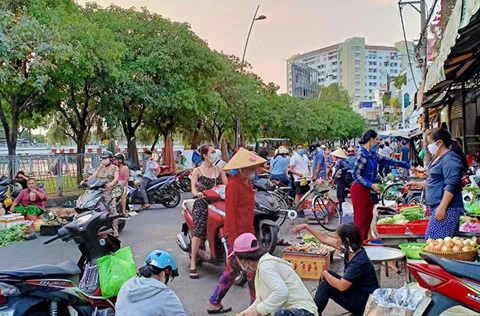
According to the committee, the Prime Minister’s Directive No. 16/CT-TTg on the distancing was implemented well at the beginning but in recent days more people have been seen on the streets.

It asked that people seriously follow the regulation, despite the fact it has a major effect on their daily life and businesses.

Authorities were directed to intensify communications to encourage people to obey regulations relating to distancing and to strictly punish any violations.

The steering committee also noted that when Directive 16 expires on April 15, it will propose the Prime Minister issue a new version that will retain solutions such as wearing face masks, maintaining a certain distance from others, and strengthening regulations on tracing cases of infection and those having had close contact with them.

Participants suggested the application of IT to supervise cases of infection and the implementation of physical distancing regulations.
It is also important to promote non-cash payments for shopping and closely control places such as houses of worship, relic sites, tourism sites, trade villages, and markets, to contain the spread of the disease.

Participants also emphasised the necessity to maintain social welfare policies, with a focus on vulnerable groups, and to consider loosening regulations over the production and trade of basic necessities.

They also asked face mask producers to export such goods only after production meets domestic demand./.
VNA

See more

Brocade weaving is a cultural lifeblood for the Khmer community in the Bay Nui (seven-mountain) area of An Giang. (Photo: VNA)

Khmer brocade weaving helps drive heritage-based economic development

Nestled at the foot of the majestic That Son mountain range, Van Giao - the brocade weaving village of Khmer people in An Cu commune, An Giang province - is not only a repository of centuries-old cultural heritage but is also emerging as a model for heritage-based economic development.

People and vehicles travel across the Lo river pontoon bridge on the morning of February 16. (Photo: VNA)

PM commends units for constructing pontoon bridge to serve Tet travel demand

Prime Minister Pham Minh Chinh on February 16 sent a letter commending the determination and strong sense of responsibility of agencies and units in urgently building a pontoon bridge across the Lo river in Phu Tho province to promptly serve people’s travel demand during the Lunar New Year (Tet) 2026.

Prime Minister Pham Minh Chinh visits and extends Lunar New Year greetings to a patient undergoing treatment at Bach Mai Hospital. (Photo: VNA)

PM extends best wishes to doctors, patients on Tet occasion

Prime Minister Pham Minh Chinh visited and extended Tet greetings to medical staff and patients at Bach Mai Hospital and Viet Duc University Hospital in Hanoi while inspecting healthcare services during the holiday at these two leading central hospitals on February 16, or the last day of the Year of the Snake.

The Van Mieu-Quoc Tu Giam heritage site in Hanoi remains a major attraction for large numbers of visitors during the early days of spring. (Photo: VNA)

Hanoi offers free parking, public transport during Lunar New Year

During Tet, Hanoi offers free parking at selected schools and locations surrounding central heritage sites. In addition, single-journey fares are waived on the Cat Linh–Ha Dong and Nhon–Hanoi Station metro lines, while subsidised public bus services across the city are operating free of charge during the holiday period.

President Luong Cuong, his spouse, delegates and artists at the special Spring Homeland Art Programme 2026. (Photo: VNA)

Five major shifts chart overseas Vietnamese affairs in 2026 and beyond

In a world marked by intensifying strategic competition, emerging conflicts and intertwined economic, security and social challenges, nearly 6.5 million Vietnamese living in over 130 countries and territories have continued to look to the homeland as a firm spiritual anchor. The homeland remains a source of confidence, connection and aspiration for Vietnamese abroad.

Vietnamese Ambassador to Cuba Le Quang Long (right) symbolically hands over 250 tonnes of rice to Cuban Deputy Minister of Agriculture Telce Abdel González (Photo: VNA)

Vietnam supports Cuba in ensuring food security

Cuban Deputy Minister of Agriculture Telce Abdel González affirmed that Cuba will create all favourable conditions for AgriVMA’s rice production project in Los Palacios district, Pinar del Río province, with a view to expanding the model to other localities across the country.

The Binh Phuoc provincial Intelligent Operations Center (IOC), operational since September 2020, has played an important role in supporting the development of digital government. (Photo: VNA)

Breakthroughs under Resolution 57 drive local development

Following the Politburo’s Resolution No. 57-NQ/TW on advancing science, technology, innovation and national digital transformation, many localities across Vietnam are translating strategic guidelines into concrete action, laying the foundation for a new development model based on knowledge, technology and modern governance.