Over 10,000 cyber-security vulnerabilities in government agencies

Over 10,000 cyber-security vulnerabilities found in government agencies

More than 10,000 cyber-security vulnerabilities have been discovered in governmental agencies since 2013, according to the IT & Network Security Centre.
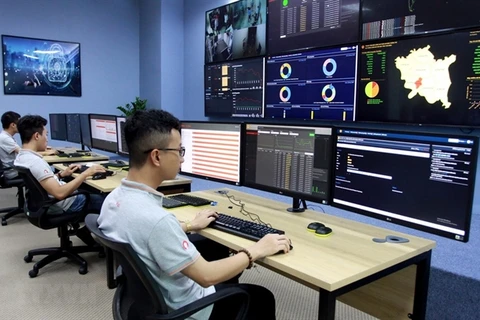
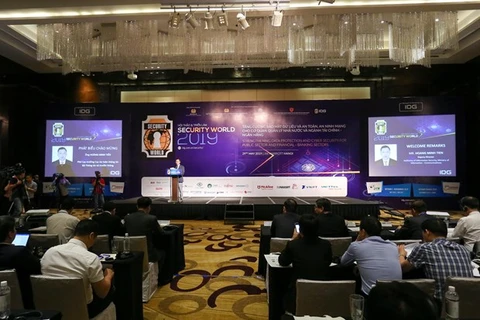
Over 10,000 cyber-security vulnerabilities found in government agencies ảnh 1More than 10,000 cyber-security vulnerabilities have been discovered in governmental agencies since 2013. (Photo: nbcnews.com)

Hanoi (VNA) – More than 10,000 cyber-security vulnerabilitieshave been discovered in governmental agencies since 2013, according to the IT& Network Security Centre.

Of the total, 100 malwares contained the domain name ‘.gov’, and more than2,100 email accounts from governmental agencies were attacked.

A report of Kaspersky Lab showed that with more than 100 million online attacksand over 400 million offline incidents, Vietnam suffered the most online andoffline attacks in Southeast Asia as of the end of 2018.

Meanwhile, the Spamhaus Project said Vietnam ranked third in the world’s topworst botnet countries, with more than 905,000 detected spam-bots.

Computer viruses have caused losses of nearly 15 trillion VND (640 million USD)for Vietnamese users.

Statistics from the Bkav Corporation revealed that more than 60 percent ofagencies and businesses in Vietnam have been infected by cryptocurrency-miningmalicious code.

Experts said cyber attacks have been sparked by poor network security policiesand the use of insecure equipment and IT services. Besides, cyber attacks arebecoming increasingly dangerous and more difficult to detect as hackers arelikely to use advanced threats to paralyse IT infrastructure.

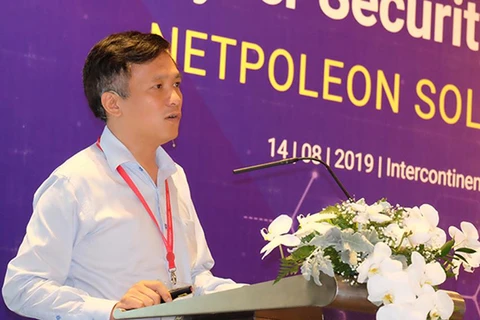
Director of the IT & Network Security Centre Tran Duc Su voiced his concernthat AI-based malware attacks will be a new trend, with a focus on e-commercesites as well as banking and finance sector to steal users’ individualinformation, and equipment serving smart urban area building.

In addition, distribution of malicious information will increase./.
VNA
See more

In Vietnam, demand for infrastructure supporting AI, cloud computing, and digital services is rising at an unprecedented level. (Illustrative photo: VNA)

Vietnam emerges as new hub for data centres

Data centres have surged to become the second most preferred alternative asset class in the region. Vietnam is no exception to this trend as the demand for infrastructure supporting AI, cloud computing, and digital services has risen at an unprecedented level.

Professor Kurt Kremer, from the Max Planck Institute for Polymer Research in Germany, speaks at the event. (Photo: VNA)

Vietnam has advantages to develop versatile humanoid robots: experts

At the symposium, international and Vietnamese experts also discussed the latest trends in robotics, from socially interactive humanoids and collaborative service robots to medical and rehabilitation systems, and examined major challenges surrounding AI safety and ethics to ensure that robotics evolves in a responsible, human-centred and sustainable manner.

The organisers present members of the judging panel of the UAV Cup PV GAS 2025. (Photo: VNA)

UAV Cup PV GAS 2025 promotes Vietnam’s home-grown UAV technology

Jointly organised by Hanoi University of Science and Technology’s Institute of Space and Underwater Technology (ISUT) and Petrovietnam Gas JSC (PV GAS), the competition aims to foster innovation among young people, enhance capabilities in UAV research, design and application, and seek practical technological solutions for smart agriculture, environmental monitoring, logistics, and emergency rescue.

Assoc. Prof. Luu Anh Tuan, Executive Director of the Centre for Artificial Intelligence Research at VinUni University, speaks at the seminar. (Photo: VNA)

Vietnam advances people-centred AI development

The event brought together scientists, policymakers, and inventors to discuss responsible AI development with a focus on human-centred values. Participants explored practical applications of ethical frameworks, ensuring transparency and human oversight in AI, and promoting international cooperation to strengthen global AI governance.

Guiding a local how to apply for administrative procedures on a mobile phone (Photo: VNA)

2030 digital government blueprint with AI at core approved

By 2030, Vietnam targets completing the establishment of a digital government, forming a smart government powered by big data and artificial intelligence (AI), delivering proactive, predictive, and citizen-centric governance models.

Deputy Minister of Science and Technology Le Xuan Dinh (standing, left) speaks at the working session with INIR Mission in Hanoi on December 1. (Photo: VNA)

Vietnam, IAEA review national nuclear power infrastructure

From December 1–11, the Ministry of Science and Technology (MoST) through the Vietnam Agency for Radiation and Nuclear Safety is coordinating with relevant ministries and agencies to host an Integrated Nuclear Infrastructure Review (INIR) Mission in Hanoi. The delegation consists of seven IAEA experts, three international specialists invited by the agency from the UK, Brazil and Bulgaria, and one observer from Egypt.

Delegates pose for a photo at the launch ceremony of the semiconductor alliance in Hanoi on November 27, 2025. (Photo: the organising board)

Alliance launched to strengthen high-quality semiconductor workforce training

Building on the coalition of five universities to develop high-quality human resources for the semiconductor industry initiated by the Ministry of Education and Training in Da Nang in 2023, VNU-Hanoi launched the semiconductor alliance to link education, research, and industry; foster an open ecosystem and develop high-quality human resources and “Make in Vietnam” semiconductor products.

Nguyen Thi Thanh Hoa, Chairwoman of the Vietnam Association for Protection of Child Rights, presents gifts to students at the ceremony (Photo: VNA)

Children’s views gathered to shape online cyber security policies

The survey found that 27.1% of children use the Internet for less than 1 hour per day, 50% for 1–3 hours, 18.8% for 4–6 hours, and 2.3% for more than 10 hours, he said, noting that the findings provide a comprehensive view of children’s Internet usage and risks related to personal safety on cyberspace.

Minister of Public Security General Luong Tam Quang hosts a reception for Jens Rubbert, Chairman of the EU–ASEAN Business Council, on November 27 (Photo: VNA)

Vietnam seeks to strengthen cybersecurity cooperation with European business community

Minister of Public Security General Luong Tam Quang met with Jens Rubbert, Chairman of the EU–ASEAN Business Council (EU–ABC), in Hanoi on November 27, during which he proposed enhanced coordination in detecting and addressing counterfeit, imitation and substandard goods, in order to safeguard the lawful rights and interests of businesses and consumers.