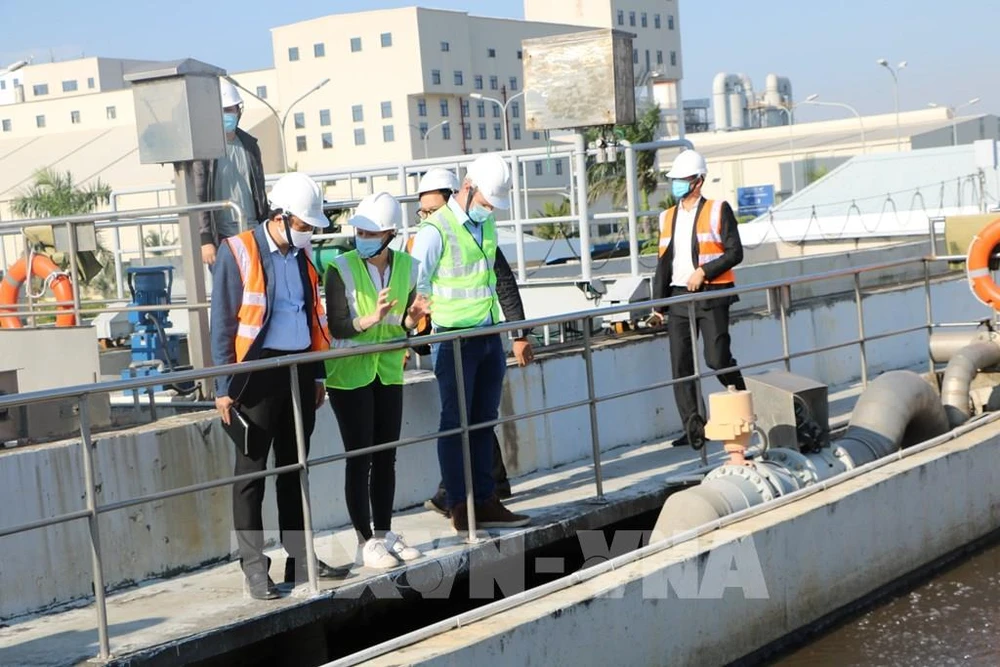
Hanoi (VNA) – A survey conducted by the real estate agency Savills Vietnam reveals that the country now has more than 400 eco-industrial zones, with the demand for this segment expected to grow in the future.
Thomas Rooney, who manages the firm’s industrial services team in Hanoi, observed that most current industrial projects are still developed under traditional models, with limited incorporation of sustainable design solutions. Transforming a conventional industrial zone into an eco-friendly one is not straightforward due to the significant costs involved and the need for thorough consideration by the government regarding the legal framework.
The cost of building a green industrial zone is typically around 30% higher than that of a traditional zone, Rooney explained. Therefore, additional incentive policies, along with credit support for investors, are necessary to help alleviate the initial financial burden.
According to data from the Ministry of Planning and Investment, by 2030, approximately 40-50% of provinces and centrally-run cities nationwide will have plans to convert existing industrial zones into eco-industrial ones, with 8-10% of them expected to establish new eco-industrial zones.
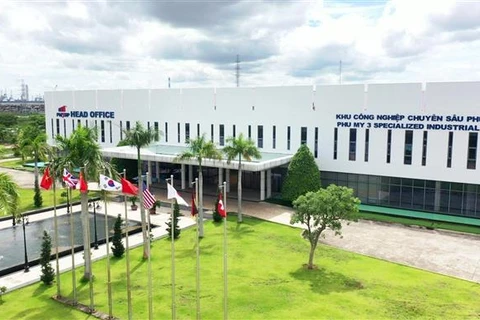
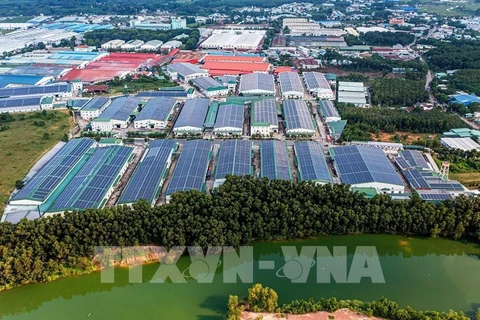
Leading this trend in Vietnam are VSIP and DEEP C industrial zones, which are utilising rooftop solar energy systems to supply electricity to parts of their operations.
Based on primary data from their working sessions with clients, Savills reports that around 80-85% of foreign-invested enterprises have high demands for ESG (environmental, social, and governance) standards when selecting factory locations, prioritising sustainability.
To effectively compete with neighbouring markets such as Thailand, the Philippines, and Indonesia, which have successfully developed several green industrial zone projects, Rooney said Vietnam needs to meet this demand. This would enhance its appeal to foreign investors and strengthen the position of its industrial zones in the global market.
According to Savills, with FDI continuously increasing in Vietnam, foreign companies will have high demand for space and warehouses to support their production and business activities. As a result, industrial real estate is expected to remain a bright spot for attracting investors in the market.
The professional service firm KPMG's survey involving 200 FDI enterprises notes that aside from factors such as location, labour availability, and logistics infrastructure, industrial zones meeting green criteria are becoming a top priority for many foreign-funded companies when choosing investment locations in Vietnam.
Furthermore, the Vietnamese government has set goals to become a developed nation by 2045 and achieve net-zero emissions by 2050. Green industrial zones in Vietnam have advantages over traditional ones due to prioritised support in terms of technology, export, branding, value chains, and preferential loans under the decree on the management of industrial and economic zones.
In Vietnam, the eco-industrial zone model has been developed since 2014 with the support of international organisations. From 2015 to 2019, the Ministry of Planning and Investment, in collaboration with the United Nations Industrial Development Organisation (UNIDO), implemented the conversion of four pilot industrial zones into eco-industrial ones. From 2020 to 2024, this model has been expanded in Hai Phong, Dong Nai, and Ho Chi Minh City, contributing to GDP growth and emissions reduction./.