Over 4.22 million e-ID accounts in Hanoi activated

As of June 28, out of the over 6.22 million e-ID accounts that have been created in Hanoi, more than 4.22 million were activated, according to the deputy director of the Hanoi Police Major General Nguyen Hong Ky.
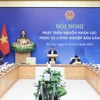
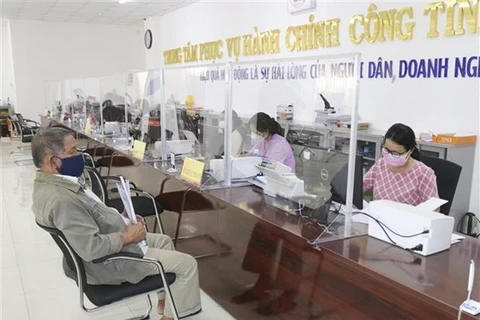
Over 4.22 million e-ID accounts in Hanoi activated ảnh 1More than 4.22 million e-ID accounts in Hanoi are activated. (Photo: hanoimoi.com.vn) 

Hanoi (VNA) – As of June 28, out of the over 6.22 million e-ID accounts that have been created in Hanoi, more than 4.22 million were activated, according to the deputy director of the Hanoi Police Major General Nguyen Hong Ky.

Speaking at a meeting on the city’s administrative reform, digitalisation, and the implementation of the project on developing the application of population database, e-identification, and e-authentication for the national digital transformation in the 2022-2025 period with a vision to 2030 (Project 06), Ky said that in the first half of this year, police effectively granted chip-based ID cards for people in the city.

Director of the city’s Home Affairs Department Tran Dinh Canh said that the municipal People's Committee issued 30 decisions to announce the list of new administrative procedures, and amended, supplemented, and removed ones.

As of June 10, 2023, the total number of administrative procedures that local competence of agencies and units are responsible for handling is 1,875, with 1,385 processed by city-level, 339 by district-level, and 151 by commune-level agencies.

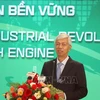
Over 4.22 million e-ID accounts in Hanoi activated ảnh 2Chairman of the Hanoi People's Committee Tran Sy Thanh speaks at the meeting. (Photo: hanoimoi.com.vn)

At the meeting, director of the city’s Department of Information and Communications of Hanoi Nguyen Viet Hung said that the city has developed and issued regulations on the management, operation, and exploitation of information systems and databases.

By the end of 2025, public service users will not have to pay fees if submitting dossiers online.

According to Hung, some districts have realised the role of digital transformation and are proactive in proposing and implementing digital transformation tasks. Departments, departments, branches, People's Committees of districts, towns and communes, wards and townships continue to maintain and operate their portals to provide information to people and enterprises.

Up to 99.5% of the enterprises in the city submit electronic tax declarations, over 99.1% of the businesses pay taxes electronically, and all the tax refund records are processed electronically.

Up to now, the city has granted 12,188 digital signatures to officials and civil servants of the city.

The city’s departments and agencies are exchanging online documents with ministries, and central agencies branches as regulated.

Chairman of the Hanoi People's Committee Tran Sy Thanh said that the city's administrative reform has made many positive changes.

He said the city's administrative reform index is always in the top ten best performers in the country. In 2022, Hanoi ranked 3rd out of the country's 63 provinces and centally-run cities, jumping seven places from the position in 2021.

Hanoi's provincial Digital Transformation Index jumped 16 places in 2021.

Thanh thanked leaders, heads of units, and localities for having the right awareness of administrative reform, digital transformation, and Project 06.

He said in the coming time, the city will take drastic directions and measures to achieve breakthroughs in the implementation of administrative reform, digital transformation, and Project 06.

Departments and agencies were asked to focus on reviewing, reducing, and simplifying regulations and administrative procedures related to investment, production, and business activities.

“The city will continue to improve the efficiency of online public services, creating the most favourable conditions for people and businesses, better connecting with national databases, further sharing data with ministries and agencies, and ensuring safety for information systems and personal data," he said./.

VNA

See more

Phuc Loi ward in Hanoi has launched the “Digital Literacy for All” movement, forming support teams to help residents install applications such as iHanoi and eTax. (Photo: VNA)

Hanoi advances technological innovation in key economic sectors

The municipal People's Committee recently issued Plan No. 109/KH-UBND on technological innovation in key economic sectors through 2035, which serves as both a catalyst and a strategic move to systematise, elevate and reinforce the capital’s leading role in the digital era.

General Secretary of the Communist Party of Vietnam (CPV) Central Committee and State President To Lam (first, right, front row) listens to a presentation about the China-ASEAN AI Application Cooperation Centre (Photo: VNA)

Top Vietnamese leader visits China–ASEAN AI Application Cooperation Centre

The China–ASEAN AI Application Cooperation Centre, jointly established by the Guangxi Zhuang Autonomous Region and ASEAN countries, aims to promote inclusive and mutually beneficial development of AI globally. It is regarded as a flagship project in advancing the “Digital Silk Road” initiative in Nanning.

A view of the 224th session of the UNESCO Executive Board in Paris. (Photo: VNA)

UNESCO extends recognition of 2 Category II science centres in Vietnam

The continued operation and enhancement of the two Category II centres under UNESCO’s auspices reflect Vietnam’s policy of positioning science, technology and innovation as key drivers of development, while closely linking scientific advancement with deeper and more substantive international integration in the current context.

China–ASEAN Artificial Intelligence Application Cooperation Centre deeply integrates future technologies with distinctive ASEAN cultural characteristics. (Photo: VNA)

China–ASEAN AI cooperation centre drives regional tech cooperation

With strong policy support and growing participation from businesses and research institutions, the China–ASEAN Artificial Intelligence (AI) Application Cooperation Centre is expected to act as a digital bridge, promoting technological integration and opening new avenues for Vietnam–China cooperation in the digital era.

Politburo member and Chairman of the Party Central Committee’s Organisation Commission Nguyen Duy Ngoc (ninth, left) and the Vietnamese delegation pose for a group photo with leaders of the Zhongguancun Science Park and Beijing city. (Photo: VNA)

Vietnam, China step up cooperation in science, technology, innovation

Politburo member and Chairman of the Party Central Committee’s Organisation Commission Nguyen Duy Ngoc, who also serves as Standing Deputy Head of the Central Steering Committee for the Development of Science, Technology, Innovation and Digital Transformation, toured the park’s exhibition area and was briefed on the formation and development of Zhongguancun, along with Beijing’s achievements in science, technology and innovation.

A technician from Viettel Bac Ninh examines equipment at a 5G base transceiver station. (Photo: VNA)

Bac Ninh accelerates development of 5G, data infrastructure

In the first quarter, Bac Ninh’s telecommunications infrastructure continued to develop in a synchronous manner. All communes have been connected to dedicated data transmission networks, and 100% of the population is covered by mobile services.

Illustrative photo (Photo: VNA)

An Giang identifies key tasks in science-technology development

The priorities focus on four pillars: science and technology, innovation, digital transformation, and real-world applications to boost socio-economic development. These are expected to create breakthroughs in governance, production, and daily life.

Illustrative image (Photo: VNA)

Vietnam Research Excellence Fellowship for 2026-2030 approved

Under the Vietnam Research Excellence Fellowship (VREF) for the 2026–2030 period, PhD students are identified as a core research force directly contributing to breakthroughs in sci-tech and innovation. Investing in top-tier doctoral candidates is more than workforce development, but a high-stakes strategic bet to forge a cohort of world-class scientists and technologists who can power Vietnam’s long-term economic ambitions.

Participants in the ASEAN Plus Photonics Symposium in Gia Lai province on April 8 (Photo: baogialai.com.vn/)

Gia Lai province hosts ASEAN Plus Photonics Symposium

Participants presented and discussed a wide range of advanced topics shaping the future of photonics, including nanophotonics and metasurfaces; topological and non-Hermitian photonics; photonic crystals and optical lattices; light–matter interactions and polariton systems.

Vietnamese Ambassador to Brazil Bui Van Nghi (right) and Professor and quantum physicist Olival Freire Juniorin, President of Brazil's National Council for Scientific and Technological Development, at their meeting on April 7. (Photo: Vietnamese Embassy in Brazil)

Vietnam, Brazil to strengthen cooperation in science, technology

Ambassador Bui Van Nghi expressed Vietnam’s interest in strengthening cooperation with Brazil in areas such as renewable energy and environmental technologies, as well as high-tech sectors including artificial intelligence (AI), quantum technology, and the semiconductor industry.