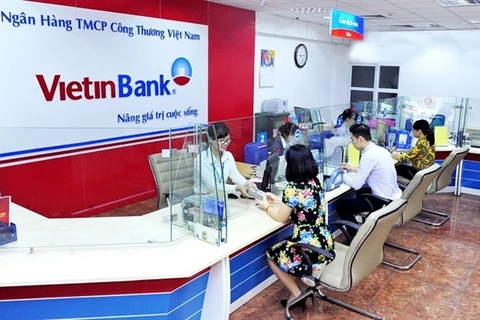
ACB is among a few banks to complete the charter capital this year (Photo: ACB)
 Hanoi (VNS/VNA) - Banks are facing major challenges to carry out their capital increase plans this year due to the impacts of the COVID-19 pandemic.
To meet the capital adequacy ratio (CAR) of the international banking standard Basel II as required by the State Bank of Vietnam (SBV), many State-owned and private commercial joint-stock banks approved plans to increase capital early this year.
However, the pandemic might ruin their plans, especially for banks that didn’t report high profit last year. It has been reported that only a few banks, including ACB and Bac A Bank, have succeeded in their capital increase plans to date.
Recently, ACB was among few banks to complete the charter capital hike from 16.63 trillion VND (713.73 million USD) to nearly 21.62 trillion VND through issuing shares at a rate of 30 percent to pay dividends in 2019.
Bac A Bank also increased its charter capital from 6.5 trillion VND to 7.1 trillion VND by issuing 58.5 million additional shares to pay dividends, with a ratio of 9 percent.
Some other banks expect to do the same to increase their capital in the remaining months of this year as it is considered the most feasible method amid the pandemic.
HDBank announced it would issue shares to pay dividends at a rate of 50 percent and bonus shares at the rate of 15 percent, increasing its charter capital from nearly 9.81 trillion VND to 16.088 trillion VND.
If the issuance is completed this year, HDBank will have the highest charter capital growth in the local banking industry.
TPBank is also planning to issue shares to increase its charter capital, which is expected to increase from nearly 8.6 trillion VND to more than 10.6 trillion VND. To meet the plan, TPBank will issue more than 181 million shares and issue nearly 34 million shares under an employee stock ownership programme.
Many other banks, such as MB, SCB and VietA Bank are also planning to raise capital using the measure.
While increasing stock dividend to hike capital is the fastest solution at this moment due to the impacts of COVID-19, experts forecast it would be uneasy to do as it needed approval from the banks’ shareholders. In fact, in the current situation, it is difficult to raise capital right from existing shareholders, let alone potential investors, including foreign investors.
From the beginning of the year until now, due to the outbreak of the pandemic, all economic sectors and industries have slowed and faced challenges to raise capital.
“There are only some four months left this year while the country has to resolve the second wave of the COVID-19 outbreak in some localities, causing difficulties for sectors, including banking, to raise capital. It, therefore, challenges banks to meet their capital increase plans set early this year,” banking expert Nguyen Tri Hieu said.
Despite the challenges, Hieu said the application of the capital adequacy ratio Basel II standards should follow the SBV’s roadmap this year, explaining that the more challenges the banking system faced, the more transparency needed to be improved.
“The COVID-19 pandemic will be one of the tests to prove the resilience of the country’s credit institution system to difficulties. Meeting Basel II standards is also a confirmation of the banks’ financial strength and reputation,” he said.
As for State-owned banks Agribank, Vietcombank, VietinBank and BIDV, the SBV’s Governor Le Minh Hung recently directed agencies to work with relevant ministries to increase charter capital for the banks.
While Agribank might be allowed to increase capital using the State budget, VietinBank and Vietcombank expect to get the hike through paying dividends in shares.
At the end of 2019, the average CAR of the four State-owned banks according to Basel I standards was only 9.4 percent, slightly higher than the prescribed minimum CAR of 9 percent. This level is much less than the CAR of private joint-stock banks (12.1 percent) and lower than the average CAR of the entire system of credit institutions (13 percent).
Notably, industry insiders said if calculating based on Basel II standards, the CAR of the banks would fall below 8 percent./.
To meet the capital adequacy ratio (CAR) of the international banking standard Basel II as required by the State Bank of Vietnam (SBV), many State-owned and private commercial joint-stock banks approved plans to increase capital early this year.
However, the pandemic might ruin their plans, especially for banks that didn’t report high profit last year. It has been reported that only a few banks, including ACB and Bac A Bank, have succeeded in their capital increase plans to date.
Recently, ACB was among few banks to complete the charter capital hike from 16.63 trillion VND (713.73 million USD) to nearly 21.62 trillion VND through issuing shares at a rate of 30 percent to pay dividends in 2019.
Bac A Bank also increased its charter capital from 6.5 trillion VND to 7.1 trillion VND by issuing 58.5 million additional shares to pay dividends, with a ratio of 9 percent.
Some other banks expect to do the same to increase their capital in the remaining months of this year as it is considered the most feasible method amid the pandemic.
HDBank announced it would issue shares to pay dividends at a rate of 50 percent and bonus shares at the rate of 15 percent, increasing its charter capital from nearly 9.81 trillion VND to 16.088 trillion VND.
If the issuance is completed this year, HDBank will have the highest charter capital growth in the local banking industry.
TPBank is also planning to issue shares to increase its charter capital, which is expected to increase from nearly 8.6 trillion VND to more than 10.6 trillion VND. To meet the plan, TPBank will issue more than 181 million shares and issue nearly 34 million shares under an employee stock ownership programme.
Many other banks, such as MB, SCB and VietA Bank are also planning to raise capital using the measure.
While increasing stock dividend to hike capital is the fastest solution at this moment due to the impacts of COVID-19, experts forecast it would be uneasy to do as it needed approval from the banks’ shareholders. In fact, in the current situation, it is difficult to raise capital right from existing shareholders, let alone potential investors, including foreign investors.
From the beginning of the year until now, due to the outbreak of the pandemic, all economic sectors and industries have slowed and faced challenges to raise capital.
“There are only some four months left this year while the country has to resolve the second wave of the COVID-19 outbreak in some localities, causing difficulties for sectors, including banking, to raise capital. It, therefore, challenges banks to meet their capital increase plans set early this year,” banking expert Nguyen Tri Hieu said.
Despite the challenges, Hieu said the application of the capital adequacy ratio Basel II standards should follow the SBV’s roadmap this year, explaining that the more challenges the banking system faced, the more transparency needed to be improved.
“The COVID-19 pandemic will be one of the tests to prove the resilience of the country’s credit institution system to difficulties. Meeting Basel II standards is also a confirmation of the banks’ financial strength and reputation,” he said.
As for State-owned banks Agribank, Vietcombank, VietinBank and BIDV, the SBV’s Governor Le Minh Hung recently directed agencies to work with relevant ministries to increase charter capital for the banks.
While Agribank might be allowed to increase capital using the State budget, VietinBank and Vietcombank expect to get the hike through paying dividends in shares.
At the end of 2019, the average CAR of the four State-owned banks according to Basel I standards was only 9.4 percent, slightly higher than the prescribed minimum CAR of 9 percent. This level is much less than the CAR of private joint-stock banks (12.1 percent) and lower than the average CAR of the entire system of credit institutions (13 percent).
Notably, industry insiders said if calculating based on Basel II standards, the CAR of the banks would fall below 8 percent./.
VNA