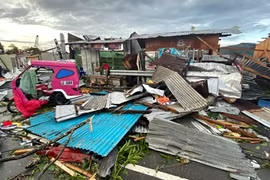
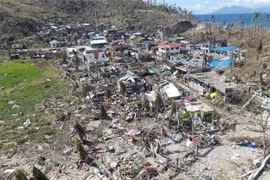
Fallen electric pylons block a road while a sign asking for food (L), is displayed along a road in Surigao City, the Philippines. (Photo: AFP/VNA)
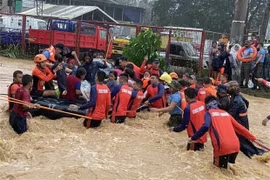
Three weeks after Typhoon Rai struck southern and centralislands, destroying thousands of homes and killing more than 400 people, reliefwork continues to deliver supplies to affected residents.
At least nine people have died from diarrhoea in the islandsof Dinagat and Siargao, the Philippine health department's regional officesaid. A total of 895 cases had been recorded there since the typhoon struck, mostlyamong those left homeless, said department spokesman Ernesto Pareja, addingthat the government and aid agencies rushed to build emergency water treatmentfacilities
The International Federation of Red Cross and Red CrescentSocieties warned of a "mounting health crisis" in typhoon-hitareas as it scaled up its disaster response. The typhoon left millions withoutaccess to clean drinking water, hospitals and health facilities, IFRCPhilippine delegation head Alberto Bocanegra said.
The United Nations World Food Programme, meanwhile,voiced concern over a rapid rise in preventable malnutrition if affectedfamilies are not provided with badly needed food assistance.
A total of 402 people have died from the typhoon whichstruck the country on December 16 last year, according to the Philippine civildefence office's latest tally, with more than 1,200 injured and 78 stillmissing and at least 370,000 still in evacuation centres.
Survivors have likened the storm to Super Typhoon Haiyan,which left 7,300 people dead or missing across the central Philippines in 2013and remains the country's deadliest on record./.
VNA