Images of culture and daily life in Vietnam 100 years ago are now on show in the capital city.
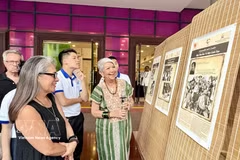
Titled Objective Vietnam, the event presents 55 photographs from thearchives of the Ecole Francaise d'Extreme-Orient (French School of theFar East) to mark a century of research in Vietnam.
The photoscome from scholars and photographers who used the large and mediumformat cameras and old camera techniques. Some of the photos have beenrestored with digitalisation.
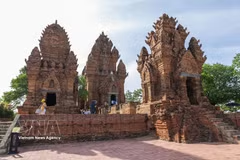
The photos record relics throughoutVietnam, especially those belonging to the Champa, Dong Duong and Oc Eocultures in the central and southern region of Vietnam.
Onesection displays photos of restoration works carried out by FrenchSchool experts. Altogether, the school built eight museums in Indochina,including five in Vietnam.
Another section pictures the Nam Giao offering ritual implemented in 1939 under King Bao Dai (1913-97) of the Nguyen Dynasty.
Thiswas the most important ceremony in feudal times. It aimed to honour thesky, earth and important gods and wish for favourable weatherconditions, prosperity and peace.
This is the first timeVietnamese people have a chance to see how the ritual was implementedand how the king, royal family's members and mandarins dressed up duringthe ritual, said Nguyen Van Cuong, the museum's director.
The exhibition also features folk culture and agricultural ceremonies, festivals, worship, funerals, and daily life.
Also on display are 50 objects from the Vietnam National Museum of History in Hanoi.
TheFrench School was established in Vietnam in 1900 in Saigon (Ho Chi MinhCity). It was closed in 1959 and re-opened in Hanoi in 1993. It mainlyfocuses on history, archaeology and philology, as well as the study ofmodern Asian societies.
The exhibition will run until March at the Vietnam National Museum of History, 25 Tong Dan street, Hanoi.-VNA