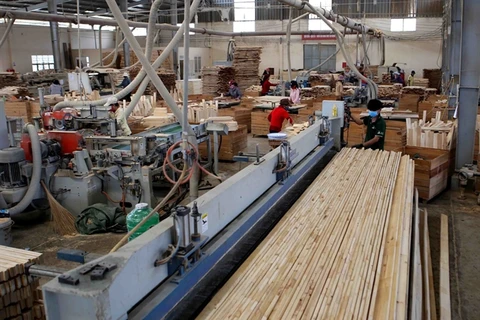
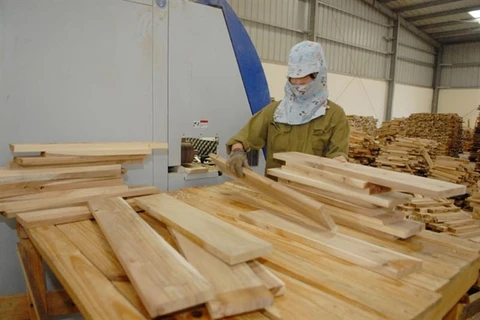
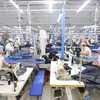
A plywood manufacturing plant (Photo: thuonghieusanpham.vn)
 HCM City (VNA) – Vietnam’s plywood exports, despite good growth amid the COVID-19 pandemic, are facing allegations of dumping and evading trade remedies in two largest markets namely the Republic of Korea (RoK) and the US.
According to the Vietnam Timber and Forest Product Association (VIFORES), plywood exports were worth 800 million USD last year, accounting for 7 percent of the country’s total wood and wooden products export value, it said.
The US is the world's largest plywood importer. In 2019 it imported 4.67 million cubic metres for 2.72 billion USD.
Its imports from Vietnam were worth 309 million USD, while the RoK’s were worth 226 million USD.
VIFORES Chairman Do Xuan Lap said plywood is used in making various interior furniture products, and the global market has seen substantial growth in recent years, creating conditions for Vietnam to boost exports.
However, the rapid growth in the country’s exports has brought trade defence risks in its two largest markets.
In addition, according to delegates at a recent conference titled Trade Promotion for Vietnam’s Plywood and Medium Density Fibreboard: challenges and opportunities in the context of COVID held in HCM City, an increase in Chinese investment in the sector has caused Vietnam’s plywood exports to face anti-dumping duties and anti-circumvention in many countries.
The US Department of Commerce had said on June 9 it would examine whether hardwood plywood products completed in Vietnam using Chinese components are circumventing US duties on imports from China, a move that could see similar duties on Vietnamese imports.
The RoK’s Ministry of Trade, Industry and Energy in April made a preliminary decision to place anti-dumping duties on plywood products from Vietnam, and requested the Ministry of Economy and Finance to impose anti-dumping duties of 9.18 percent to 10.65 percent on plywood imported from the Southeast Asian nation.
Ngo Sy Hoai, VIFORES Vice Chairman and General Secretary, said “The threat of anti-dumping lawsuits on plywood products from Vietnam is increasing, especially in the context of its timber industry’s increasing integration into the world market.”
The US-China trade war has left many manufacturing companies in Vietnam facing tax evasion investigations.
“If we fail to prove the origin of plywood exported to the US, Vietnamese plywood may be slapped with anti-circumvention duties equivalent to the tax imposed by the US on plywood exported from China of more than 200 percent."
This will entail a similar risk for products made from plywood such as kitchen cabinets, he said.
Trinh Xuan Duong, Chairman of the Vietnam Plywood Association, said in the current context businesses need to join hands through associations and the Ministry of Industry and Trade’s Trade Remedies Authority of Vietnam to oppose decisions to initiate investigations by the US and the RoK and prepare sufficient information and data to respond to the investigations.
Le Xuan Quan, Chairman of Nano Architecture and Furniture JS Company, said local wood industry business groups should review their members’ export activities to detect any abnormal relationships between their production capacity and export volumes.
If they find any violations related to fraudulent origins, they must widely publicise the case, and authorities need to throw the book at the offenders, he said.
Associations called on their members not to pursue short-term benefits by cooperating with Chinese firms and declare fake origins so that they do not affect the entire industry.
The conference was jointly organised by VIFORES, the USAID and the Trade Remedies Authority of Vietnam./.
VNA