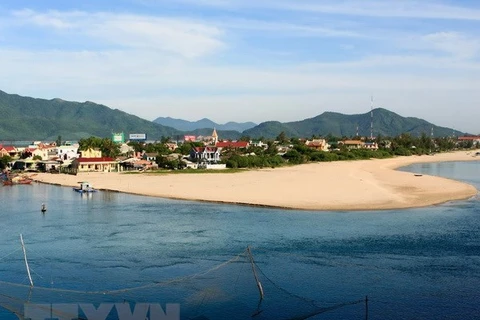
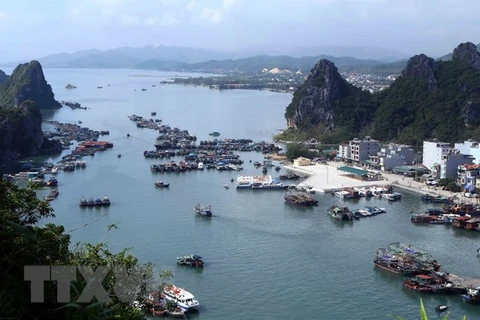
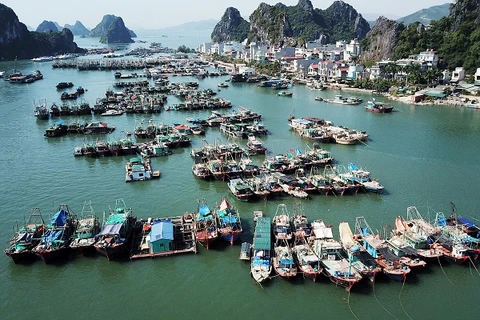
The Prime Minister has approved the zoning of the Cao Bang Border Gate Economic Zone to 2040 (Photo: www.caobang.gov.vn)
 Hanoi (VNA) – The Prime Minister has approved the zoning of the Cao Bang Border Gate Economic Zone to 2040.
Under Decision No.20/2014/QD-TTg of the PM, the economic zone will be constructed on an area of about 30,130 ha. The population in the area is projected to stand at about 110,000-115,000 in 2030, including 30,000-35,000 urban residents.
It is expected to contribute to the economic growth of the country’s northern region and become a driving force of the north-eastern area in particular.
The plan will assess natural conditions, socio-economic development, infrastructure, living conditions and land use in the border areas, and forecast the changes of the natural environment under the impact of the urbanisation and socio-economic development. It also evaluates investment and implementation of projects which already received approval and those are under consideration.
The plan is to analyse the role of transport and exchange of goods between the economic zone and the Vietnam-China cross-border economic zone and its relations with surrounding regions and economic hubs of China’s Guangxi province. -VNA
Under Decision No.20/2014/QD-TTg of the PM, the economic zone will be constructed on an area of about 30,130 ha. The population in the area is projected to stand at about 110,000-115,000 in 2030, including 30,000-35,000 urban residents.
It is expected to contribute to the economic growth of the country’s northern region and become a driving force of the north-eastern area in particular.
The plan will assess natural conditions, socio-economic development, infrastructure, living conditions and land use in the border areas, and forecast the changes of the natural environment under the impact of the urbanisation and socio-economic development. It also evaluates investment and implementation of projects which already received approval and those are under consideration.
The plan is to analyse the role of transport and exchange of goods between the economic zone and the Vietnam-China cross-border economic zone and its relations with surrounding regions and economic hubs of China’s Guangxi province. -VNA
VNA