PM urges faster progress of expressway projects in Mekong Delta

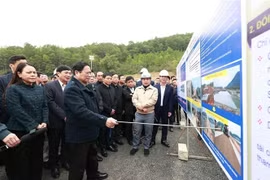
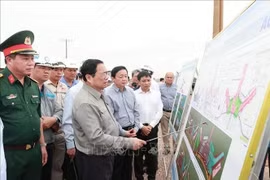
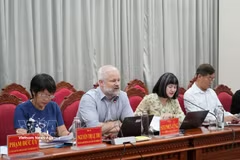
Prime Minister Pham Minh Chinh had a meeting with ministries, sectors, and Mekong Delta localities in Can Tho city on January 30 to look into the progress of some transport projects.
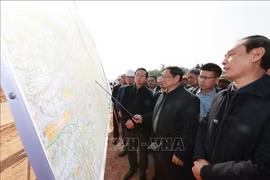
PM urges faster progress of expressway projects in Mekong Delta ảnh 1PM Pham Minh Chinh speaks at the working session in Can Tho city on January 30. (Photo: VNA)
Can Tho (VNA) – Prime MinisterPham Minh Chinh had a meeting with ministries, sectors, and Mekong Delta localitiesin Can Tho city on January 30 to look into the progress of some transportprojects.

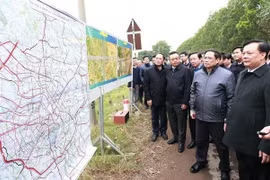
The working session followed hisfact-finding tour of some key transport projects after the Lunar New Yearholiday.

PM Chinh said the Mekong Delta,comprising 12 provinces and one city, holds a critically important role, boastshuge potential, but is also the region most vulnerable to climate change inVietnam.

Breakthroughs in transport infrastructureand human resources will help this region develop more strongly in the coming time,he went on, noting that promoting transport infrastructure projects will alsohelp accelerate public investment disbursement, one of the driving forces fornational socio-economic recovery and development.

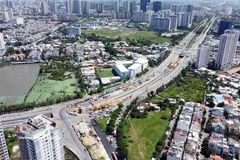
According to the PM-approved roadnetwork planning for 2021 - 2030, with a vision to 2050, the Mekong Delta willhave six expressways with the total length of 1,166km. Some projects areunderway and about 554km of expressways are expected to be completed by 2026, whilethe rest will be built between 2026 and 2030.

The PM affirmed that developingtransport infrastructure, especially expressways, in the Mekong Delta is anobjective requirement, so actions must be taken without hesitation to obtain observableand measurable results.

He demanded consensus, strongdetermination, great efforts, and drastic and effective actions, adding thesooner expressways are opened, the sooner the Mekong Delta can benefit fromthem.

Applauding ministries, sectors, andlocalities’ performance, the Government leader asked them to coordinate moreclosely in developing transport facilities, particularly expressways, in theregion.

They need to quickly finishprocedures in the first half of 2023 so as to start the remaining projects soon,PM Chinh said./.
VNA
See more

MICE visitors enjoy services at Song Be Golf Resort in Ho Chi Minh City. (Photo: VNA)

Ho Chi Minh City shifts MICE tourism from venues to experiences

Ho Chi Minh City boasts significant advantages for MICE tourism, with the central area offering strengths in finance, trade and services; Binh Duong in industry, exhibitions and business connectivity; and Ba Ria-Vung Tau and Con Dao in marine tourism, resorts, ecology and distinctive experiences.

National Brand products are on display at the Vietnam National Brand International Forum. (Photo: VNA)

Vietnam's national brand value jumps 45% to over 462 bln USD

Deputy Minister of Industry and Trade Luong Hoang Thai outlined Vietnam's National Brand Programme 's achievements, the role of business community and plans for brand development in a press interview ahead of the 10th Vietnam National Brand Product recognition ceremony on October 16.

Khanh Hoa province possesses significant advantages for renewable energy projects and new energy sectors. (Photo: VNA)

New value chains from two industrial – renewable energy centres

To implement the revised Power Development Plan VIII, the Ministry of Industry and Trade has proposed establishing two inter-regional renewable energy industrial and service centres in the northern and southern regions to develop the renewable energy sector and a complete value chain.

WB Senior Environmental Specialist and Task Team Leader Stephen Ling speaks at the working session (Photo; VNA)

Ca Mau, WB cooperate in sustainable fisheries development

Scheduled to run from 2026 to 2029, the project aims to develop the local fisheries sector and deepen global integration, while adapting to climate change and protecting the environment through infrastructure upgrades, technological innovation, and better management and production capacity.

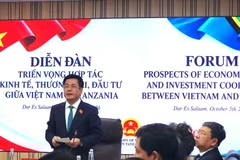
Vice President of the Vietnamese National Assembly Nguyen Hong Dien speaks at the forum. (Photo: Vietnam Trade Promotion Agency)

Tanzanian businesses seek greater cooperation, investment opportunities with Vietnam

Attending the forum during his working visit to Tanzania, Vice President of the National Assembly Nguyen Hong Dien said the two economies were highly complementary. Tanzania has strengths in natural resources, agriculture, energy, its domestic market and its strategic position in East Africa, while Vietnam has advantages in manufacturing and processing, high-tech agriculture, electronics, telecommunications and international trade.

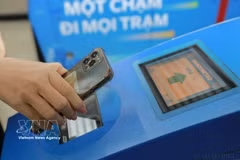
The automatic ticketing system that uses electronic identification, authentication, biometric recognition and cashless payment for passengers on the Cat Linh-Ha Dong railway line in Hanoi. (Photo: VNA)

Cashless payments open gateway to financial inclusion

Cashless payments continued to grow rapidly in the first eight months of 2026. The number and value of cashless transactions rose 34.56% and 13.26% year-on-year, respectively, while online transactions increased 46.57% in number and 21.77% in value.

Ho Chi Minh City attracts more than 17.8 billion USD in FDI in the first nine months of 2026 (Illustrative image. Photo: VNA)

Ho Chi Minh City offers new destinations for FDI flows

The merger of Ho Chi Minh City with Binh Duong and Ba Ria-Vung Tau has opened up a larger development space, enabling the city to reshape its approach to attracting foreign investment. In particular, Resolution No. 10-NQ/TW of the Politburo sets out clear orientations for developing the foreign-invested economic sector, providing a basis for shifting the focus from the amount of investment capital to the quality of investment.

Vietnam exports about 1.4 million tonnes of coffee worth 6.54 billion USD in the first nine months of 2026. (Photo: VNA)

Vietnam seeks to boost value, expand markets for coffee sector

Acording to VICOFA, Vietnam needs to focus on exporting green coffee beans that meet EUDR criteria, particularly as compliance levels among some other producing countries remain low. At the same time, it should develop specialty and organic coffee lines as well as deeply processed products to serve the premium segment in Europe.