Policy dialogue aims to speed up action on tuberculosis in APEC

The APEC Health Working Group (HWG) held a policy dialogue on August 22 to discuss the acceleration of action on tuberculosis (TB) and multi-drug-resistant tuberculosis (MDR-TB) in the region.
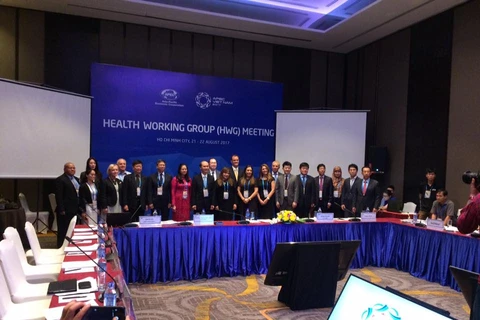
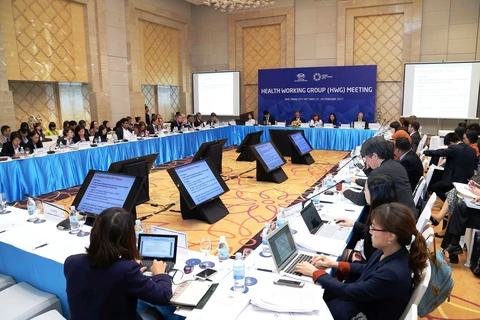
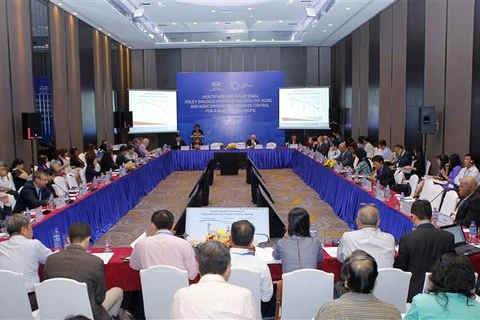
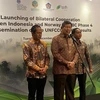
Policy dialogue aims to speed up action on tuberculosis in APEC ảnh 1The policy dialogue to discuss the acceleration of action on tuberculosis and multi-drug-resistant tuberculosis in the APEC region takes place on August 22 (Photo: VNA)

HCM City (VNA) – The APEC Health Working Group(HWG) held a policy dialogue on August 22 to discuss the acceleration of actionon tuberculosis (TB) and multi-drug-resistant tuberculosis (MDR-TB) in theregion.

The dialogue was part of the third APEC SeniorOfficials’ Meeting (SOM 3) and related meetings in Ho Chi Minh City.

More than 100 participants includedrepresentatives of the World Health Organisation (WHO), the Stop TBPartnership, the Global TB Caucus, the US Centres for Disease Control andPrevention, and the APEC economies.

Vietnamese Deputy Minister of Health Pham LeTuan stressed his country has gained a number of positive outcomes in TBprevention and control over the last decades. It is one of the nine economies achievingthe three main targets of TB infection minimisation and also among the threeeconomies that have effectively implemented the WHO’s End TB Strategy.

Vietnam’s top priority at present is to earlydetect all TB infections and cure them so as to prevent transmission, he noted.

He said the policy dialogue, an initiative ofVietnam with coordination from other APEC economies and the WHO support, aimedto devise a breakthrough strategy and build a common responsibility frameworkto eradicate TB in the APEC region.

Diana E.C Weil, a coordinator of the Policy,Strategy and Innovations Unit of the WHO Global TB Programme, highly valuedVietnam’s efforts in the TB fight, adding that the country has become one ofthe pioneer members in carrying out the WHO’s End TB Strategy.

She said TB is a global threat as one-third ofthe global population can contract TB and about 10 percent of the infectedpeople will carry the disease for their whole life.

At the dialogue, delegates discussed cooperationand integration opportunities in TB prevention and control. They also submittedimportant recommendations to call on policy makers, leaders of Governments andthe health sector in the APEC economies to pay more attention to TB.-VNA
VNA

See more

KKP cuts GDP forecast, warns Thailand faces recession risk. (Photo: The Nation)

Thailand’s economy may face recession risk

In its latest report, KKP Research noted that Thailand’s vulnerability goes beyond its reliance on imported crude oil and liquefied natural gas (LNG). Disruptions to shipping routes in the Middle East could also worsen shortages of fertilisers, affecting agricultural output, as well as petrochemical feedstocks, which would impact the plastics and textile industries.

Thai Prime Minister Anutin Charnvirakul speaks before Thai Parliament in Bangkok. (Photo: Xinhua/VNA)

Thailand plans tighter, targeted fiscal 2027 budget

Thailand's fiscal 2027 budget is projected at around 3.78 trillion THB (nearly 118 billion USD), a 2% increase from the previous year, with a focus on targeted spending and cutting unnecessary expenses, according to Prime Minister Anutin Charnvirakul.

Fitch downgrades Philippines’ outlook to ‘negative’. (Illustrative photo: Reuters)

Fitch downgrades Philippines’ outlook to ‘negative’

The Outlook revision reflects rising risks to the Philippines' strong medium-term growth prospects from recent disruptions to public investment, exacerbated in the near-term by elevated exposure to the ongoing global energy shock.

The Singapore Maritime Technology & Research Roadmap is aimed at advancing the sector’s efficiency and sustainability. (Photo: businesstimes.com.sg)

Singapore unveils new roadmap to boost innovation in maritime sector

The Singapore Maritime Technology & Research Roadmap is aimed at advancing the sector’s efficiency and sustainability. It highlights priorities – including digital technologies, decarbonisation and operational integration – to boost resilience, productivity and innovation in Singapore’s maritime ecosystem. It also addresses structural issues such as manpower, land and sea space limitations.

Malaysia considers establishing strategic petroleum reserve

Malaysia considers establishing strategic petroleum reserve

Malaysia, which was previously a net exporter, has now become a net importer due to declining domestic production and rising consumption, with demand estimated at around 800,000 barrels per day compared to production of about 400,000 barrels per day.

Indonesia to halt diesel imports from July

Indonesia to halt diesel imports from July

The move is part of the Indonesian Government’s efforts to strengthen national energy independence by utilising palm oil as an alternative fuel, said Agriculture Minister Andi Amran Sulaiman.

Malaysia’s growing microplastics crisis is largely self-inflicted, driven by domestic waste, weak recycling practices and everyday plastic use, said experts. (Photo: New Straits Times)

Malaysia seeks solutions to microplastic crisis

Microplastics originating from domestic waste and wastewater are increasingly entering the food chain, posing serious threats to seafood safety and the livelihoods of coastal communities.