Potential impacts of Lao Pak Lay hydropower project discussed in Hanoi

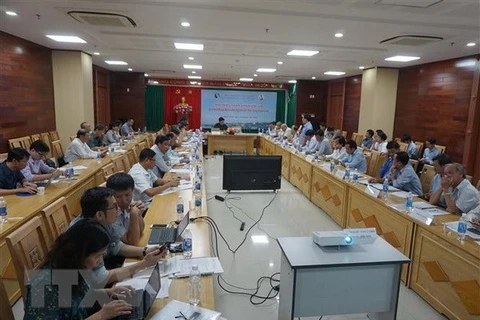
The possible impacts of Laos’ Pak Lay hydropower project on areas along the Mekong River were discussed at a national consultation held by the Vietnam National Mekong Committee (VNMC) in Hanoi on January 7.
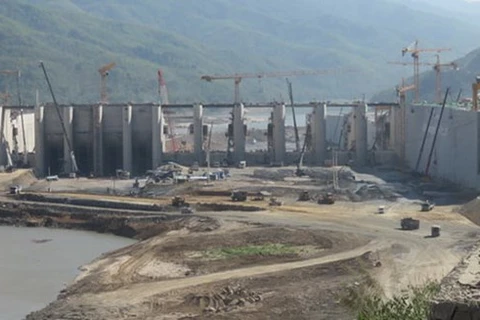
Potential impacts of Lao Pak Lay hydropower project discussed in Hanoi ảnh 1Illustrative image (Photo: opendevelopmentmekong.net)

Hanoi (VNA) – The possible impacts of Laos’ PakLay hydropower project on areas along the Mekong River were discussed at anational consultation held by the Vietnam National Mekong Committee (VNMC) inHanoi on January 7.

The Pak Lay project is proposed to be located onthe Mekong mainstream in the Pak Lay district of Xayaburi province, about1,615km from the Mekong Delta of Vietnam that sits at the end of theriver. 

It will be the fourth of its kind in Laos andamong the 11 hydropower projects to be built on the Mekong mainstream acrossLaos and Cambodia. Its construction is scheduled to start in 2022 and becompleted in 2029.

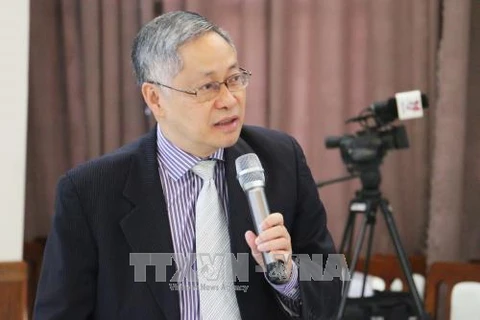
Chief of the VNMC Office Le Duc Trungsaid the consultation aims to look into the impacts of the project’s activitiesand the Mekong River Commission (MRC) Secretariat’s technical assessment reportso as to collect the opinions of relevant parties on the project.

Based on the investor’s impact assessmentreport, the VNMC perceived that about 25 million people residing along theMekong River corridor, from the Pak Lay project’s location to the East Sea, arebe likely to be under cross-border cumulative impacts.

Among them, there will be about 12.5 millionpeople in the Mekong Delta region of Vietnam under both positive and negativemid-level, long-term impacts.

The investor proposed some solutions, but it hasyet to work out measures to mitigate such cross-border impacts, the VNMC said.

Nguyen Dinh Dat, an expert at the VNMC, said thePak Lay hydropower project will influence the river’s flow, the salineintrusion situation, sediment deposition, water quality, aquatic resources, andwaterways transport in the Mekong Delta.

Notably, if all 11 hydropower dams are built,the total water flow will drop by almost 49 percent over a 10-day period andover 27 percent during a month in Tan Chau town and Chau Doc city, twolocalities of An Giang province located respectively on the Tien and Hau rivers– the two main branches of the Mekong River in Vietnam.

Such an impact has been assessed as serious, Datsaid, adding that it will cause saltwater to penetrate by a maximum of 10.5kmdeep into the land surrounding the Tien and Hau rivers, thus affectingcultivation activities in the dry season.

At the meeting, participants proposed the MRCJoint Committee ask the investor to amend the project’s design, monitorpossible impacts, and take measures to mitigate the adverse effects of the PakLay hydropower project. –VNA
VNA

See more

A motorist refuels at a station in Phnom Penh following a Ministry of Commerce warning against domestic fuel stockpiling. (Photo: Khmer Times)

Cambodia strengthens control over retail fuel sales

Cambodia’s Ministry of Commerce has called on the public and fuel station operators across the country to avoid hoarding fuel and to strictly follow technical safety standards in the sale and storage of petroleum products to prevent safety risks and ensure a stable supply.

Lao Prime Minister Sonexay Siphandone (Photo: Xinhua/VNA)

Laos identifies 10 key tasks to build independent, self-reliant economy

Laos will step up agricultural production to ensure food security, meet domestic demand and expand exports; encourage the development of agro-processing industries, including those related to rubber, aquatic products, cassava and sugarcane, as well as fertiliser and animal feed production, in order to increase added value and create jobs in rural areas.

Illustrative image (Photo: Nikkei)

ASEAN faces startup funding drought risks

ASEAN's startups raised 1.16 billion USD in October-December 2025, slightly down from the same quarter a year earlier. For the full year, funding increased 18% to 5.4 billion USD, but that was still about a fourth of the level seen in the peak year of 2021.

Environment Minister Hanif Faisol Nurofiq speaks to the press in Badung, Bali, on March 5. (Photo: Antara)

Indonesia steps up waste sorting at source

Waste sorting at source, combined with modern treatment technologies and stronger community participation, will play a decisive role in reducing pollution and building a sustainable waste management system in Indonesia in the coming years.

Lao girls in a festival. (Photo: asiakingtravel.com)

Laos marks International Women’s Day

The Lao People’s Revolutionary Party and the Lao Government have established policies and legal frameworks to promote women’s development, safeguard women’s rights and interests, and advance gender equality.

Two children play with a gadget in Jakarta. (Photo: ANTARA)

Indonesia sets age limits on digital platforms to protect children

Minister of Communication and Digital Affairs Meutya Hafid said Government Regulation No. 17 of 2025 on Electronic System Governance for Child Protection, known as PP Tunas, will delay access to high‑risk platforms until age 16, while lower‑risk services will be available from age 13.

Indonesia looks to expand engineering workforce amid AI push

Indonesia looks to expand engineering workforce amid AI push

President of the Institution of Engineers, Indonesia (PII) Ilham Akbar Habibie said the number of engineers per one million people in Indonesia remains low. The country currently has about 2,500 engineers per one million people, compared with around 9,500 in Vietnam – nearly four times higher. He described Vietnam as a typical example of how a nation can rely on engineering to strengthen its economy and drive robust economic growth.

Singapore invests to strengthen food self-reliance

Singapore invests to strengthen food self-reliance

Singapore plans to pump 70 million SGD (55 million USD) over the next five years to help local farms expand production capacity and build capabilities, as the country steps up efforts to strengthen food resilience amid growing global uncertainties.

Thailand announces referendum results on constitutional amendment (Photo: eastasiaforum.org)

Thailand announces results of constitutional amendment referendum

Official results released by the EC and signed by EC Chairman Narong Klanwarin show that a majority of Thai voters (58.64%) supported the amendment of the current Constitution. Meanwhile, 30.46% voted against, 8.34% cast blank ballots, and 2.56% of the votes were invalid.

Illustrative photo: Internet

Guangxi strengthens ASEAN – China trade connectivity

China has remained ASEAN’s largest trading partner for 17 consecutive years, while ASEAN has held the position as China’s top trading partner for the past six years. Guangxi, the only Chinese region linked to ASEAN by both land and sea, plays a strategic role in connecting the two markets.

Malaysian Minister of Investment, Trade and Industry Johari Abdul Ghani (Photo: Bernama)

Malaysia boosts exports to CPTPP member countries

Through the CPTPP, exporters can access non-traditional markets such as Canada, Mexico and Peru and, for the first time, gain preferential access to the UK market, which had previously been subject to regular tariffs, said a Malaysian official.

Young Lao ethnic women splash water to pray for good fortune during the traditional water-splashing New Year festival. (Photo: VNA)

Laos accelerates UNESCO nominations for cultural heritage

The Lao government will seek inscription of several traditions on the UNESCO Intangible Cultural Heritage of Humanity list, including Larb, the Sou Khuan ceremony, Pu Yer – Ya Yer, Lao New Year (Bun Pi Mai Lao), and Khao Tom–Khao Lam. It will also pursue World Heritage status for Nakai-Nam Theun National Park, the Plain of Jars in Houaphanh Province, and That Ing Hang.

Vietnam attends Cambodia–ASEAN Business Summit 2026

Vietnam attends Cambodia–ASEAN Business Summit 2026

Themed “Transforming ASEAN Transformation: Innovation, Integration and Industrial Evolution,” the event aimed to promote economic growth, deepen regional integration, and advance sustainable development in Cambodia and across ASEAN, underscoring the bloc’s strong commitment to innovation-driven growth and fostering regional competitiveness.