Pre-made food lessens Tet’s burden on women

Vietnamese always prepare traditional dishes for ancestor worship during the Lunar New Year festival, and the burden for preparing all of this still falls on women.
Pre-made food lessens Tet’s burden on women ảnh 1An advertisement for the Tet food making service in front of a supermarket (Photo: VNA)

Hanoi (VNA/VNS) - For mostVietnamese people, the Tet (Lunar New Year) Festival symbolisesthe beginning of a new year and the accompanying hopes for a happy life.

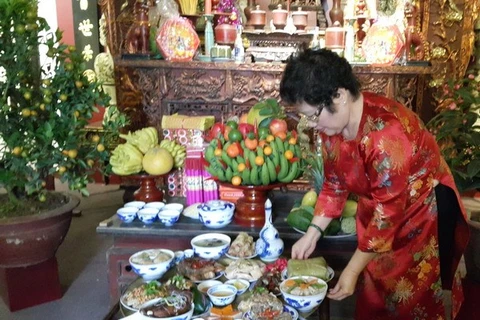
No matter the family’s circumstances, peoplealways prepare traditional dishes for ancestor worship with the hope that theancestors will bless their descendants with good health, luck and prosperity inthe Lunar New Year.

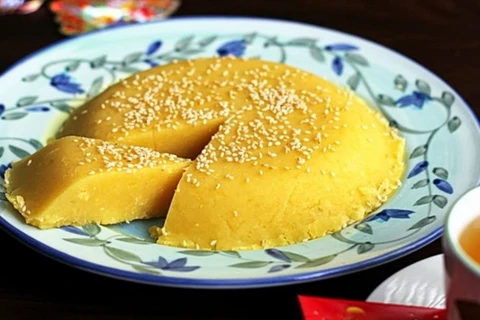
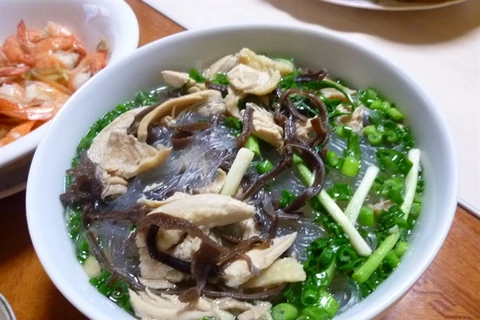
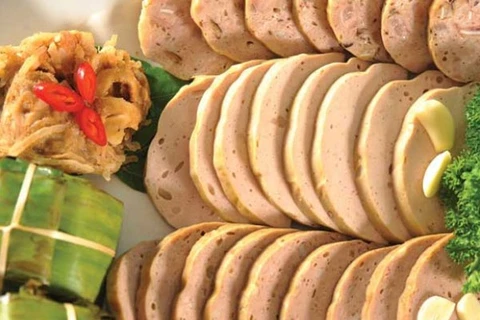
Traditional dishes like banhchung (square sticky rice cake), gio lua (lean porkpaste), thit dong (frozen meat stew), canh mang (bamboosprout soup) and nem (spring roll) are popular dishesaround Tet.

The burden for preparing all of this falls onwomen. And the incomplete progress towards gender equality means that they mustbalance this task with many other responsibilities, such as career andchildcare. As such, an increasing number of women, still expected by theirfamilies to serve the traditional meals, are selecting ready-to-eat foodservice to help them save time and effort.

Nguyen Thu Huyen, from Hanoi’s Thanh Xuandistrict, is among them.

As a chief accountant for a private company, shehad to work until the last day before Tet. Over the past two years, Huyen hasusually hired people to prepare food and all that she has to do is display themon the family altar.

"With this service, I have more time torest, play and take care of my children. I think this is a very convenientservice, helping to share some of the burdens of women," she said.

Tran Thuy Ha, from Hai Ba Trung district, hasanother story to share.

Living with her husband’s family after marriage,Ha had no chance to celebrate Tet the way she wanted for the pastseven years.

She had to clean and decorate the house as wellas rush to the supermarket to buy many things for the festival.

Now thinking that it is time to relax after ayear of hard work, Ha has decided to order meals for this Tet.

She said she spent only fifteen minutespreparing food for the first three days of the Lunar New Year.

However, purchasing ready-to-eat food is notsomething everyone favours, especially old people.

62-year-old Le Thi Nam,from Hai Duong province, said: “Like many Vietnamese, I thoughtthat Tet was the important time of the gods, ancestors, grandparentswho have passed away and it is the occasion for family members and theirrelatives to reunite.”

In the past, people used to look forwardto Tet to enjoy delicious foods. But now that the country is richer,many formerly special foods are available every day. What makes Tet foodspecial is that it is prepared by families to eat together. 

Vietnamese has its saying “uong nuoc nho nguon”which roughly translates as “when drinking water, you should think of thesource.”

Thus, she said, people should prepare deliciousspecialties by themselves on this occasion to show respect for ancestors andgrandparents.

The food will be offered to the ancestors first,then served to the family during Tet, she explained.

Tet is the time that women are busypreparing dishes to worship the Kitchen Gods and ancestors, but also for allfamily members to get together and share the work, Nam said, adding thatpreparing traditional dishes for ancestor worship together helped tighten therelationship between family members because some of them haven’t met each otherfor a long time.

Historian Le Van Lan agreed. “Whenever we askedan older person about his wish on the New Year, they would remember the warmthof family reunions. They could be the days that Kitchen Gods return to theHeaven, the gathering of family members around square sticky rice pot or theassignment of wrapping nem (spring rolls) on the eve of the Lunar New Year,” hetold a local media.

During Tet, people visit one another,entertain with food and drinks, and greet each other with wishes for luck andhappiness. This cultural custom reflects the Vietnamese people’s longstanding,durable relationship not only inside their families, but also in their nativeplaces.

“In my opinion, though Tet is the timefor togetherness and cohesiveness, most Vietnamese women are the most miserableas they bear the burden of preparing for the occasion. Why don’t we change tomake Tet happier for them and they will have more time to relax?”

“I still remember when I was a small child, mymother was always busy preparing traditional foods like banhchung, dua hanh (pickled onion) or bamboo sprout soup as these foodstake much time. For example, bamboo sprout should be soaked in water about halfa month before Tet and the water needs to be changed every day.”

“As a result of exhaustionfrom Tet preparations, it was easy for my mother to get angry with uswhenever we did things that she did not expect. At that time, we hoped that mymother could make a simple Tet for our family.”

“I think we have many ways to celebrate the NewYear. We can still maintain the tradition of preparing offerings for ancestralworship, but we can trim the preparations without spending so much timeshopping and cooking before and during the holiday so that the spirit of the occasioncan be kept alive - which is what counts more than where the food came from.”Lan said.-VNA/VNS
VNA

See more

Students in the Mekong Delta city of Can Tho are honoured for their outstanding performance in startup activities. (Photo: VNA)

Education ministry targets five digital technology incubators at universities

A key target under the new plan is the establishment of five digital technology incubators, or Deeptech Hubs, at universities and research institutes with strong potential. The education ministry also plans to launch a training programme for 1,000 outstanding technology entrepreneurs and develop criteria for selecting and supporting startup ecosystems within educational institutions.

At the equipment handover ceremony for the Narcotics Targeting Centre of Vietnam Customs. (Photo: cand.com.vn)

Vietnam Customs expands capacity to tackle cross-border narcotics crime

Established in November 2025, the NTC comprises six officers from the Anti-Smuggling Investigation Sub-Department specialising in surveillance, intelligence collection and information analysis. The centre is tasked with strengthening customs capacity in risk assessment and drug crime targeting, helping authorities detect and prevent illicit cross-border trafficking of narcotics and other dangerous substances at an early stage.

Representatives of the Club of Cambodian Journalists and the Vietnam Journalists Association at the working session in Hanoi on May 12 (Photo: VNA)

Vietnamese, Cambodian journalists strengthen cooperation

The Vietnam Journalists Association and the Club of Cambodian Journalists agreed to enhance coordination and information sharing between media agencies, exchange experience in professional training and technology application in journalism, and regularly organise training programmes for reporters and editors.

Ca Mau province has consistently attached importance to developing human resources and investing in infrastructure in ethnic minority areas. (Photo: VNA)

Vietnam steps up implementation of ethnic affairs strategy through 2030

To accelerate the implementation of the the Ethnic Affairs Strategy by 2030, with a vision toward 2045, the Prime Minister requested ministries, agencies and local authorities to continue thoroughly carrying out the Party and State’s policies on ethnic affairs, enhancing the effectiveness of State management and strengthening oversight of policy implementation.

Officials from the Market Surveillance Department of Da Nang conduct inspections at business establishments in Hai Chau ward. (Photo: VNA)

No “blind spots” in crackdown on smuggling, counterfeit goods

In the Jan-April period, authorities nationwide uncovered and handled nearly 44,000 cases related to smuggling, trade fraud and counterfeit goods, while initiating 1,464 criminal cases involving 2,277 suspects, according to the National Steering Committee for Combating Smuggling, Commercial Fraud and Counterfeit Goods (National Steering Committee 389).

A delegation of 60 exemplary overseas Vietnamese from 20 countries and territories offers incense to commemorate the Hung Kings. (Photo: VNA)

Overseas Vietnamese community contributes to national unity, development

According to Chairman of the State Committee for Overseas Vietnamese Affairs Nguyen Trung Kien, many overseas Vietnamese entrepreneurs have achieved success in developed economies, gaining experience in corporate governance, advanced technologies, and international-standard operations.

A market surveillance team carries out an unannounced inspection at a fashion business in Hanoi. (Photo: VNA)

Hanoi steps up crackdown on counterfeit goods, IP infringements

The agency has set a target of increasing the number of handled cases by at least 20% compared to the same period last year between May 7 and 30. Inspection and monitoring activities will continue beyond May 30 on a regular, focused and systematic basis across the city.

Construction of Tran Hung Dao bridge, one of seven bridges spanning the Red River, launched in 2025, alongside Hong Ha, Me So, Tu Lien, Ngoc Hoi, Van Phuc and Thuong Cat bridges (Photo: VNA)

📝OP-ED: Beyond rhetoric, urban reconstruction moves ahead

Transport infrastructure development is a key task in the capital’s major development strategies, closely linked with the Hanoi Capital Master Plan with a 100-year vision and the implementation of the revised Capital Law. A series of major projects, including ring roads, urban railways, national railways and regional economic connectivity projects such as the Red River Landscape Boulevard Axis, are being implemented to enhance connectivity, promote the growth of Hanoi and the country, and lay the foundation for urban reconstruction in a modern, synchronised and sustainable direction.

 Dong Nai – aspiration to rise in new era

Dong Nai – aspiration to rise in new era

Following its merger and status elevation to Vietnam’s seventh centrally-run city starting April 30, 2026, Dong Nai is entering a pivotal phase to reposition its role and standing within a broader development landscape. More than an administrative upgrade, the move—coupled with strategic projects such as Long Thanh International Airport—is opening new space for the southern locality to make socio-economic breakthroughs, strengthen regional connectivity and reshape its development model toward services, tourism and innovation.