Hanoi (VNA) – Many Vietnamese firms have felt the impact of the COVID-19 pandemic as the domestic processing and manufacturing sector has greatly relied on materials imported from foreign countries like China and the Republic of Korea (RoK).
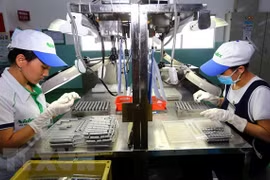
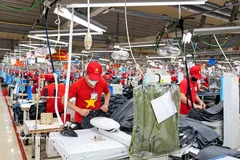
 Enterprises have prepared production and business plans to ease the impact of the pandemic (Photo: VietnamPlus)
Struggling to maintain production amidst the pandemic
According to the Ministry of Industry and Trade (MoIT), Vietnam’s export turnover reached 18.6 billion USD in February, up 1.5 percent from the previous month. In the first two months of this year, the value was 36.92 billion USD, a year-on-year rise of 2.4 percent.
[Vietnam promotes intensive processing towards high-value farm produce]
Notably, the export revenue of the foreign-invested sector, including crude oil, stood at only 25.51 billion USD, up 0.9 percent against the corresponding time last year. Excluding crude oil, the growth rate was merely 0.5 percent.
The earnings of the processing industry that made up more than 85 percent of the country’s total export value increased only 4.1 percent year-on-year.
Truong Thanh Hoai, Director of the MoIT’s Industry Department, said the domestic processing and manufacturing sector has greatly relied on materials imported from China and other countries affected by COVID-19 like the RoK and Japan.
Many enterprises operating in electricity and electronics, one of the sectors hardest hit by the epidemic, just have enough components and spare parts for production by the middle or the end of March 2020.
In 2019 alone, Vietnam spent 40 billion USD importing these materials, including 16.8 billion USD worth of products imported from the RoK, 13.8 billion USD from China and 1.7 billion USD from Japan.
“China and some other countries like the RoK and Japan are Vietnam’s major importers. Therefore, the pandemic will impact export value and consumption markets of many industrial production sectors of Vietnam,” Hoai said.
Meanwhile, agro-forestry-fishery exports have been disrupted at certain border gates.
The ministry said the sector’s export value in the first two months contracted by 14 percent year-on-year. Only rice and cassava experienced increases of 20.5 percent and 55.8 percent in export revenues, respectively.
In the group of agricultural products and seafood, the sharpest falls were seen in vegetables (17.4 percent), aquatic products (17.7 percent), cashew nuts (19.3 percent), coffee (9.8 percent), tea (19.4 percent), pepper (18.8 percent) and rubber (24.2 percent).
New opportunities from FTAs
Apart from exports, Vietnam’s imports from some Asian countries have also decreased, with import value from China dropping 0.4 percent over the same period last year.
The leather and handbag sector whose 60 percent of materials are imported, mostly from China and the RoK, is forecast to be burdened with more difficulties if the pandemic persists and continues to develop complicatedly.
Minister Tran Tuan Anh has asked the Department of Industry to assess difficulties faced by businesses, and work with relevant ministries and agencies to adopt measures to support them and stabilise the domestic market.
It is time for the local industry to review its position in connectivity chains in order to restructure its operations and enhance its capacity in supporting industries, thus preparing long-term supplies and easing reliance on certain markets, he said, stressing the need to utilise opportunities in the EU market after the EVFTA takes effect, along with benefits offered by the Comprehensive and Progressive Agreement for Trans-Pacific Partnership (CPTPP).
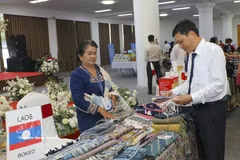
 FTAs are expected to open up various opportunities for Vietnamese exporters and importers (Photo: VietnamPlus)
The European Parliament (EP) on February 12 ratified EVFTA and the EU-Vietnam Investment Protection Agreement (EVIPA).
The EVFTA is expected to create a major push for Vietnam’s exports, helping diversify the country’s exports and markets. Under the agreement, Vietnam will cut 65 percent of import tax on EU commodities right after the deal takes effect, while the rest will be erased in a 10-year period. Meanwhile, the EU will cut more than 70 percent of tariff on Vietnam’s commodities right after the deal takes effect, while the rest will be abolished in the seven subsequent years.
The two documents were signed in Hanoi on June 30 last year. They include intensive, extensive and comprehensive commitments covering the fields of economy, trade, investment and sustainable development issues.
Pham Tat Thang, Director of the MoIT’s Industry and Trade Information Centre, said the CPTPP and EVFTA are regarded as the most important deals as they will open up opportunities for Vietnamese goods to penetrate high-end markets.
Vietnam’s major products like garments-textiles, footwear, phones and seafood can be effectively exported to the regions, he added.
Thang, however, suggested domestic firms pay more attention to strict regulations in technology and food safety imposed by these markets./.