Property market attractive to both eastern, western investors

While Asian investors are dominating real estate investment and mergers and acquisitions in Vietnam, many European and American firms have chosen to invest in listed property companies.
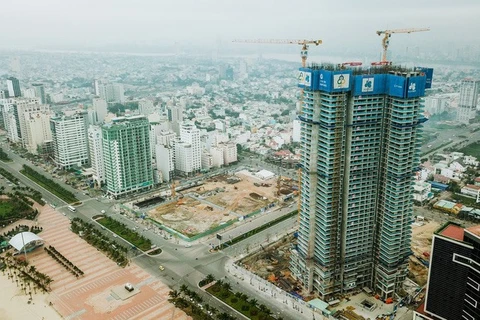
Property market attractive to both eastern, western investors ảnh 1Vietnam's property market is attractive to both eastern and western investors (Photo: VNA)

Hanoi (VNA) – While Asian investors are dominating real estate investmentand mergers and acquisitions (M&As) in Vietnam, many European and Americanfirms have chosen to invest in listed property companies, according to aspecialist of Savills Vietnam.

Over the last three years, the Vietnamese markethas recorded strong investment from Singapore, Hong Kong (China), Japan and theRepublic of Korea.

Su Ngoc Khuong, Investment Director of SavillsVietnam, noted more investments and M&As conducted by Asian investorscompared to European and American companies. 

Foreign investors’ investment targets andmethods are affected by many factors, including cultural differences andgeographical distance. Meanwhile, property investment is greatly influenced bylocal regulations, especially legal affairs, which may be barriers to Europeanand American investors.

However, that doesn’t mean European and Americaninvestors ignore the Vietnamese market, he noted, elaborating that many of themhave engaged in the securities sector. Few have directly invested in propertyprojects or companies but the majority acted as investors of listed businesses.

[Infographics: Property market sees increase of buyers in 2017]

Notably, they have also focused on providingreal estate-related services. Many companies managing and operating offices,resorts, hotels, serviced apartments and malls or those providing investmentadvice and market research are from Europe and America, Khuong said.

European and American investors are still takingpart in Vietnam’s property market by different means, he said, adding that“they cannot rule such an attractive and potential market like Vietnam out oftheir investment map.”

Some foreign investors said a real estate marketwith a large young population is a very attractive opportunity. Big cities likeHanoi, Ho Chi Minh City, Da Nang and Nha Trang are major destinations which areattracting more young people who tend to live separately or come to start theircareers, leading to a surge in housing demand.-VNA
VNA
See more

Toy production at a Hong Kong-invested factory (Photo: VNA)

Vietnam targets deeper market penetration in Hong Kong in 2026

Vietnam-Hong Kong trade hit 62.3 billion USD in the first 11 months of 2025, soaring 73.1% annually. Vietnamese exports to Hong Kong amounted to 36.8 billion USD, a 90.6% hike, ranking fourth among Hong Kong’s import sources, while imports from Hong Kong stood at 25.5 billion USD, up 52.9% and ranking third.

Vietnam’s start-up market enters restructuring phase

Vietnam’s start-up market enters restructuring phase

In 2026, venture capital inflows into Vietnam’s start-up ecosystem are expected to recover gradually, though in a more selective manner. VinVentures forecasts that capital will focus on start-ups that have survived the rigorous screening of 2024–2025, possess clear business models, strong commercialisation capacity, and the ability to generate real cash flows.

Workers process tra (pangasius) for export (Photo: VNA)

Vietnam–Singapore trade continues to thrive

For the year as a whole, Vietnam retained its position as Singapore’s 10th largest trading partner. Bilateral trade reached a record high of nearly 40 billion SGD, up 26.2% from the previous peak of 31.67 billion SGD recorded in 2024.

Eric Van Vaerenbergh, an energy expert and lecturer at the Brussels Engineering School (ECAM) (Photo: VNA)

Belgian expert optimistic about Vietnam’s economic outlook

Vietnam should move from a growth model based mainly on expanding capital and labour to one driven by productivity improvements. He said that this requires enhancing the quality of the workforce, particularly engineers, technicians, and managers in industrial sectors.

Workers at the VSIP Hai Phong industrial and urban complex, which specialises in producing electronic components for office equipment. (Photo: VNA)

Roadmap aims to improve business climate and boost competitiveness

By the end of 2026, Vietnam aims to rank among the world’s top 50 performers in the United Nations Sustainable Development Goals, advance at least three places in the International Property Rights Index, and climb at least one position in the Global Innovation Index.

Vietnam is strengthening its position in the technology value chain, becoming a major manufacturing hub for complete consumer electronics products. (Photo: VNA)

ESG standards offer opportunities to reposition Vietnam’s electronics firms

The 2025-2027 period will be a critical turning point, as exporters to the European market will be required to strictly comply with ESG standards, including net-zero emissions roadmaps, labour standards, corporate governance and transparency requirements. As a key export sector, the electronics industry is being directly and strongly affected by this shift.