Railway sector asked to improve competitiveness

Prime Minister Nguyen Xuan Phuc’s working group has called for the railway sector to raise its competitiveness in comparison with other modes of transport.
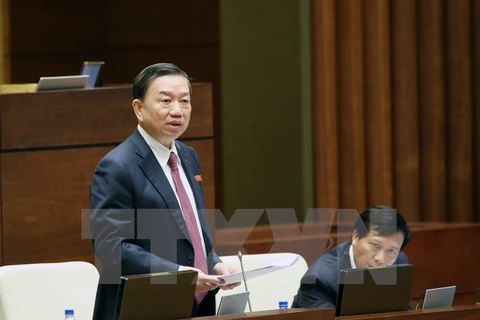
Railway sector asked to improve competitiveness ảnh 1In the first six months of the year, the railway corporation achieved revenue of 3.5 trillion VND (155 million USD), an increase of 3.8 percent compared to last year’s same period.(Source: VNA)
Hanoi (VNA) - Prime Minister Nguyen Xuan Phuc’s working group hascalled for the railway sector to raise its competitiveness in comparison withother modes of transport.

Working with leaders of the Vietnam Railway Corporation in Hanoi on inspectionsamong other matters, Mai Tien Dung, Minister - Chairman of the Government Office, saidsuch inspections were carried out to check the implementation of measures toensure hitting this year’s GDP growth target.

The working day with the railway sector aimed to examine the implementation ofmeasures to promote business, to increase transport revenue and passenger andcargo transport. It also hoped to detect difficulties and obstacles in order tofind measures to tackle these difficulties.

In the first six months of the year, the railway corporation achieved revenueof 3.5 trillion VND (155 million USD), an increase of 3.8 percent compared tolast year’s same period, and only 45 percent of the year’s goal.

The working group, on behalf of the Prime Minister, said the corporation neededto explain several matters.

The first issue is a 12 percent drop of the sector’s revenue in 2016, which was6.5 trillion VND (289 million USD), compared to 2015.

“When compared to other transport types, railway transport is less attractive –in terms of safety and quality. The facility is outdated. For goods transport,storage and loading ports, connections with air and sea transport are notconvenient,” said Dung, who is also head of the working group.

“The Prime Minister said that leaders of the corporation should think about howto improve all of these elements to raise competitiveness,” Dung said.

Another issue was safety and skills of the sector’s staff. The working groupcited recent incidents including accidents at Yen Vien station and an incidentwhen two trains travelled on the same track at Suoi Van station in Binh Thuan province.

Investment in the railway sector was also important. “It’s good that the sectorhas already called on investment in storage, loading means and connectingrailways with industrial zones, airports and sea ports,” Dung said.

In response to Dung’s comments, Vu Ta Tung, Director of the Vietnam RailwayCorporation, admitted that the railway sector faces fierce competition on pricewith air, road and waterway transport. The price depended much on the railwaysector’s infrastructure, he said.

"Many officials of the railway sector still have backward thinking,"Tung said. However, to change the backward thinking and develop the sector, itwould be a long road, not a short one, he said.

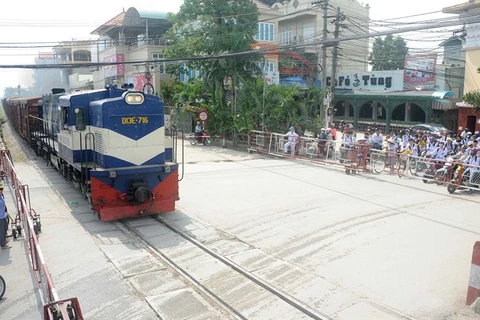
The Prime Minister asked the sector to pay attention to managing and improvingrailway crossings.

The final matter was the issue of equitisation. The working group said thecorporation had proceeded with this in good time but capital withdrawal has notmet requirements.-VNA

VNA

See more

People shop for Tet at a supermarket. (Photo: VNA)

Vietnamese goods dominate Tet market in Mekong Delta

In key retail hubs such as Can Tho, Long Xuyen and My Tho, high-quality Vietnamese goods account for 85–90% of Tet market share. Surveys at major supermarket chains and traditional markets show that consumers this year are prioritising locally-processed foods, confectionery and beverages.

Prime Minister Pham Minh Chinh strikes the gong to inaugurate the Vietnam International Financial Centre in Ho Chi Minh City. (Photo: VNA)

Int’l Financial Centre – A catalyst for Vietnam’s economic breakthrough: Deputy PM

Standing Deputy Prime Minister Nguyen Hoa Binh, who chairs the IFC’s Governing Council, said that the establishment of the centre in Ho Chi Minh City and Da Nang represented the initial realisation of a major task set out in the Resolution of the 13th National Party Congress. While characterising the launch as an early milestone rather than a final achievement, he underscored that it reflected meticulous, methodical and determined preparations at multiple levels of government.

Kobayashi Yosuke, Chief Representative of JICA Vietnam. (Photo: JICA Vietnam)

JICA hails milestones in Vietnam partnership amid green, digital push

In line with Vietnam’s development priorities and its goal of becoming a high-income country by 2045, JICA will continue to work with a wide range of partners in both Vietnam and Japan to mobilise technical and financial resources for more sustainable and inclusive cooperation

Vietnam International Trade Fair for Apparel, Textiles and Textile Technologies (VIATT 2026) is expected to expand its scale by 20% compared to last year's edition. (Photo: bnews.vn)

Int’l trade fair for apparel, textiles, textile technologies to open in Ho Chi Minh City

According to Vietrade, VIATT 2026 aims to promote the development of Vietnam’s textile and garment industry by enhancing production technologies, strengthening sustainability, and expanding technical textile segments. The event is expected to create opportunities for international businesses to tap into the growth potential of Vietnam and ASEAN, while enabling domestic enterprises to connect more effectively with global buyers.

Participants at a conference on digital assets in Hanoi on December 10. (Photo: VNA)

Finance ministry seeks public feedback on minimal tax on digital assets

Under the draft, the transfer and trading of crypto assets would not be subject to value-added tax. Individual investors, regardless of residency status, would be required to pay personal income tax at a rate of 0.1% on the gross value of each transfer. This approach mirrors the current tax method applied to securities transactions.

Steel products of Hoa Phat Group. (Photo: VNA)

Vietnam aims to meet 80–85% of domestic steel demand by 2030

Vietnam aims to meet 80–85% of domestic steel demand by 2030. Crude steel production is targeted at 25–26 million tonnes per year, with annual growth of 7–8%, while finished steel output is expected to reach 32–33 million tonnes per year, growing by 5.5–6.5% annually. Per capita steel consumption is projected at 270–280 kg per year.

One of the products granted Halal certification in 2026. (Photo: moit.gov.vn)

Spring Fair 2026 boosts momentum for Vietnam’s Halal sector

The fair’s greatest value for Halal products lies less in immediate revenue than in building trust and standardising business practices. In a market where certification determines entry, it highlights that expansion must begin with fundamentals, standards, raw materials, production processes and readiness.

Prime Minister Pham Minh Chinh speaks at the fifth meeting of the Steering Committee for Nuclear Power Plant Construction. (Photo: VNA)

PM calls for more vigorous implementation of nuclear power projects

Describing nuclear power plants as nationally significant, strategic projects with a century-long vision, PM Chinh called for urgent and responsible implementation of tasks within assigned authority, with any outstanding issues promptly reported to higher authorities.