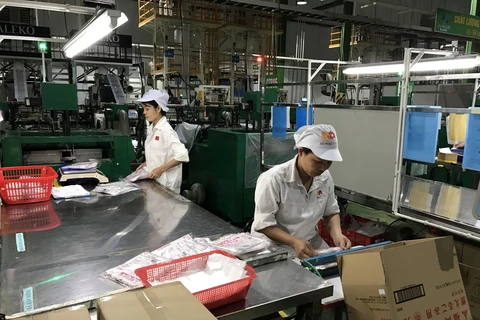
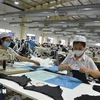
Workers process pineapple for export at the factory of the An Giang Agriculture and Food Import - Export JSC in An Giang province (Photo: VNA)
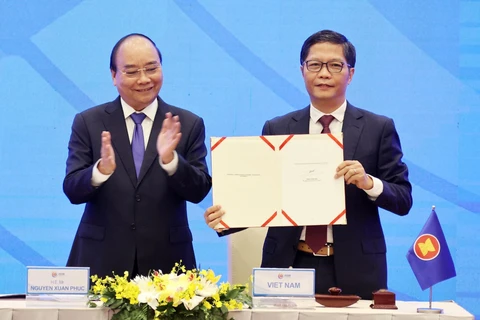
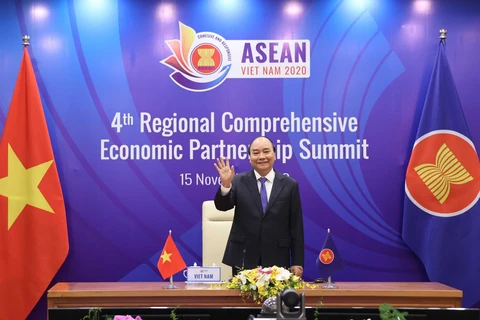
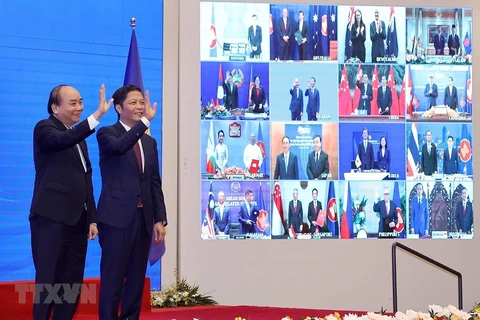
 HCM City (VNA) - The recently-signed Regional Comprehensive Economic Partnership (RCEP) agreement will create opportunities for Vietnam’s agricultural products to extend their reach in the region and the world, experts have said.
Le Duy Minh, President of the Vietnam Farms and Agricultural Enterprises Association, told a meeting in Ho Chi Minh City on January 15 that the agriculture sector has been integrating intensively and extensively into the world but also faces considerable difficulties and challenges, including the impact of the COVID-19 pandemic, climate change, trade disputes between major economies, and an increase in technical barriers in many countries.
Vietnam signed a number of important economic deals in 2020, heralding a new era of economic integration with opportunities to expand export markets and attract more domestic and foreign investment.
Among the deals, the RCEP, which gathers together 10 ASEAN countries and five partners (the Republic of Korea, China, Japan, Australia, and New Zealand), is the world’s largest free trade agreement (FTA), as it covers a market of about 2.2 billion consumers and accounts for some 30 percent of the global GDP.
Minh said the commitments in the RCEP to open up goods, services, and investment markets, simplify customs procedures, set up trade-facilitating rules of origin, and minimise trade barriers are expected to boost the development of regional and global value chains and foster member economies, including Vietnam.
Dang Phuc Nguyen, Secretary General of the Vietnam Fruit and Vegetables Association, said the country could be one of the greatest beneficiaries from the RCEP, as most other members have strong demand for goods where Vietnam holds strengths, such as agricultural and aquatic products.
Thanks to the harmonisation of rules of origin between the RCEP members, Vietnam’s exports can better meet requirements and benefit from preferential tariffs to increase shipments to member countries like Japan, the Republic of Korea, Australia, and New Zealand, he said.
These countries also have relatively similar import standards and consumer tastes, not to mention lower logistics costs and more conducive transportation thanks to their relatively close geographical proximity to each other, Nguyen said.
According to the General Director of the Vina T&T company, Nguyen Dinh Tung, a short-term benefit created by the RCEP is favourable conditions being created for talks on opening export markets for more agricultural products. Commitments and trade facilitation measures under the deal will also promote the growth of new supply chains, thus boosting international-standard agricultural production.
Apart from the opportunities, participants also pointed to a host of challenges, such as satisfying rules of origin and quality standards and the competition from foreign rivals in both the domestic and foreign markets.
Tung suggested businesses view FTAs, including the RCEP, as a chance to improve product quality, perfect supply chain management, and promote competitiveness to further meet the market's demand./.