International press agencies assessed that the completion of the Congress’s agenda, the consolidation of the leadership apparatus and the adoption of the Resolution of the 14th National Congress conveyed a strong message of political stability, internal unity and consistent development orientation of the CPV in the new term
The sixth National Party Congress in December 1986 mapped out the Doi Moi (Renewal) policy and initiated the process of Party-led reforms in Vietnam. This marked a crucial turning point in socialist construction, unleashing national strength and potential to propel the country forward. During the 1986–1995 period, the Party led the reform, abolished the subsidy mechanism, and transitioned to a socialist-oriented market economy, overcoming socio-economic crises and laying a firm foundation for international integration.
A historically significant highlight is Vietnam’s adoption of a new growth model driven by science and technology, innovation and digital transformation. This marks a decisive shift from an input-based development approach to a knowledge- and productivity-driven economy.
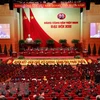
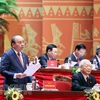
The National Convention Center was filled with a vibrant and energetic atmosphere as the 14th National Congress of the Communist Party of Vietnam officially opened in Hanoi on January 20.
The 14th plenum of the 13th Party Central Committee from November 5 – 6 completed its agenda with high consensus and good outcomes, serving as an important preparation for the 14th Party Congress.
The Vietnam Bank for Social Policies has become a lifeline for millions of poor households, offering preferential loans to fund small businesses and farming, while other policies have provided free health insurance, tuition exemptions and housing support.
Nearly 40 years into “Doi moi” (Renewal), under the leadership of the Party and with the concerted efforts of the entire nation, Vietnam has achieved historic and significant accomplishments across politics, socio-economics, and external relations.
Set against the backdrop of the Year of the Snake, associated with the country’s transformation and renewal, the exhibition offers a fresh vision of a dynamic and evolving Vietnam. Visitors have a chance to discover a creatively reimagined Vietnam that transcends stereotypical images of war, traditional costumes, and scenic landscapes.
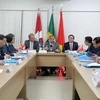
A delegation of the Communist Party of Vietnam (CPV), led by Nguyen Trong Nghia, Politburo member and Secretary of the Party Central Committee, paid a working visit to Brazil from August 26 to 27, aiming at fostering and expanding relations with political parties in the South American country as well as promoting the comprehensive partnership between the two countries.
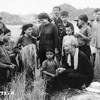
President Ho Chi Minh went down in history as a distinguished politician of the international communist movement and a great leader of the Vietnamese people, and his thoughts are still relevant today, opined Argentinian journalist Gaston Fiorda.
After nearly 40 years of "Doi moi" (Renewal), the State-run economic sector has developed strongly, contributing significantly to building and safeguarding the Fatherland, maintaining macro-economic stability and boosting socio-economic development, an official from the Vietnam Institute of Economics (VIE) told a workshop in Hanoi on July 10.
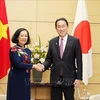
Vietnam always views Japan as an important and long-term strategic partner, and stands ready to develop the bilateral ties to a stronger and more comprehensive and practical fashion on the basis of its foreign policy of independence, self-reliance, multilateralism and diversification, a senior Vietnamese Party official has said.
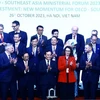
The Organisation for Economic Cooperation and Development (OECD) – Southeast Asia Ministerial Forum 2023 was organised under the theme of “Sustainable and Quality Investment: New Momentum for OECD- Southeast Asia Parntership” in Hanoi on October 26.
Over the past 40 years of national renewal, Hanoi's economy has transformed from a subsidised economy to a socialist-oriented market economy, with mechanisms and policies for market development being steadily improved, thus enhancing the capital city’s position in the international arena.
Vietnam is one of the countries that are successful in hunger eradication and poverty alleviation, achieving many economic achievements thanks to the application of private property rights and free-market reforms, according to an article posted on US’s news website washingtonexaminer.com on October 11.
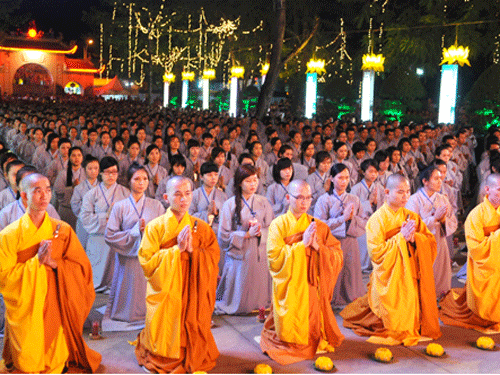
Throughout the “Doi moi” (Renewal) process, the belief and religious life in Vietnam has changed towards greater freedom and progress, with belief and religious activities taking place vibrantly, and the right to belief and religious freedom better protected, which has been recognised by the international community.
The success of the National Party Congresses in Vietnam and Laos has contributed to regional stability and development, the Lao News Agency’s Pathet Lao newspaper affirmed in a front-page article on February 2.
A discussion of draft documents on Party building and national development took place under the chair of Prime Minister Nguyen Xuan Phuc on January 27 as part of the ongoing 13th National Party Congress.
Vietnam has made tremendous achievements since the Doi Moi (renewal) policy was launched at the 6th National Congress of the Communist Party of Vietnam (CPV) in 1896, agreed foreign friends who are interested in Vietnam and the country’s development journey.