Rubber industry needs better grip on competitiveness in int’l market

As the COVID-19 pandemic recedes, Vietnam's rubber industry faces challenges from both the world market and internal factors that hinder the industry’s competitiveness. Finicky global markets are extremely competitive and well down the road of development, meaning Vietnam needs to catch up to keep pace.
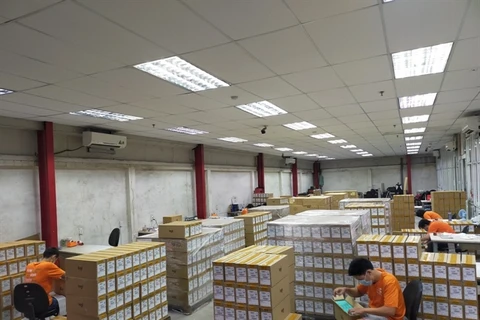
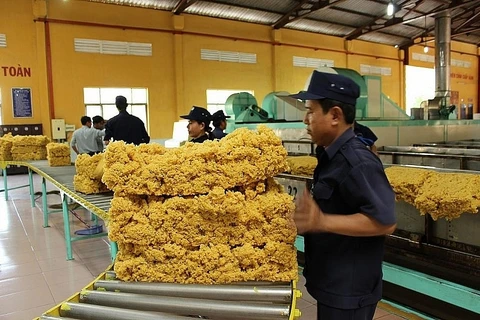
Rubber industry needs better grip on competitiveness in int’l market ảnh 1Rubber industry needs better grip on competitiveness in int’l market (Photo: VNA)

Ho Chi Minh City (VNA) – As the COVID-19 pandemic recedes, Vietnam's rubber industry faces challenges from both the world market and internal factors that hinder the industry’s competitiveness. Finicky global markets are extremely competitive and well down the road of development, meaning Vietnam needs to catch up to keep pace.

Tran Ngoc Thuan, Chairman of the Vietnam Rubber Association (VRA), said the competition between natural rubber producing and exporting countries will become more intense in terms of price, product quality, commercial reputation and the ability to meet increasingly stringent sustainability standards on demanding markets.

On the other hand, the structure and types of natural rubber in Vietnam still heavily rely on the Chinese market and only partially meet the needs of other, more finicky markets. This makes it difficult for market penetration in major markets such as the US, Japan, among others.

In addition, a disjointed national management system and policy mechanism such as tax declaration, value added tax, and high income taxation has caused difficulties for industry and business growth.

Meanwhile, according free trade agreements, natural rubber imported into Vietnam currently enjoys a tax rate of 0%, which will encourage businesses to prioritise choosing import markets from Thailand, Malaysia, and Indonesia. This will create competitive pressure with domestic rubber businesses.

The rubber product processing industry still faces difficulties in competing with imported products. There is still a lack of technical barriers in trade to prevent poor quality goods from being imported from other countries, causing losses to consumers and unfair competition with domestic goods.

Despite many difficulties and challenges, the VRA leaders said that the industry will also have many advantages in the coming time.

The association forecast that the world's natural rubber demand will be in a continuous uptrend. The gap between supply and demand will be a great opportunity for Vietnam to increase natural rubber production, export turnover, and create jobs for rural areas and related industries.

Tran Thanh Nam, Deputy Minister of Agriculture and Rural Development, said that in general, there are still many difficulties and challenges, the association needs to continue promoting its representative role while considering supporting members and businesses as an important factor contributing to promoting the sustainable development of the industry in the coming time.

According to the official, sustainable development has become stronger and Vietnam's rubber industry must focus on improving competitiveness in the world market on the basis of quality assurance in accordance with international standards.

Vietnam's rubber industry requires uniform quality management nationwide while increasing the application of advanced techniques, restructuring products according to market requirements, and expanding investment in processing. The formation of auxiliary industries is important, and at the same time, the sector must continue to promote the reorganisation of the industry according to the production value chain in order to improve competitiveness in the international market./.
VNA

See more

People shop for Tet at a supermarket. (Photo: VNA)

Vietnamese goods dominate Tet market in Mekong Delta

In key retail hubs such as Can Tho, Long Xuyen and My Tho, high-quality Vietnamese goods account for 85–90% of Tet market share. Surveys at major supermarket chains and traditional markets show that consumers this year are prioritising locally-processed foods, confectionery and beverages.

Prime Minister Pham Minh Chinh strikes the gong to inaugurate the Vietnam International Financial Centre in Ho Chi Minh City. (Photo: VNA)

Int’l Financial Centre – A catalyst for Vietnam’s economic breakthrough: Deputy PM

Standing Deputy Prime Minister Nguyen Hoa Binh, who chairs the IFC’s Governing Council, said that the establishment of the centre in Ho Chi Minh City and Da Nang represented the initial realisation of a major task set out in the Resolution of the 13th National Party Congress. While characterising the launch as an early milestone rather than a final achievement, he underscored that it reflected meticulous, methodical and determined preparations at multiple levels of government.

Kobayashi Yosuke, Chief Representative of JICA Vietnam. (Photo: JICA Vietnam)

JICA hails milestones in Vietnam partnership amid green, digital push

In line with Vietnam’s development priorities and its goal of becoming a high-income country by 2045, JICA will continue to work with a wide range of partners in both Vietnam and Japan to mobilise technical and financial resources for more sustainable and inclusive cooperation

Vietnam International Trade Fair for Apparel, Textiles and Textile Technologies (VIATT 2026) is expected to expand its scale by 20% compared to last year's edition. (Photo: bnews.vn)

Int’l trade fair for apparel, textiles, textile technologies to open in Ho Chi Minh City

According to Vietrade, VIATT 2026 aims to promote the development of Vietnam’s textile and garment industry by enhancing production technologies, strengthening sustainability, and expanding technical textile segments. The event is expected to create opportunities for international businesses to tap into the growth potential of Vietnam and ASEAN, while enabling domestic enterprises to connect more effectively with global buyers.

Participants at a conference on digital assets in Hanoi on December 10. (Photo: VNA)

Finance ministry seeks public feedback on minimal tax on digital assets

Under the draft, the transfer and trading of crypto assets would not be subject to value-added tax. Individual investors, regardless of residency status, would be required to pay personal income tax at a rate of 0.1% on the gross value of each transfer. This approach mirrors the current tax method applied to securities transactions.

Steel products of Hoa Phat Group. (Photo: VNA)

Vietnam aims to meet 80–85% of domestic steel demand by 2030

Vietnam aims to meet 80–85% of domestic steel demand by 2030. Crude steel production is targeted at 25–26 million tonnes per year, with annual growth of 7–8%, while finished steel output is expected to reach 32–33 million tonnes per year, growing by 5.5–6.5% annually. Per capita steel consumption is projected at 270–280 kg per year.

One of the products granted Halal certification in 2026. (Photo: moit.gov.vn)

Spring Fair 2026 boosts momentum for Vietnam’s Halal sector

The fair’s greatest value for Halal products lies less in immediate revenue than in building trust and standardising business practices. In a market where certification determines entry, it highlights that expansion must begin with fundamentals, standards, raw materials, production processes and readiness.

Prime Minister Pham Minh Chinh speaks at the fifth meeting of the Steering Committee for Nuclear Power Plant Construction. (Photo: VNA)

PM calls for more vigorous implementation of nuclear power projects

Describing nuclear power plants as nationally significant, strategic projects with a century-long vision, PM Chinh called for urgent and responsible implementation of tasks within assigned authority, with any outstanding issues promptly reported to higher authorities.

Vehicles transporting import and export goods at Bac Luan II Bridge border gate. (Photo: VNA)

Building smart border gates to enhance competitiveness, drive growth

With plans to build the Mong Cai–Ha Long–Hai Phong railway alongside the smart border gate and economic cooperation zone, Quang Ninh is positioning itself as a new growth pole in northern Vietnam and a key gateway for economic cooperation between Vietnam, ASEAN and China.