Scholar analyses why US should recognise Vietnam as market economy

The newly elevated relationship between Vietnam and the US to the comprehensive strategic partnership not only deepens the two countries’ diplomatic relations but translates as an opportunity for Washington to upgrade Vietnam’s recognition as a market economy, said James Borton - a non-resident senior fellow at the Foreign Policy Institute (FPI) of the Johns Hopkins University’s Paul H. Nitze School of Advanced International Studies (SAIS).

Scholar analyses why US should recognise Vietnam as market economy ảnh 1
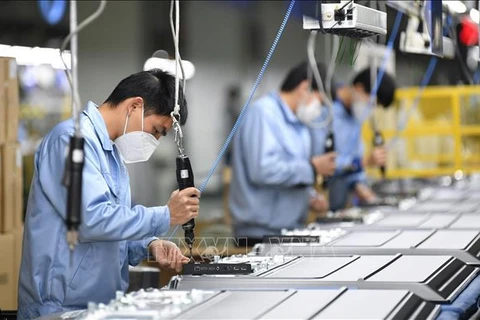
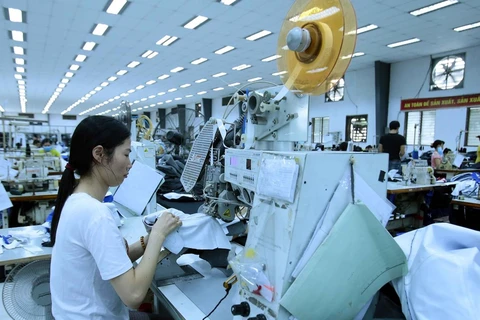
Illustrative photo (Photo: VNA)

Hanoi (VNA) - The newly elevated relationship between Vietnam and the US to the comprehensive strategic partnership not only deepens the two countries’ diplomatic relations but translates as an opportunity for Washington to upgrade Vietnam’s recognition as a market economy, said James Borton - a non-resident senior fellow at the Foreign Policy Institute (FPI) of the Johns Hopkins University’s Paul H. Nitze School of Advanced International Studies (SAIS).

In an article published on geopoliticalmonitor.com on March 11, Borton said the market status recognition will bring many economic benefits to both countries.

He wrote that with the burgeoning trade flows between the two countries and the White House’s push for the establishment of the partnership agreement on the Indo-Pacific Economic Framework for Prosperity (IPEF), market status recognition would help Vietnam expand its trade and investment with the US.

Scholar analyses why US should recognise Vietnam as market economy ảnh 2
A screenshot of the article (Source: VNA)

The bilateral benefits for US companies derived from recognition of Vietnam as a market economy include market access and export opportunities, namely in agriculture, machinery, aircraft, and pharmaceutical products, all of which contribute to the development of a supply chain that suits the US’s interests.

Market-status recognition would also contribute to a reduction in trade barriers, making it easier and cheaper for US businesses to export goods and services to Vietnam, according to Borton.

Furthermore, the US’s recognition of Vietnam as a market economy could further incentivise US companies to diversity their supply chains. Additionally, lower import prices and improved market access could enable US companies to increase their output and production in Vietnam. This offers the potential to generate increased sales revenues and profitability for American companies operating in Vietnam

According to Borton, telecommunications, information technology, power generation, transportation infrastructure construction, environmental project management, and technology will continue to offer promising opportunities for US companies.

Vietnam’s efforts in creating favourable business environment and equality for international investors are also mentioned in the writing. The author cited the World Bank’s “Doing Business 2020” report which placed Vietnam at the commendable rank of 70th out of 190 economies, reflecting its commitment to nurturing favourable conditions for business operations. Furthermore, US News and World Report ranked Vietnam seventh among 78 countries in which to start a business in 2021, up 5 spots from a year earlier.

A total of 72 countries have recognised Vietnam as a market economy including the UK, Canada, Australia, and Japan./.
VNA

See more

Prime Minister Pham Minh Chinh speaks at the meeting between standing Government members and representatives of ministries, agencies and Phu Tho province (Photo: VNA)

PM orders new Lo river bridge to meet emerging development needs

Stressing both immediate and long-term imperatives, Prime Minister Pham Minh Chinh directed that authorities pursue a dual-track approach: repairing the existing bridge to ensure safety while simultaneously investing in a new structure capable of opening up new socio-economic development space and safeguarding national defence and security.

Online event promotes Vietnamese products in Canada (Photo: VNA)

Online programme promotes Vietnamese products in Canada

Vietnam’s exports to Canada have doubled over the past five years to more than 13 billion USD, reflecting strong cooperation potential, especially as the Comprehensive and Progressive Agreement for Trans-Pacific Partnership (CPTPP) continues to take effect.

Vehicles transporting import and export goods at Mong Cai international border gate. (Photo: VNA)

Mong Cai smart border gate to open new era for cross-border trade

The smart border gate will be based on Industry 4.0 technologies, with cross-border data connectivity serving as its core. Beyond modernising a single customs checkpoint, the project aims to create a regional-scale “digital gateway” facilitating more efficient trade flows.

Vietnam’s Trade Counsellor in Italy Duong Phuong Thao. (Photo: VNA)

Spring Fair 2026: Trade fairs boost Vietnam–Italy trade connectivity

Vietnam’s Trade Counsellor in Italy Duong Phuong Thao said the bilateral relations are developing positively, providing a solid foundation for economic and trade ties. The Italian Government, financial institutions and business community regard Vietnam as a key market in Southeast Asia.

The booth of the Vietnam Trade Office at a trade fair in Morocco. (Photo published VNA)

Spring Fair 2026: opportunities for trade between Vietnam and Morocco

Tran Le Dung, Head of the Vietnam Trade Office in Morocco, said Morocco has accumulated extensive experience in hosting large-scale agricultural trade fairs and exhibitions. Flagship events include the annual International Agricultural Exhibition in Morocco (SIAM), alongside specialised shows covering food and beverages, textiles, handicrafts and logistics.

Prime Minister Pham Minh Chinh delivers closing remarks at the Spring Fair 2026. Photo: VNA

Prime Minister attends Spring Fair 2026 closing ceremony

After 12 vibrant and colourful days, the first Glorious Spring Fair 2026 vividly portrayed the vitality of the nation’s economic and consumer activities at the beginning of the new year, leaving a strong impression on the public and business community.

Vu Thi Thuy, Deputy Consul General and Head of the Vietnam Trade Office in Hong Kong Special Administrative Region (China). (Photo: VNA)

Hong Kong experience offers insights for Vietnam–Hong Kong trade cooperation

At this year’s Spring Fair, the Vietnam Trade Office in Hong Kong facilitated the participation of several Hong Kong enterprises in Vietnam to conduct market surveys, seek import sources and showcase their products. Notably, a company under the Hong Kong Productivity Council presented technological solutions for smart homes and smart manufacturing at the event.

People shop for Tet at a supermarket. (Photo: VNA)

Vietnamese goods dominate Tet market in Mekong Delta

In key retail hubs such as Can Tho, Long Xuyen and My Tho, high-quality Vietnamese goods account for 85–90% of Tet market share. Surveys at major supermarket chains and traditional markets show that consumers this year are prioritising locally-processed foods, confectionery and beverages.

Prime Minister Pham Minh Chinh strikes the gong to inaugurate the Vietnam International Financial Centre in Ho Chi Minh City. (Photo: VNA)

Int’l Financial Centre – A catalyst for Vietnam’s economic breakthrough: Deputy PM

Standing Deputy Prime Minister Nguyen Hoa Binh, who chairs the IFC’s Governing Council, said that the establishment of the centre in Ho Chi Minh City and Da Nang represented the initial realisation of a major task set out in the Resolution of the 13th National Party Congress. While characterising the launch as an early milestone rather than a final achievement, he underscored that it reflected meticulous, methodical and determined preparations at multiple levels of government.

Kobayashi Yosuke, Chief Representative of JICA Vietnam. (Photo: JICA Vietnam)

JICA hails milestones in Vietnam partnership amid green, digital push

In line with Vietnam’s development priorities and its goal of becoming a high-income country by 2045, JICA will continue to work with a wide range of partners in both Vietnam and Japan to mobilise technical and financial resources for more sustainable and inclusive cooperation