Science minister presses for business start-up spirit

Minister of Science and Technology Nguyen Quan has called for a strong business start-up spirit this year to turn Vietnam into a start-up haven in the next decade.
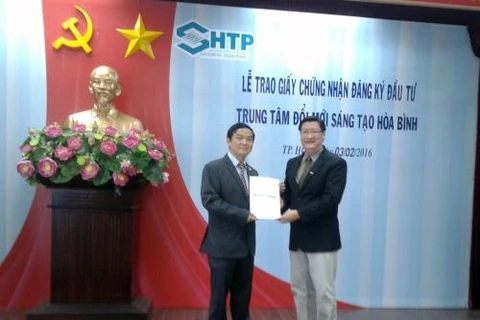
Science minister presses for business start-up spirit ảnh 1Minister of Science and Technology Nguyen Quan (Source: VNA)

Hanoi (VNA) – Minister of Science and Technology Nguyen Quan has called for a strong business start-up spirit this year to turn Vietnam into a start-up haven in the next decade.

In a recent interview with Vietnam News Agency, Quan said Vietnam has gained experience in start-up ecology, and this year the ministry will propose adding contents regarding venture investment and start-up infrastructure into the law, thereby creating a legal corridor for start-ups.

As this is the beginning of the 2016-2020 plan, he said the priority goal this year, is bringing to life decrees and circulars on realising the Law on Science and Technology, including empowering research institutes and science-technology organisations with the right to self-determination.

On development orientations, the sector will work to maintain Vietnam’s rankings in terms of sci-tech development, including being third in ASEAN, ranked second among low-income countries and 52 nd in the world.

If more attention is paid, Vietnam is very likely to achieve higher rankings, Quan commented.

Reviewing 2015’s activities, the Minister gave praise to a comprehensive and expansive legal system that paves the way for a broader technology market, linking technologic advances with manufacturing and trading.

Technology markets, commerce platforms and intermediary units on the national, regional and local scale have contributed to stimulating supply and demand, evidenced by increased transaction volumes, he said.

However, he also pointed out shortcomings faced by the sector, such as limited staff and technical equipment, and the shortage of policies to make breakthroughs in science and technology development.-VNA


VNA

See more

Prime Minister Pham Minh Chinh (C) and delegates cut a ribbon to innaugurate the Vietnam National Space Centre (VNSC) at Hoa Lac Hi-Tech Park in Hanoi on March 13 (Photo: VNA)

PM calls for accelerated space technology development in Vietnam

Vietnam aims by 2030 to achieve a mid-level position in space science and technology development within Southeast Asia, and after 2030 to build national capabilities to independently develop satellite technologies and apply space data to address global challenges and national security needs.

Students control robots at the FPT Schools AI & Robotics Challenge (Photo: VNA)

National AI ethics framework issued to guide safe, responsible rollout

According to the circular taking effect on March 10, the framework imposes specific obligations on entities and individuals involved in AI activities. In particular, the AI use must ensure safety, reliability, while preventing harm to human life, health, dignity, honour, and mental well-being.

Party General Secretary To Lam speaks at the first meeting in 2026 of the Central Steering Committee for the Development of Science, Technology, Innovation and Digital Transformation on March 12. (Photo: VNA)

Party chief urges stronger, result-oriented implementation of Resolution 57

Turning science, technology, innovation and digital transformation into the main drivers of a new growth model requires substantial efforts. In the coming period, the focus must shift from merely carrying out tasks to delivering tangible and measurable outcomes, while concentrating resources on addressing strategic national challenges, said Party General Secretary To Lam.

Vietnamese Ambassador to the US Nguyen Quoc Dung addresses the forum. (Photo: VNA)

High-level forum advances Vietnam–US technological cooperation

The ambassador highlighted that Vietnam and the US are highly complementary. Vietnam offers a dynamic economy, a young and increasingly skilled workforce and rapidly growing innovation ecosystem, while the US offers frontier technologies, world class research institutions, capital and leading global companies.

Participants at the first meeting of the National Steering Committee on Semiconductor Industry Development in 2026 (Photo: VNA)

Vietnam becomes vital player in global semiconductor value chain: Deputy PM

Vietnamese companies have also gradually joined the global value chain by improving their capabilities in chip design, production and related services. Notably, a semiconductor chip manufacturing plant project developed by the Viettel Military Industry and Telecoms Group (Viettel) has already commenced.

Young voters in Ho Chi Minh City scan an QR code to participate in an online quiz about the Election Law. (Photo: VNA)

Digital technology helps enhance transparency, trust in elections

The use of technology in this election is not merely a short-term measure but reflects Ho Chi Minh City’s broader commitment to comprehensive digital transformation and smart urban governance, reinforcing public trust in the democratic process and administration.

Information about candidates for the Khanh Hoa provincial People's Council for the 2026-2031 term is published on digital information channels, making it convenient for voters to explore. (Photo: VNA)

Technology breakthrough ensures voters' access, rights

Digital platforms such as the national population database and the VNeID application have been widely applied to streamline election management and improve accuracy in voter registration, helping citizens exercise their civic rights more conveniently.

Mang But commune area in Quang Ngai province. (Photo: VNA)

3.9-magnitude earthquake recorded in Mang But, Quang Ngai

According to the Vietnam Earthquake Information and Tsunami Warning Centre under the Institute of Earth Sciences, the tremor occurred at 11:35:06 (Hanoi time) with coordinates of 14.864 degrees North latitude and 108.210 degrees East longitude, at a depth of about 8.1 km. The event was assessed as having a level-0 disaster risk.

Illustrative photo: AFP

AI Law takes effect, anchors national governance framework

Taken together, the new AI Law and its implementation roadmap not only complete Vietnam’s legal architecture for AI, but also lay a structured foundation for risk management, innovation and ecosystem development, aiming to ensure coherent and effective enforcement in the years ahead.