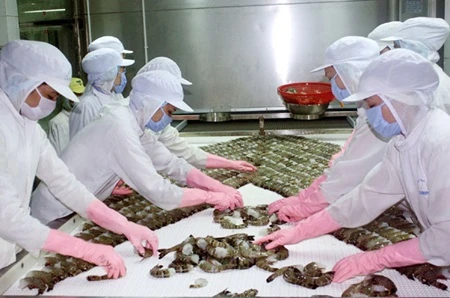
Illustrative image (Source: VNA)
 Hanoi (VNA) - Profitable shrimp farming produced a rapid transformation in the quality of life for people in the Mekong Delta region, but the unplanned expansion in production has also had negative effects on the environment and domestic shrimp trade.
Due to its favorable natural conditions, farmers in coastal communes of southern Ben Tre province started to switch from rice cultivation to shrimp farming 15 years ago. The rapid success and high income that the industry ushered in pushed many local people to invest in this sector.
After a few years, Thanh Phuoc transformed from a poor commune into a wealthy locality, and the number of households with an annual turnover of more than 50,000 USD increased rapidly.
Ngo Van Thu, a farmer in Thanh Phuoc Commune, said the land had not yet been exploited at that time, so the water resources were abundant and the clean environment supported the production.
Due to attractive profits, farmers in other areas of unfavourable natural conditions also did whatever it took to raise shrimp, including in Ben Tre, but the Ba Lai project area is filled with freshwater. Local people spontaneously drilled wells to bring in salt water and made ponds to raise shrimp.
The rapid growth of shrimp farming and poor infrastructure has led to disease outbreaks, shrimp kills and huge losses for farmers in many places.
Thu said he stopped farming for almost three years.
"The more I raised, the more money I lost," he said. Shrimp died of unknown causes."
Ngo Van Hung, Thu's brother, still tried his luck by raising shrimp two seasons last year, but lost over 60 million VND (2,700 USD).
Similarly, the Mekong Delta province of Tra Vinh, where the irrigation system is inefficient, experienced issues with diseased shrimp.
Huynh Phuoc Hai, a farmer in Kien Giang province, said, "It's clear that the farming environment is being seriously polluted. Along one canal, many households scrambled for water, and when shrimps got diseases, they discharged the contaminated waste, making way for pathogens to disperse."
Vo Hong Ngoan, a long-term shrimp farmer in Bac Lieu province, said because the environment was too polluted that so many farm owners utilise antibiotics for preventing diseases. Besides its prophylactic purpose, antibiotics overuse will increase cost of production and the seed source is no longer qualified."
According to statistics of relevant agencies, in the last two years, 32,000 tonnes of aquaculture (mainly shrimp) of Vietnamese companies were returned after they were imported because of antibiotic contamination.
In the first nine months of 2015, 38 foreign countries returned 582 batches of aquaculture products to Vietnamese providers for the same reason, stating that they would tighten the inspection of shrimp shipments from Vietnam.
Ngoan said there are various types of antibiotics displayed for sale, but farmers are mostly unaware of their toxicological effects. On the other hand, processing factories keep buying shrimp without proper inspection, so farmers become negligent in utilising antibiotics.
Tran Quoc Tuan, Director of the Industry and Trade Department of Tra Vinh province, said he supported efforts to tighten the management of antibiotic use in shrimp farming and boost dissemination of information to farmers and processing companies.
He said state management agencies still have to make farmers aware of the risks, and companies must change their way of doing business by co-operating with farmers to build clean material areas. In doing so, the seed, farming methods, feeding and medicines will be strictly controlled in order to produce quality products, he said.-VNA