Singapore, Thailand strengthen measures to cope with COVID-19 outbreak

Singapore will roll out a new stay-home notice for its residents and long-term pass holders returning from mainland China as part of efforts to respond to the acute respiratory disease caused by a novel coronavirus (COVID-19).
Singapore, Thailand strengthen measures to cope with COVID-19 outbreak ảnh 1Travellers arrive at Changi Airport Terminal 3 on February 14, 2020. (Photo: straitstimes.com)

Singapore (VNA) - Singapore will roll out a new stay-home noticefor its residents and long-term pass holders returning from mainland China aspart of efforts to respond to the acute respiratorydisease caused by a novel coronavirus (COVID-19).

They will be required to stay at home at all times for 14 days, according to Ministerof National Development Lawrence Wong.

He said the new scheme will take effect from 23:59 on February 18, and apply toall returnees with recent travel history to China, outside of Hubei province,within the last 14 days.

This will be stricter than the current leave of absence (LOA), which allowthose returning to leave their homes briefly for their meals or to buyhousehold supplies.

The stay-home notice is given in the context that there are a substantialnumber of Singaporean nationals and long-term pass holders still in China, andthey will come bank to Singapore in the coming time.

Wong said the measure is suitable at present as it will help reduce the numberof COVID-19 infected cases.

Enforcement officers will carry out random calls and spot checks, among othermeasures, to ensure that those serving out the stay-home notice comply withrequirements.

There are penalties for those who flout the rules, Wong said, giving foreignersmay get their work or long-term passes revoked while Singaporeans could beprosecuted under the Infectious Diseases Act. Under the Act, first-time offenderscan be fined up to 10,000 SGD (7,100 USD), jailed for up to six month, or both.

Meanwhile, a network of 900 designated clinics is being activated progressivelyfrom February 18 to help Singaporean authorities better detect and manage thevirus outbreak.

There have been a total of 77 confirmed COVID-19 cases in the nation.

While in Thailand, health authorities have extended coronavirus screening tocover visitors from Japan and Singapore while denying entry to passengers andcrew of the MS Westerdam cruise ship which is now berthed in Cambodia.

According to Permanent Secretary of the Public Health Ministry SukhumKanchanapimai, the screening method will be the same as that used on passengersfrom Wuhan. Earlier, intensive screening was already in place for arrivals frommainland China, Hong Kong and Taiwan.

On February 17, Minister of Public Health Anutin Charnvirakul announced the banon passengers and crew from the ship from entering Thailand. The decision cameafter an 83-year-old US female passenger tested positive for COVID-19 onarrival in Malaysia.
He had ordered all Thai airlines not to issue boarding passes toanyone who had been on MS Westerdam for the next 14 days.

The ministry also advised Thai citizens to postpone their trips to Singaporeand Japan as the number of COVID-19 cases is increasing in the two countries.

Thailand’s COVID-19 cases have risen to 35 so far, while no deaths have beenreported./.
VNA
See more

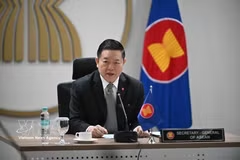
ASEAN Secretary-General Kao Kim Hourn (Photo: VNA)

Growing together: 11 nations, one ASEAN home

The new emblem signals an ASEAN that is growing more inclusive while holding to its founding principles of building a peaceful, stable, dynamic region based on equality and cooperation. Its colours come from member states’ national emblems, reflecting diversity inside a single community.

An overview of the dialogue between ASEAN leaders and the ASEAN Business Advisory Council (ASEAN-BAC) in Manila on November 15 (Photo: VNA)

Vietnam puts forward priorities to advance ASEAN cooperation

Appreciating ASEAN-BAC’s report and recommendations, Deputy Minister of Foreign Affairs Dang Hoang Giang, head of Vietnam’s ASEAN Senior Officials’ Meeting (SOM) delegation, called for simplifying procedures, reducing costs, accelerating digitalisation, upgrading the ASEAN Single Window (ASW) and effectively implementing the ASEAN Digital Economy Framework Agreement (DEFA) to make the regional market more accessible.

ASEAN signs Digital Economy Framework Agreement

ASEAN signs Digital Economy Framework Agreement

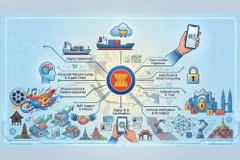
The Digital Economy Framework Agreement (DEFA), the bloc’s first standalone and legally binding digital economy agreement, establishes common rules covering digital trade, cross-border data flows, electronic payments, cyber security and artificial intelligence (AI).

Minister Counsellor Nguyen Hai Luu, Deputy Permanent Representative of Vietnam to the UN, speaks at the discussion on November 12, 2026. (Photo: VNA)

Vietnam supports peace, reconstruction efforts in Gaza: diplomat

Minister Counsellor Nguyen Hai Luu, Deputy Permanent Representative of Vietnam to the UN, expressed deep concern over the dire humanitarian situation in Gaza, particularly as recent heavy rains and flooding have worsened living conditions for residents.

Thailand diversifies oil sources to ensure energy security

Thailand diversifies oil sources to ensure energy security

Although the diversification of oil import sources has helped reduce the risk of domestic oil shortage, it has not immediately reduced energy costs because import prices depend on market mechanisms, transportation costs, foreign exchange rates and the terms of oil contracts.

ST Telemedia Global Data Centres (Thailand), an affiliate of Singapore Telecom, is developing three data cehtres in Thailand including this facility on Rama IX Road in Bangkok. (Photo: bangkokpost)

Thailand tightens regulations on data centres

The new rules focus on controlling investment scale, electricity and water consumption, environmental impacts, and preventing investors from reserving resource quotas beyond their actual needs.

A road is under construction in Dong Nai city, Vietnam. (Photo: VNA)

ADB: Southeast Asia needs 7.1 trillion USD in infrastructure investment by 2040

ADB estimates that the region will need an average of 476 billion USD in infrastructure investment annually during 2026–2040, equivalent to 8.7% of GDP. However, at current investment levels, government budget resources would cover only around 45% of this demand, leaving an annual financing gap of 264 billion USD.

Kyodo News publishes an article titled “Sculptures by Japanese, Vietnamese artists on display in Yokohama,” (Screenshot photo)

Japanese media widely cover top Vietnamese leader ’s visit

Japanese media have continued extensive coverage of General Secretary of the Communist Party of Vietnam (CPV) Central Committee and President To Lam’s activities in Japan, highlighting his meetings with representatives of leading financial institutions at the Tokyo Stock Exchange, witnessing of cooperation agreement signing and participation in cultural exchanges.

Thailand pushes for establishment of ASEAN emergency public health centre

Thailand pushes for establishment of ASEAN emergency public health centre

The draft agreement stipulates that ACPHEED will comprise three specialised centres based in three ASEAN member states. Vietnam will oversee the centre for prevention and preparedness; Indonesia will host the centre for detection and risk assessment; and Thailand will be responsible for the centre for response and risk communication.