Singapore to lift restriction on food imports from Japan’s Fukushima

Singaporean Prime Minister Lee Hsien Loong said Singapore will remove restrictions on food imports from Japan’s Fukushima prefecture. These restrictions were imposed after the nuclear accident in 2011.​
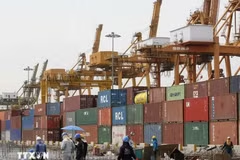
Singapore to lift restriction on food imports from Japan’s Fukushima ảnh 1Some economies still restrict food imports from Japan. (Photo: Reuters)

Hanoi, (VNA) - Singaporean Prime Minister Lee Hsien Loong said Singapore willremove restrictions on food imports from Japan’s Fukushima prefecture. Theserestrictions were imposed after the nuclear accident in 2011.

Lee madethe announcement during a phone talk on May 25 with his Japanese counterpartSuga Yoshihide.

The twosides pledged to cooperate in the coming time for the fair distribution of COVID-19vaccine for developing countries.

Singaporeis one of 54 countries and territories that have applied restrictions onfoodstuff and aquaculture products from Fukushima after the incident at the FukushimaDaiichi nuclear power plant. Many countries and territories later eased the restrictionand there are only 15 countries and territories remaining in the list now.

In January2020, Singapore removed the ban on foodstuff imports from some cities in Fukushimaon the condition that shipments must have certificatesof place of origin and checks for radioactive cesium.

PM Suga and his counterpart Lee Hsien Loong also agreed to work togetherto realize a free and open Indo-Pacific region, including by stepping upeconomic and defence cooperation./.

VNA

See more

Indonesia designates 31 mln ha of waters as conservation areas

Indonesia designates 31 mln ha of waters as conservation areas

Head of the Convention and Marine Resource Balance working team at the ministry’s Directorate of Ecosystem Conservation Ahmad Sofiullah said this week that it is a strategic effort to ensure the sustainability of Indonesia’s marine ecosystems.

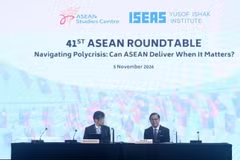
Thai Deputy Prime Minister and Minister of Foreign Affairs Sihasak Phuangketkeow (R) takes part in the Q&A session at the 41st ASEAN Roundtable. (Photo: VNA)

Thailand calls on ASEAN to proactively address polycrisis

Thai Deputy Prime Minister and Minister of Foreign Affairs Sihasak Phuangketkeow noted that no single member state could tackle challenges ranging from major-power competition and economic fragmentation to climate change and energy and food security on its own. Regional cooperation is therefore a strategic imperative, enabling ASEAN not only to overcome crises but also to sustain its development momentum.

Palm oil and palm oil-based products are among Indonesia’s promising export commodities. (Photo: VNA)

Indonesia to launch commodity export monitoring platform next year

DSI will draw on data from customs authorities, trade activities and the financial system, alongside contracts and documents uploaded by exporting companies. The platform will monitor the volume, quality, prices and destination markets of various commodities, as well as transactions between related parties.

Philippines increases rice imports from Cambodia

Philippines increases rice imports from Cambodia

Cambodia has contracted to supply a further 87,344 tonnes to the Philippines between September and December. If all orders are fulfilled, its rice exports to the market could reach around 209,000 tonnes in 2026.

Students get free meals under the national school feeding programme at Hun Sen Svay Cek Primary School (Photo: khmertimeskh)

Cambodia expands school meal programme

Cambodian Prime Minister Hun Manet stressed that his Government would proactively allocate budget and strengthen management capacity, with the aim of expanding the school meal programme to more than 7,000 primary schools nationwide. The move is expected to improve students' nutrition and learning conditions.

Cambodia, EU strengthen investment cooperation

Cambodia, EU strengthen investment cooperation

In his opening remarks, Deputy Prime Minister and First Vice President of the Council for the Development of Cambodia (CDC) Sun Chanthol highlighted the Cambodian Government's efforts to improve the investment climate and facilitate trade, stressing the importance of close public-private cooperation in promoting Cambodia as an attractive investment destination.