Minister for Trade and Industry of Singapore Chan Chun Sing (Photo: VNA)
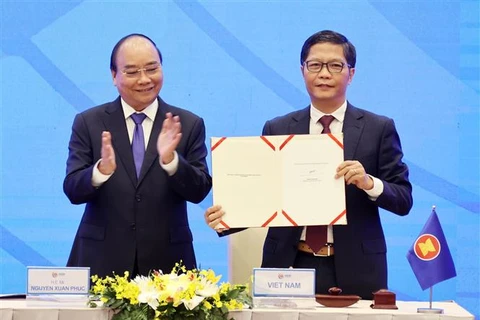
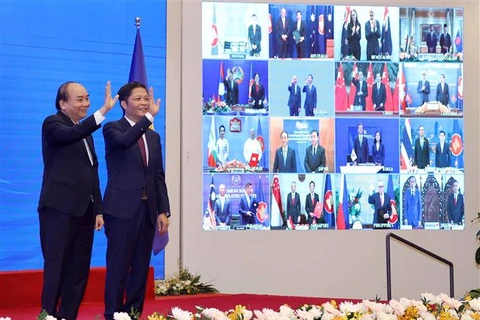
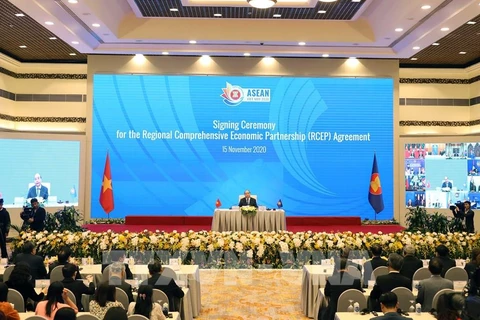
 Singapore (VNA) – Singapore will soon ratify the Regional Comprehensive Economic Partnership (RCEP) agreement which was signed by 15 member countries on November 15, said Minister for Trade and Industry Chan Chun Sing.
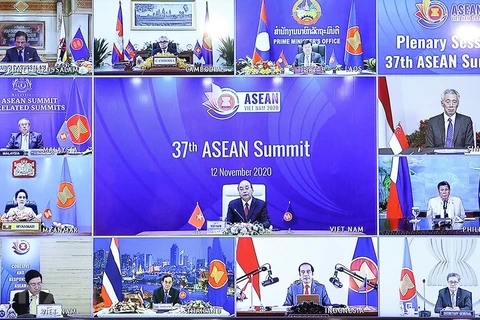
Speaking at a press conference following the signing of the deal within the framework of the 37th ASEAN Summit and Related Summits held virtually by Vietnam from November 12-15, Chan said, to reap the benefits of the RCEP, “work remains to be done”, adding that signatories would need to “accelerate efforts to ratify the agreement as soon as possible”.
The minister said Singapore will ratify the RCEP "definitely" within the next 12 months. And while there is no "firm timeline" for the other countries, "we expect this to be done soonest because I think all the countries involved have given the commitment to expedite their domestic processes", he said.
Chan said the early implementation of the RCEP will potentially provide further opportunities to Singapore’s trade with the 14 other signatories, which totalled 50.4 percent (515 billion SGD or 387.9 billion USD) of the country’s global trade in 2019.
“For Singapore, the RCEP provides a strong foundation for us to rebuild our economy and overcome the challenges as we emerge from the pandemic together,” he stressed.
The RCEP consolidates smaller existing agreements to form the world’s largest free-trade agreement, covering a third of the world both in terms of GDP and population.
The RCEP will come into force when six ASEAN countries and three non-ASEAN countries have ratified it./.
Speaking at a press conference following the signing of the deal within the framework of the 37th ASEAN Summit and Related Summits held virtually by Vietnam from November 12-15, Chan said, to reap the benefits of the RCEP, “work remains to be done”, adding that signatories would need to “accelerate efforts to ratify the agreement as soon as possible”.
The minister said Singapore will ratify the RCEP "definitely" within the next 12 months. And while there is no "firm timeline" for the other countries, "we expect this to be done soonest because I think all the countries involved have given the commitment to expedite their domestic processes", he said.
Chan said the early implementation of the RCEP will potentially provide further opportunities to Singapore’s trade with the 14 other signatories, which totalled 50.4 percent (515 billion SGD or 387.9 billion USD) of the country’s global trade in 2019.
“For Singapore, the RCEP provides a strong foundation for us to rebuild our economy and overcome the challenges as we emerge from the pandemic together,” he stressed.
The RCEP consolidates smaller existing agreements to form the world’s largest free-trade agreement, covering a third of the world both in terms of GDP and population.
The RCEP will come into force when six ASEAN countries and three non-ASEAN countries have ratified it./.
VNA