Singapore’s electronics sector continue stable growth

Singapore’s electronics industry - particularly semiconductors - has outperformed other segments of the economy amid the coronavirus-induced recession and will remain a major source of employment, Minister of Trade and Industry Chan Chun Sing said at a recent press conference.
Singapore (VNA) – Singapore’s electronicsindustry - particularly semiconductors - has outperformed other segments of theeconomy amid the coronavirus-induced recession and will remain a major sourceof employment, Minister of Trade and Industry Chan Chun Sing said at a recentpress conference.

The industry as a whole reaped 5.7 billion SGD (4.2 billion USD)in fixed assets investment in the first nine months of the year and recorded376 million SGD in total business expenditure.

Chan said that these investments will create about 1,100 jobs whenthey are fully realised over the next three to five years, and come on top ofthe opportunities already created by the industry so far this year.

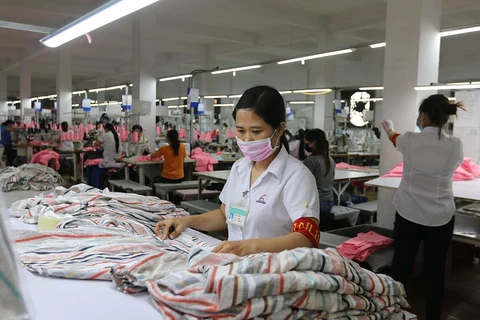
Around 130 electronics companies have offeredmore than 2,800 employment opportunities since April - 1,880 jobs, with therest comprising attachments and training slots, the Ministry of Trade andIndustry noted. Almost all of the jobs were for professionals, managers,executives and technicians, it said.

The industry has seenits contribution to gross domestic product (GDP) surge from less than 1 percentin 1990 to 6.9 percent last year.

The electronics industryas a whole employs 70,500 workers in semiconductors, consumer electronics andinformation technology, and accounted for about 39 percent of Singapore'smanufacturing GDP last year.

The semiconductorindustry alone lifted output 1.7 per cent year on year in the first half ofthis year, even as the overall economy suffered its worst-ever recession./.
VNA

See more

Indonesian Trade Minister Budi Santoso on the sidelines of the Closing Ceremony of Trade Expo Indonesia (TEI) 2025 at ICE BSD, Tangerang. (Photo:jakartaglobe.id)

Indonesia seeks WTO approval to suspend concessions to EU

The dispute dates back to 2018, when the EU issued a directive restricting the inclusion of crop-based biofuels in member states’ renewable energy targets and set a roadmap to phase out palm oil-based biofuels by 2030, citing concerns over the sustainability of palm oil production.

A motorist refuels at a station in Phnom Penh following a Ministry of Commerce warning against domestic fuel stockpiling. (Photo: Khmer Times)

Cambodia strengthens control over retail fuel sales

Cambodia’s Ministry of Commerce has called on the public and fuel station operators across the country to avoid hoarding fuel and to strictly follow technical safety standards in the sale and storage of petroleum products to prevent safety risks and ensure a stable supply.

Lao Prime Minister Sonexay Siphandone (Photo: Xinhua/VNA)

Laos identifies 10 key tasks to build independent, self-reliant economy

Laos will step up agricultural production to ensure food security, meet domestic demand and expand exports; encourage the development of agro-processing industries, including those related to rubber, aquatic products, cassava and sugarcane, as well as fertiliser and animal feed production, in order to increase added value and create jobs in rural areas.

Illustrative image (Photo: Nikkei)

ASEAN faces startup funding drought risks

ASEAN's startups raised 1.16 billion USD in October-December 2025, slightly down from the same quarter a year earlier. For the full year, funding increased 18% to 5.4 billion USD, but that was still about a fourth of the level seen in the peak year of 2021.

Environment Minister Hanif Faisol Nurofiq speaks to the press in Badung, Bali, on March 5. (Photo: Antara)

Indonesia steps up waste sorting at source

Waste sorting at source, combined with modern treatment technologies and stronger community participation, will play a decisive role in reducing pollution and building a sustainable waste management system in Indonesia in the coming years.

Lao girls in a festival. (Photo: asiakingtravel.com)

Laos marks International Women’s Day

The Lao People’s Revolutionary Party and the Lao Government have established policies and legal frameworks to promote women’s development, safeguard women’s rights and interests, and advance gender equality.

Two children play with a gadget in Jakarta. (Photo: ANTARA)

Indonesia sets age limits on digital platforms to protect children

Minister of Communication and Digital Affairs Meutya Hafid said Government Regulation No. 17 of 2025 on Electronic System Governance for Child Protection, known as PP Tunas, will delay access to high‑risk platforms until age 16, while lower‑risk services will be available from age 13.

Indonesia looks to expand engineering workforce amid AI push

Indonesia looks to expand engineering workforce amid AI push

President of the Institution of Engineers, Indonesia (PII) Ilham Akbar Habibie said the number of engineers per one million people in Indonesia remains low. The country currently has about 2,500 engineers per one million people, compared with around 9,500 in Vietnam – nearly four times higher. He described Vietnam as a typical example of how a nation can rely on engineering to strengthen its economy and drive robust economic growth.

Singapore invests to strengthen food self-reliance

Singapore invests to strengthen food self-reliance

Singapore plans to pump 70 million SGD (55 million USD) over the next five years to help local farms expand production capacity and build capabilities, as the country steps up efforts to strengthen food resilience amid growing global uncertainties.

Thailand announces referendum results on constitutional amendment (Photo: eastasiaforum.org)

Thailand announces results of constitutional amendment referendum

Official results released by the EC and signed by EC Chairman Narong Klanwarin show that a majority of Thai voters (58.64%) supported the amendment of the current Constitution. Meanwhile, 30.46% voted against, 8.34% cast blank ballots, and 2.56% of the votes were invalid.

Illustrative photo: Internet

Guangxi strengthens ASEAN – China trade connectivity

China has remained ASEAN’s largest trading partner for 17 consecutive years, while ASEAN has held the position as China’s top trading partner for the past six years. Guangxi, the only Chinese region linked to ASEAN by both land and sea, plays a strategic role in connecting the two markets.

Malaysian Minister of Investment, Trade and Industry Johari Abdul Ghani (Photo: Bernama)

Malaysia boosts exports to CPTPP member countries

Through the CPTPP, exporters can access non-traditional markets such as Canada, Mexico and Peru and, for the first time, gain preferential access to the UK market, which had previously been subject to regular tariffs, said a Malaysian official.

Young Lao ethnic women splash water to pray for good fortune during the traditional water-splashing New Year festival. (Photo: VNA)

Laos accelerates UNESCO nominations for cultural heritage

The Lao government will seek inscription of several traditions on the UNESCO Intangible Cultural Heritage of Humanity list, including Larb, the Sou Khuan ceremony, Pu Yer – Ya Yer, Lao New Year (Bun Pi Mai Lao), and Khao Tom–Khao Lam. It will also pursue World Heritage status for Nakai-Nam Theun National Park, the Plain of Jars in Houaphanh Province, and That Ing Hang.