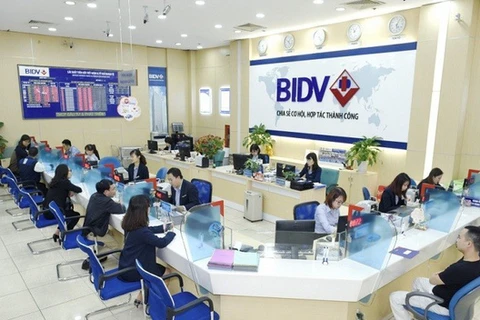
BIDV was the latest bank to adopt Basel II standards this month. (Source: BIDV)
 Hanoi (VNS/VNA) - Capital difficulties are putting pressure on some banks struggling to meet the central bank’s Basel II deadline of early next year, but experts suggest the central bank should not delay the process.
The State Bank of Vietnam (SBV) has set a deadline of January 1, 2020 for all domestic and foreign banks in the country to meet the minimum capital requirements of Basel II standards, but only 18 banks have so far met the requirements, including 16 Vietnamese and two foreign banks.
Basel II is the second edition of the Basel Accords, which are recommendations on banking laws and regulations issued by the Basel Committee on banking supervision. It comprises minimum capital requirements, supervisory review and market discipline to enhance competition and transparency in the banking system and make banks more resistant to market changes.
According to experts, Basel II application is considered a radical reform to create a foundation for the domestic banking system to grow safely and healthily and improve the competitiveness of the system under the context of the country’s deep international economic integration.
Banking expert Nguyen Tri Hieu told Viet Nam News that Basel II would not only help banks reduce risks and make the best use of capital, but also significantly reduce the losses caused by economic volatility.
“Notably, the sooner banks apply the Basel II standards the earlier they optimise their operational efficiency as the criteria, including legal framework, databases and capital adequacy issues, required for banks to qualify for the application of the Basel II risk management framework are relatively strict,” Hieu said.
Basel II requires banks to have a capital adequacy ratio (CAR) of at least 8 percent, so banks with a relatively good performance and financial situation can easily adopt the standards, whereas it is difficult for those facing financial difficulties.
Though many banks have plans to increase capital, only a few medium-sized and large banks have managed to do so. Many banks, especially small ones, are still struggling to increase capital to meet Basel II standards.
According to Hieu, it was difficult for banks to lure capital from domestic investors as banking shares were not as attractive as before. Meanwhile, foreign capital seemed interested in only State-owned banks.
“Many small banks are seriously lacking capital, so it will be a struggle for them to meet the Basel II capital requirements,” Hieu noted.
However, experts said the SBV should not delay the adoption of Basel II as Vietnam had been late in adopting the standards compared to other countries, which are already completing the adoption of Basel III standards.
Besides, the delay could affect negatively the nation’s banking system as well as other banks which had made great efforts to adopt the standards before the SBV’s deadline.
Banking expert Phan Minh Ngoc suggested the SBV should punish banks that failed to meet the deadline, such as curtailing their credit growth quotas or even placing them under special supervision.
By doing so, the central bank would not only ensure the safety and development of the banking system, but also ensure fairness for the banks that had tried and succeeded in adopting Basel II norms on time, Ngoc said.
Moreover, he added, the adoption of Basel II standards early next year would also have a very important effect of narrowing the big gap in the operational standards of Vietnamese and regional banks.
Analysts from Fitch Ratings also noted eventual adoption of Basel II may still encourage more active capital-raising efforts, which could reduce risks to financial stability and support improvements in Vietnamese banks' credit profiles. However, the impact on ratings will hinge on the extent and sustainability of the improvement in capitalisation, as well as any changes in risk profiles.
"Vietinbank is the only Fitch-rated bank that is reportedly yet to comply with the new standards. Vietcombank, Military Bank and ACB are reported to be in compliance already, but we expect their capital ratios to remain low relative to global standards in the foreseeable future," Fitch analysts told Viet Nam News.
Fitch forecast Vietnamese banks would continue to face challenges in raising external capital. Banks in Vietnam have a 30 percent foreign-ownership limit, which constrains their efforts to raise equity from overseas investors and makes them reliant on capital issuance in the shallow local market. Vietinbank is among those that are already at the foreign-ownership limit. Meanwhile, Fitch does not expect many smaller banks to attract foreign interest, given their short operating histories and fledgeling franchises.
“We expect sector consolidation over the next few years, as smaller players struggle to meet Basel II requirements and become takeover targets. That said, regulatory intervention may be required to incentivise the better-capitalised banks to undertake a merger,” Fitch noted./.
VNA