Stakeholders seek ways to remove roadblocks to real estate market

The Governor of the State Bank of Vietnam (SBV) and representatives from some ministries, credit institutions and businesses will meet online on November 13 to look into the implementation of the Prime Minister’s dispatch on the real estate market.
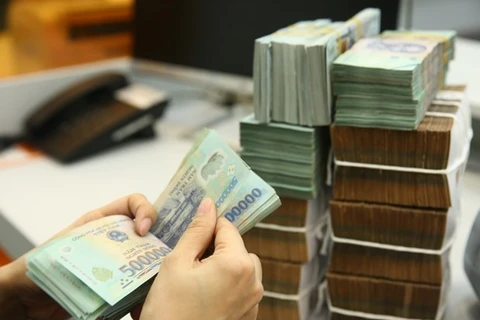
Stakeholders seek ways to remove roadblocks to real estate market ảnh 1Under the 10-year social housing loan package, which was launched by the central bank in April, the loan interest rates for them will be 1.5-2% lower than those of commercial banks. (Photo: VNA)
Hanoi (VNA) – The Governor of the StateBank of Vietnam (SBV) and representatives from some ministries, creditinstitutions and businesses will meet online on November 13 to look into theimplementation of the Prime Minister’s dispatch on the real estate market.

The construction minister and officials from theGovernment Office and the ministries of public security, finance, planning andinvestment, natural resources and environment, and justice will join the event.

The conference will also see the participation ofthe general directors of the Vietnam Bank for Social Policies, and 14Hanoi-based credit institutions, and representatives from the Vietnam NationalReal Estate Association.

In Dispatch No. 993/CD-TTg, dated October 24, 2003,the PM urged more drastic solutions to boost the domestic property market in asafe, healthy and sustainable fashion, thus contributing to spurring socio-economicdevelopment.

He asked the central bank to instruct commercial banks tocontinue real estate lending, take appropriate solutions to reduce interestrates, further streamline administrative procedures, and offer specialincentives to feasible projects.

The SBV was also requested to closelycoordinate with the Ministry of Construction to review loan terms in order toaccelerate the disbursement of the social housing loan package worth 120trillion VND (5.12 billion USD).

The credit package with incentive interest for bothdevelopers and buyers is set to boost social housing construction amid ashortage of affordable apartments.

Under the 10-year package, which was launched by thecentral bank in April, the loan interest rates for them will be 1.5-2% lowerthan those of commercial banks.

At a recent question-and-answer session of theongoing 6th sitting of the 15th National Assembly, SBV Governor Nguyen Thi Hongalso affirmed that the bank will step up the information work to furtherpopularise the package among the public, given its current sluggish disbursement.

The disbursement has been far slower than expecteddue to the limited supply and inappropriate loans terms, Hong elaborated, notingthat the central bank will urge People’s Committees of cities and provinces tosoon announce projects entitled to the package.

The bank will instruct credit institutions to paymore attention to the disbursement, and expand it to commercial banks, Hongsaid.

Over the past time, only 18 out of the 63 People'sCommittees released the list of participating projects with 53 projects andtotal loan demand of 27 trillion VND.

According to a Government report, as of the end ofSeptember, a total of 46 social housing projects with about 20,210 apartmentshad been completed in urban areas./.
VNA
See more

Toy production at a Hong Kong-invested factory (Photo: VNA)

Vietnam targets deeper market penetration in Hong Kong in 2026

Vietnam-Hong Kong trade hit 62.3 billion USD in the first 11 months of 2025, soaring 73.1% annually. Vietnamese exports to Hong Kong amounted to 36.8 billion USD, a 90.6% hike, ranking fourth among Hong Kong’s import sources, while imports from Hong Kong stood at 25.5 billion USD, up 52.9% and ranking third.

Vietnam’s start-up market enters restructuring phase

Vietnam’s start-up market enters restructuring phase

In 2026, venture capital inflows into Vietnam’s start-up ecosystem are expected to recover gradually, though in a more selective manner. VinVentures forecasts that capital will focus on start-ups that have survived the rigorous screening of 2024–2025, possess clear business models, strong commercialisation capacity, and the ability to generate real cash flows.

Workers process tra (pangasius) for export (Photo: VNA)

Vietnam–Singapore trade continues to thrive

For the year as a whole, Vietnam retained its position as Singapore’s 10th largest trading partner. Bilateral trade reached a record high of nearly 40 billion SGD, up 26.2% from the previous peak of 31.67 billion SGD recorded in 2024.

Eric Van Vaerenbergh, an energy expert and lecturer at the Brussels Engineering School (ECAM) (Photo: VNA)

Belgian expert optimistic about Vietnam’s economic outlook

Vietnam should move from a growth model based mainly on expanding capital and labour to one driven by productivity improvements. He said that this requires enhancing the quality of the workforce, particularly engineers, technicians, and managers in industrial sectors.

Workers at the VSIP Hai Phong industrial and urban complex, which specialises in producing electronic components for office equipment. (Photo: VNA)

Roadmap aims to improve business climate and boost competitiveness

By the end of 2026, Vietnam aims to rank among the world’s top 50 performers in the United Nations Sustainable Development Goals, advance at least three places in the International Property Rights Index, and climb at least one position in the Global Innovation Index.

Vietnam is strengthening its position in the technology value chain, becoming a major manufacturing hub for complete consumer electronics products. (Photo: VNA)

ESG standards offer opportunities to reposition Vietnam’s electronics firms

The 2025-2027 period will be a critical turning point, as exporters to the European market will be required to strictly comply with ESG standards, including net-zero emissions roadmaps, labour standards, corporate governance and transparency requirements. As a key export sector, the electronics industry is being directly and strongly affected by this shift.