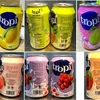
It is increasingly common to find products labelled under supermarket brands, offering less expensive prices on shelves of supermarkets in major cities.
According to Vu Vinh Phu, President of the Hanoi Supermarket Association, selling products under retailers' brands is popular throughout the world and has begun to develop in Vietnam in recent years with the participation of big names such as BigC, Metro, Co.opmart and Fivimart.
Private-label products found in supermarkets are varied from beverages and foods, as well as daily necessities such as tissue, toothpaste, shower cream and washing powder.
Currently, private-label products account for a modest percentage of store products, often several hundred product types, as well as fast-moving consumer products.
The potential of developing private labels was large in Vietnam, given improved attitudes of consumers towards retailers' private labels.
A report by Nielsen, the global information and measurement company, released at the end of last year revealed that 84 percent of consumers in Vietnam said that their perception of private label brands had improved over time, being the highest rate in the region.
In addition, the price of private-label goods were less expensive, as supermarkets impose fewer fees with lower distribution costs than the same products with named brands, often from 5 percent to 30 percent lower.
A representative from Hanoi Co.op Mart said developing private label brands was one of numerous development strategies of the supermarket. Currently, private-label products accounted for a modest 3 percent of goods on shelves at the supermarket.
BigC also developed several private label brands, offering more than 1,000 products, and the number was expected to continue increasing.
Phu said that private label products were the result of cooperation between producers and distributors, which could solve distribution problems, especially for small-sized firms.
While the development of private-label goods might affect market share and consumption of existing branded products, Phu urged that supermarkets' traditional suppliers improve their products' competitiveness to compete with private label goods.
Nguyen Thi Hoai, a consumer in Hanoi, said that if the quality of private-label products was not much different from branded products or merely "acceptable", she opted to buy private-label products due to lower prices.
According to Dinh Thi My Loan, President of the Vietnam Retailer Association, consumers must pay attention to the quality of products when making purchasing decision.
Quality remains a decisive factor to draw buyers to come back to all products.-VNA
According to Vu Vinh Phu, President of the Hanoi Supermarket Association, selling products under retailers' brands is popular throughout the world and has begun to develop in Vietnam in recent years with the participation of big names such as BigC, Metro, Co.opmart and Fivimart.
Private-label products found in supermarkets are varied from beverages and foods, as well as daily necessities such as tissue, toothpaste, shower cream and washing powder.
Currently, private-label products account for a modest percentage of store products, often several hundred product types, as well as fast-moving consumer products.
The potential of developing private labels was large in Vietnam, given improved attitudes of consumers towards retailers' private labels.
A report by Nielsen, the global information and measurement company, released at the end of last year revealed that 84 percent of consumers in Vietnam said that their perception of private label brands had improved over time, being the highest rate in the region.
In addition, the price of private-label goods were less expensive, as supermarkets impose fewer fees with lower distribution costs than the same products with named brands, often from 5 percent to 30 percent lower.
A representative from Hanoi Co.op Mart said developing private label brands was one of numerous development strategies of the supermarket. Currently, private-label products accounted for a modest 3 percent of goods on shelves at the supermarket.
BigC also developed several private label brands, offering more than 1,000 products, and the number was expected to continue increasing.
Phu said that private label products were the result of cooperation between producers and distributors, which could solve distribution problems, especially for small-sized firms.
While the development of private-label goods might affect market share and consumption of existing branded products, Phu urged that supermarkets' traditional suppliers improve their products' competitiveness to compete with private label goods.
Nguyen Thi Hoai, a consumer in Hanoi, said that if the quality of private-label products was not much different from branded products or merely "acceptable", she opted to buy private-label products due to lower prices.
According to Dinh Thi My Loan, President of the Vietnam Retailer Association, consumers must pay attention to the quality of products when making purchasing decision.
Quality remains a decisive factor to draw buyers to come back to all products.-VNA