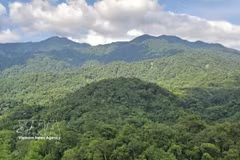
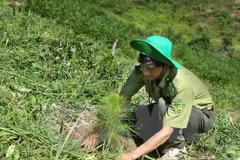
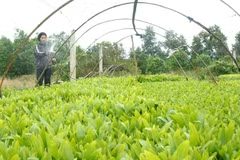
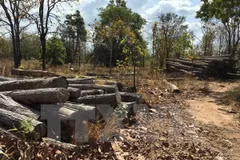
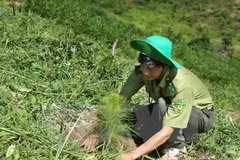
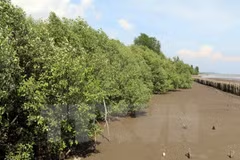
In Vietnam, forests serve as a foundation for livelihoods, water resources, public health, and environmental stability, particularly for ethnic minority communities living in and near forest areas. They also act as a natural buffer against disasters, helping reduce risks linked to climate change.
The seminar featured presentations and experience-sharing from ASEAN member states on deploying nature-based solutions and establishing sustainable financing systems for forestry.
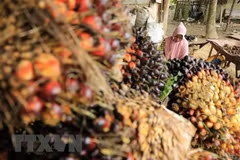
Indonesian authorities said on December 22 that they will fine palm oil companies operating within forest areas with a total sum of 4.8 trillion IDR (310.1 million USD).
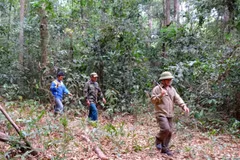
Authorities in the southern province of Binh Phuoc are tightening measures to prevent forest fires in the dry season as prolonged heat has occurred since the beginning of the year.
The landscape cluster of Hon Yen in the central coastal province of Phu Yen has been recognised as a national relic site given its geological, cultural and historical values as well as floral diversity.
The United States Agency for International Development (USAID) launched the 24-million-USD Green Annamites Project in Tam Ky city, the central province of Quang Nam on March 27 to help it preserve local biodiversity and improve people’s livelihoods.
The southernmost province of Ca Mau is embarking on a sustainable forestry development project for 2016-2020 with a total cost of 684 billion VND (31 million USD).
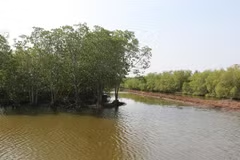
Hau Giang province has undertaken efforts to develop thousands of hectares of forests in areas prone to salinity intrusion such as Long My and Vi Thuy districts, Nga Bay town, and Vi Thanh city.