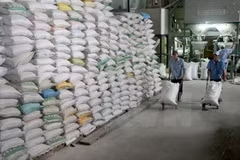
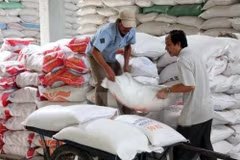
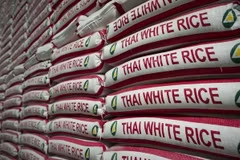
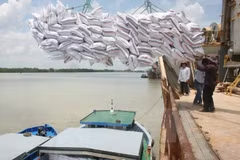
Although the volume of individual shipments remains relatively modest, industry experts say the steady flow of exports reflects stable demand in the EU for high-quality rice.
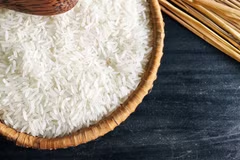
With stable and high demand for specialty rice from Asia, the European Union (EU) remains a highly potential market for rice exporters of Vietnam, the Dau tu (Vietnam Investment Review) reported.
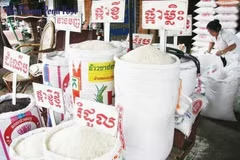
Cambodia has exported more than 600,000 tonnes of milled rice in the first 11 months of the year, up 16 percent year on year, according to Minister of Agriculture, Forestry and Fisheries (MAFF) Veng Sakhon.
With the European Union – Vietnam Free Trade Agreement (EVFTA), the EU will completely liberalise trade in broken rice, and will reduce the tax rate to zero percent for Vietnamese rice products after three to five years. This is a great opportunity for Vietnamese rice to compete in the EU market.
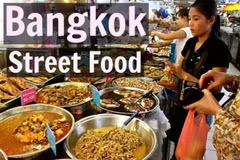
The Tourism Authority of Thailand has hosted the “World’s Best Street Food: Bangkok 2019” to promote some of the delicacies sold in stalls along Thai streets.
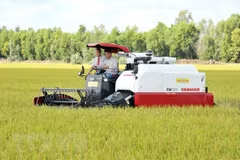
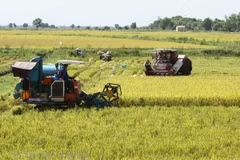
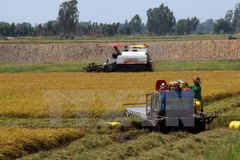
The summer-autumn rice crop in southern localities has yielded a good harvest, heard a conference held in the Mekong Delta province of Tay Ninh on July 20.
The rice export value of Laos in the first six months of 2017 dropped 42 percent compared to the same period last year, according to the country’s Ministry of Industry and Commerce.
Vietnam aims to export 4 million tonnes of rice in 2030 under a 2017-2020 rice export development strategy with a vision to 2030 recently approved by Prime Minister Nguyen Xuan Phuc.
Thailand's rice committee on November 7 announced a new loan scheme worth 514 million USD to help rice growers struggling with record falling prices in the past decade.
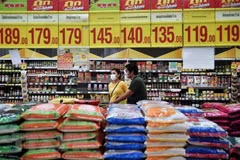
Vietnam's rice exports this year excluding border trade are expected to remain at last year's 6.5 million tonnes, according to the Vietnam Food Association.