Under the plan, by early 2026, the reverse payment direction will also be completed, enabling Vietnamese travellers to use the apps of NAPAS member banks to scan QR codes for payment in China. Once fully operational in both directions, the system will form a complete cross-border QR payment ecosystem that supports tourism, trade and consumer spending between the two nations.
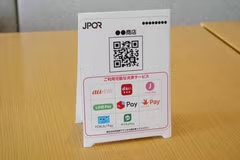
Japan and the Association of Southeast Asian Nations (ASEAN) countries will integrate QR code payments from 2025, aiming to facilitate spending between these countries without the need to exchange currency, which is time-consuming, especially for tourists, according to Japan’s Ministry of Economy, Trade and Industry (METI).
Laos plans to start using QR code transactions with neighbouring countries – Vietnam, Thailand and Cambodia – from the fourth quarter of this year, according to Lao media.
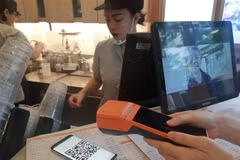
With contactless payment becoming increasingly common in Ho chi Minh City due to people’s fear of COVID-19, retail firms are investing more and more in digital infrastructure.
The shift towards electronic payment is now an established trend with half of Ho Chi Minh City’s public hospitals embracing it, health authorities have said.
While non-cash payments are admittedly on the rise, the cash payment habit and limited development of technology infrastructure are big problems for the country’s non-cash economy, experts have said.
E-wallet firm MoMo launched a cashback programme on November 3 with value of up to 100,000 VND (4.30 USD) per transaction and for four transactions daily at most.
UnionPay International (UPI), a subsidiary of China UnionPay, said on June 21 that it has signed a cooperation agreement on payment by QR code with Vietnam Payment Solution Joint Stock Company (VNPAY) - the biggest QR code payment firm in Vietnam.
Vietnam is emerging as a country with great potential to develop digital economy, as it has more than 58 million internet users out of its 90 million people and the over 125 million mobile subscribers.