Across many localities, festivals are evolving beyond traditional cultural gatherings into drivers of heritage-based economic development. This transformation both preserves cultural values and enhances the competitiveness of local tourism destinations.
Festivals across Vietnam continue to enliven the early days of spring, offering opportunities for communities and visitors to celebrate traditional culture, honour historical figures, and pray for peace, happiness and prosperity.
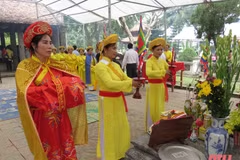
Every year, during the first lunar month, Trieu Khuc village in Hanoi comes alive with festive rituals and a distinctive folk performance in which young men dress as women to perform the traditional “Con di danh bong” (Girls playing drum) dance, a highlight of the village’s centuries-old festival honouring national hero Bo Cai Dai Vuong Phung Hung.
Vietnam possesses rich “soft power” assets, from a diverse system of tangible and intangible cultural heritage to traditional festivals, landscapes, and crafts.
Over the past years, Khanh Hoa has developed various forms of high-quality sea and island resort tourism in combination with entertainment, sightseeing, adventure sports, and ocean exploration. Tourism has become an economic spearhead, creating jobs for dozens of thousands of workers while stimulating the development of many other economic sectors.
The Trieu Khuc village festival (Thanh Tri district, Hanoi) is one of the capital's traditional festivals, deeply rooted in history and spiritual culture. Recognised as a national intangible cultural heritage in 2020, its most distinctive highlight is the "Con Di Danh Bong" dance—an ancient performance where young men dress as women.
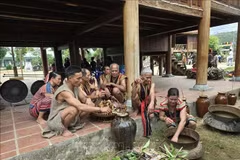
Living in Vietnam’s Central Highlands, the Brâu ethnic minority group has a distinctive culture and traditional festivals, including the rice-sowing festival. Let’s take a look!
Vietnam’s traditional festivals as well as those which are shaping up their brand, are adding lustre to local tourism while spurring the country to join hands with other ASEAN member states to develop sustainable festival tourism.
Various activities will be held at the Vietnam National Village for Ethnic Culture and Tourism next month in celebration of the upcoming National Independence Day, according to organisers.
A recent national cultural conference outlined the key tasks in reviving and developing Vietnamese culture amid the country’s integration process. In response, the northern province of Yen Bai is working on a number of measures to preserve and promote the cultural values of local ethnic minority groups.
A hot-air balloon festival was held on Doi Duong beach, the south-central province of Binh Thuan, on March 24 to celebrate the National Tourism Year 2023 themed “Binh Thuan – Green Convergence”.
Traditional festivals in Ba Ria-Vung Tau bear the cultural influence of all three regions of the North-Central-South, becoming an indispensable part of the community's cultural life here.
A group of young artists in Ho Chi Minh City will release a new bilingual art book featuring 30 folk music genres and theatrical performing arts, and six traditional festivals of Vietnam.
The central province of Thanh Hoa, home to a large number of tangible and intangible heritage including various traditional festivals, is rolling out practical measures to combine tourism development with the preservation and promotion of the heritages' values.
At any number of social and cultural events around Vietnam, especially traditional festivals, drums feature as the centrepiece of almost all activities.
The Minister of Culture, Sports and Tourism has recommended postponing or cancelling traditional festivals which are yet to start, and for those which already began, their scale, duration and activities should be reduced, in the face of the threat of coronavirus.
The National Assembly Standing Committee’s resolution on the establishment of Sa Pa district-level town in the northern province of Lao Cai was handed over to the locality’s People’s Committee at a ceremony on December 28.