
☀️ Morning digest on August 4
The following is a list of selected news summaries reported last night by the Vietnam News Agency.
The following is a list of selected news summaries reported last night by the Vietnam News Agency.

While still on track, the ministry flagged that fallout from the Middle East conflict and a suite of fiscal relief measures, including cuts to environmental protection tax, value-added tax, special consumption tax and fees on gasoline and aviation fuel, are starting to chip away at revenue. Collection progress and growth rates across several tax streams have decelerated from the previous year.
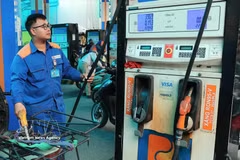
The cuts are expected to ease the burden on households and help firms sustain production and trade, even as it trims state budget revenue by an average of about 7.2 trillion VND (276.9 million USD) per month.
The prolonged reduction will be in effect from October 1, 2025 through September 30, 2026.

Indonesia has extended its full value-added tax (VAT) incentive on residential property purchases until the end of 2025, in a bid to sustain household demand and support economic growth.
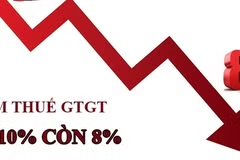
Under Resolution No. 204/2025/QH15 of the National Assembly, the 2% reduction in VAT is scheduled to take effect from July 1 and remain valid until December 31, 2026.

Also on the day, legislators will also discuss draft laws on mutual legal assistance in criminal and civil matters, a draft law on amendments and supplements to several articles of the Civil Procedure Code, the Law on Administrative Procedure, the Juvenile Justice Law, the Law on Bankruptcy, and the Law on Mediation and Dialogue at Court.

It is estimated that if low-value goods worth less than 1 million VND are subject to a 10% VAT rate, State budget revenue could increase by around 2.7 trillion VND (105.6 million USD).
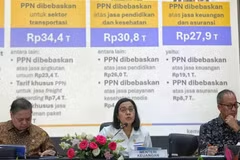
The Indonesian government has unveiled a series of economic stimulus packages totaling 827 trillion Rp (51.65 billion USD) for 2025, designed to mitigate economic shocks and address the weakening purchasing power of low- and middle-income groups.

Indonesia will offer a sales tax incentive on Government-borne Luxury Goods (PPnBM DTP) of 3% for hybrid cars from next year.
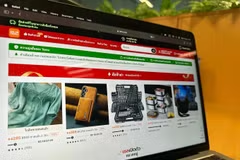
Thailand has recorded a decrease of 20% in low-quality imports, mainly from China, since imposing restrictions on cheap imports that are hurting business in Southeast Asia's second-largest economy, government spokesperson Sasikarn Wattanachan said on December 9.

The rapid growth of e-commerce has contributed significantly to Vietnam's economic development, but it also brought challenges, particularly in tax management.

The 15th National Assembly approved an extension of the 2% value-added tax (VAT) reduction. The reduction applies to specific goods and services listed in Point a, Section 1.1, Clause 1, Article 3 of Resolution No. 43 on fiscal and monetary policies to support the Socio-Economic Recovery and Development Programme. The extended policy will be effective from January 1, 2025 to June 30, 2025.
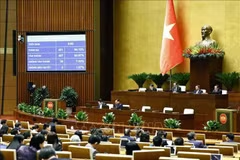
The Law on the Value Added Tax was adopted at the 8th session of the 15th National Assembly (NA) in Hanoi on November 26 and is set to come into force in July next year.

Indonesian Finance Minister Sri Mulyani Indrawati said on November 14 that the government will raise value added tax (VAT) in January next year to ensure national budget revenue.

The People's Committee of the southern province of Binh Duong held a dialogue with representatives of Korean businesses operating in the locality on November 1.

The Philippines will impose a 12% value-added tax on digital services offered by tech giants such as Amazon, Netflix, Disney, and Alphabet, in a move that aims to level the playing field with domestic players, the country’s Bureau of Internal Revenue (BIR) announced on October 2.

The tax revenue from the digital economy sector in Indonesia reached 27.85 trillion IDR (1.75 billion USD) from 2022 to the end of August 2024, according to the Taxation Directorate General under the country’s Finance Ministry.

The Indonesian Government has decided to launch some incentives for the middle class to promote their contributions to the national economy.

Millions of packages of small, low-value items that are crossing the border into Vietnam daily should be subjected to VAT, special consumption and environmental taxes, according to industry experts and domestic e-commerce sellers.