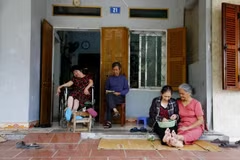
The lawsuit over the use of Agent Orange/dioxin during the Vietnam War goes beyond an individual claim, representing an estimated 3 million victims in Vietnam, Cambodia and Laos affected by exposure to the toxic herbicide.
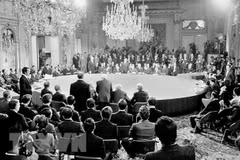
In the early 1970s, most Americans, including many servicemen and war veterans, believed that the war in Vietnam was a mistake and that the US should negotiate for a peace agreement, Dr. Andrew Wells-Dang, a senior expert about Vietnam at the US Institute of Peace told the Vietnam News Agency's resident correspondents while talking about the signing of the Paris Agreement on Ending the War and Restoring in Vietnam (Paris Peace Accords) 50 years ago.
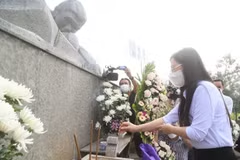
An incense offering ceremony took place on March 16 to commemorate 504 victims of a massacre by US troops 54 years ago in Son My village, Tinh Khe commune of Quang Ngai city in the central province of the same name.
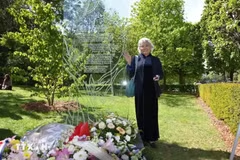
US companies that manufactured the toxic Agent Orange (AO)/dioxin defoliant used by US forces during the war in Vietnam must take responsibility for dealing with the consequences, the Vietnamese Ministry of Foreign Affairs' spokeswoman Le Thi Thu Hang said on May 13.
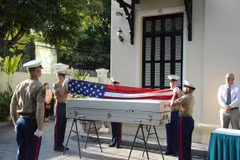
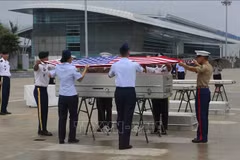
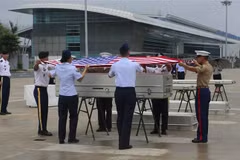
A ceremony to repatriate remains of US servicemen who died during the war in Vietnam was held at Da Nang International Airport in the central city of Da Nang on April 2.
An exhibition on the war in Vietnam, titled “Vietnam, your pain is in my heart”, is scheduled for April in Russia’s second-largest city Saint Petersburg.
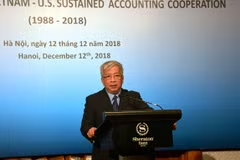
A ceremony was held in Hanoi on December 12 to mark the 30th anniversary of bilateral cooperation in searching for US soldiers missing in action (MIA) in the war in Vietnam.
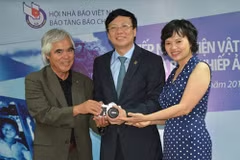
Former Associated Press war photographer Nick Ut (real name Huynh Cong Ut) handed over his two cameras and 52 photos to the Vietnam Press Museum at a ceremony on June 1.
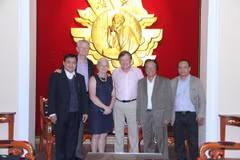
Charles Jackson, a US veteran and prisoner during the war in Vietnam, expressed his wish to find his war-time rescuers during a meeting with the Vietnam-US Society (VUS) on January 11.