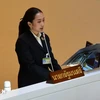
Thai Prime Minister Yingluck Shinawatra has said she believes the military will not launch a coup to try to end the country's ongoing political crisis.
Speaking to foreign media on Bangkok on December 11, she said coup-makers who ousted her older brother Thaksin as prime minister seven years ago realised that a coupe doesn’t solve any problems.
The PM made the statement at a time when opposition protesters have appealed to the army to help them overthrow her Government.
But apart from sending some unarmed soldiers to help protect government buildings, the generals have so far avoided any public return to the fray. Army chief General Prayut Chan-O-Cha said last week problem should be solved by politics.
Thailand has seen 18 actual or attempted coups since it became a constitutional monarchy in 1932.
The same day, the Red Shirts vowed their support for the upcoming election, warning that proposals from opposition rallies aimed at suspending the country's democracy risked "absolute dictatorship".
Earlier on December 9, Yingluck called on an early election - set for February 2, 2014 - to try to calm the political turmoil. But opposition leader Suthep Thaugsuban rejected the move, demanding the government step aside in order to set up an unelected "people's council".
Bangkok has been shaken by more than a month of mass opposition demonstrations, resulting in the death of five and injuries to more than 200 others.-VNA
Speaking to foreign media on Bangkok on December 11, she said coup-makers who ousted her older brother Thaksin as prime minister seven years ago realised that a coupe doesn’t solve any problems.
The PM made the statement at a time when opposition protesters have appealed to the army to help them overthrow her Government.
But apart from sending some unarmed soldiers to help protect government buildings, the generals have so far avoided any public return to the fray. Army chief General Prayut Chan-O-Cha said last week problem should be solved by politics.
Thailand has seen 18 actual or attempted coups since it became a constitutional monarchy in 1932.
The same day, the Red Shirts vowed their support for the upcoming election, warning that proposals from opposition rallies aimed at suspending the country's democracy risked "absolute dictatorship".
Earlier on December 9, Yingluck called on an early election - set for February 2, 2014 - to try to calm the political turmoil. But opposition leader Suthep Thaugsuban rejected the move, demanding the government step aside in order to set up an unelected "people's council".
Bangkok has been shaken by more than a month of mass opposition demonstrations, resulting in the death of five and injuries to more than 200 others.-VNA