Thai private, public sectors urged to jointly tackle tourism challenges in 2023

The public and private sectors are being urged to work together to prepare for uncertainty in the tourism industry next year, which may pose hurdles for Thailand’s ability to maintain its competitive edge.
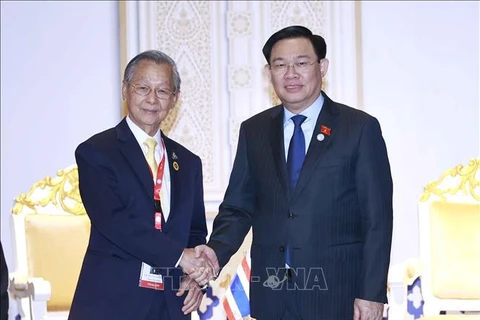
Thai private, public sectors urged to jointly tackle tourism challenges in 2023 ảnh 1The public and private sectors are being urged to work together to prepare for uncertainty in the tourism industry next year. (Photo: thainews.prd.go.th)
Bangkok (NNT/VNA) - The public and private sectors are being urged to work together to prepare for uncertainty in the tourism industry next year, which may pose hurdles for Thailand’s ability to maintain its competitive edge.

Bhumikitti Ruktaengam, advisory chairman of the Phuket Tourist Association, stated that more integration is needed between the public and private sectors, especially regarding tourism policies. The cooperation will be crucial as the Thai tourism industry braces for uncertainties and increased competition in 2023.

Bhumikitti said domestic factors such as political tension for the upcoming general election next year would pose concerns for tourists visiting the country. Soaring energy prices and the ongoing Russia-Ukraine crisis are affecting tourist expenditures and making it harder for authorities to raise expenditures per trip. Another source of uncertainty is the mass demonstrations against the Covid-19 curb in China, which create ambiguity in travel regulations and may impact the number of Chinese tourists visiting Thailand in the future.

The advisory chairman warned that increased competition is a challenge for the Thai tourism industry, noting that some tourist groups have already switched their winter destinations from Thailand to neighboring countries. He emphasized that the country may lose more tourists to competitors unless cooperation and new methods are implemented to retain its competitiveness.

Meanwhile, Krod Rojanastien, president of the Thai Spa Association, suggested that Thailand focus on potential tourism products the country already has, which could tap high-spending travelers. He believes the country has strong potential in the health and wellness sector and urged the government to strengthen education programs related to these services to address the crucial problem of personnel shortages./.
VNA
See more

The opening ceremony of the 48th ASEAN Summit in Cebu, the Philippines, on May 8, 2026 (Photo: VNA)

ASEAN enhances fight against cybercrime, online scams

In a statement issued by the ASEAN Chair on May 9, the regional bloc welcomed ongoing initiatives aimed at enhancing cross-border cooperation, building cybersecurity capacity, and improving protection and assistance for victims and survivors of online scams.

The newborn pygmy hippopotamus “Nong Moo Daeng” at Nakhon Ratchasima Zoo (Photo: pattayamail.com)

Thailand: Nakhon Ratchasima Zoo debuts newborn pygmy hippo

The name “Nong Moo Daeng” received the highest number of votes among five shortlisted names, securing its place as the calf’s official name. The result indicates strong public engagement and growing interest in wildlife cared for by the national zoo network.

Illustrative image (Photo: straitstimes.com)

Malaysia to tighten EV imports

The Malaysian Ministry of Investment, Trade and Industry issued a circular to car importers with new regulations that effectively increase the minimum retail price of fully imported EVs and also increase the minimum power output for such models.

E-commerce giant Amazon cuts jobs in Singapore

E-commerce giant Amazon cuts jobs in Singapore

The move marks a change in direction for Amazon.sg, which launched in 2019 to provide Singapore customers with a localised storefront offering local currency and payment options, Singapore-specific deals and Prime membership benefits.

Illustrative photo (Photo: freemalaysiatoday.com)

Malaysia maintains growth momentum in first quarter of 2026

BNM said domestic investment activity will be driven by progress in multi-year projects in both the public and private sectors, implementation of new smaller-scale public projects, strong realisation of approved investments, and the continued rollout of national master plans.