Thailand aims to become regional halal industry hub

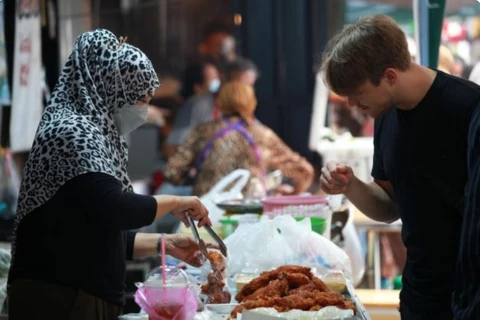
Thailand’s Ministry of Industry has established the Thai Halal Industry Centre (THIC) as an effort to turn the country into a regional leader in the production and export of halal products.

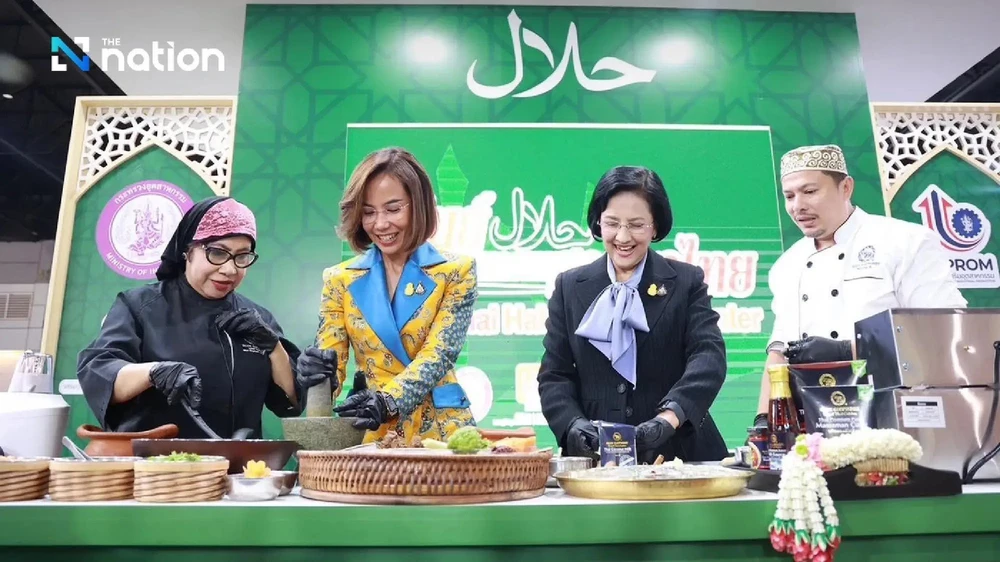
Thailand promotes Halal products. (Photo: nationthailand.com)

Bangkok (VNA) – Thailand’s Ministry of Industry has established the Thai Halal Industry Centre (THIC) as an effort to turn the country into a regional leader in the production and export of halal products.

The world’s 2.3 trillion USD Halal market is projected to grow rapidly, reaching 2.8 trillion USD by 2025 with the increasing global Muslim population.

Thai Minister of Industry Pimpatra Wichaikul said besides the establishment of the THIC, Thailand will enhance the standards and capabilities of domestic halal entrepreneurs. The ministry will also promote the expansion of exports including to potential global markets.

The food and beverage sector holds the largest market share, accounting for 63% of the total market value. The global halal food market is valued at approximately 1.4 trillion USD and is expected to double within five years, driven by the rapidly increasing global Muslim population.

Thai Prime Minister Srettha Thavisin signed the order for the establishment of the National Halal Industry Committee (NHIC) on April 17, 2024, and serves as its chairperson, with Nalinee Taveesin, the Thai Trade Representative, responsible for halal industry development, and Minister of Industry Pimpatra Wichaikul as its vice-chair.

The committee also includes representatives from 21 key agencies involved in Thailand's halal sector.

The NHIC is tasked with formulating policies and development strategies for halal products, integrating Thailand's unique “soft power”, and coordinating policies, measures, and plans to effectively drive the development of the country's halal industry. This aims to position Thailand as a leader in the production and export of halal products in the region.

According to Pimpatra, in the first year, the ministry will focus on advancing the Thai halal industry through three main missions, namely establishing the centre to support the ecosystem of Thailand's halal industry, enhancing awareness of its potential both domestically and internationally, and promoting trade and market expansion in the world./.
VNA

See more

 President Prabowo Subianto signs an inscription at the inauguration of PT VKTR Teknologi Mobilitas' electric commercial vehicle assembly plant in Magelang, Central Java, on Thursday, April 9, 2026. (Photo: Antara)

Indonesia targets ending fuel imports within three years

In addition to electrifying power plants, the Indonesian government is promoting electric vehicles and the utilisation of other renewable energy sources. Solutions include processing palm oil and used cooking oil into aviation fuel to further reduce reliance on fossil fuels.

A groundbreaking ceremony for Indonesia's first melamine project, invested by PT GEABH Joint Technology, is held in the Gresik Special Economic Zone, East Java Province, Indonesia, April 8 (Photo: Xinhua)

Indonesia develops strategic chemical industry

Indonesia's first melamine plant in the Gresik Special Economic Zone is seen as a strategic step to boost the development of the country’s chemical industry and enhance domestic value creation.

Illustrative image (Photo: thevibes.com)

Malaysia leads Southeast Asia in global investment appeal

The latest 2026 Global Opportunity Index (GOI) report by the Milken Institute ranked Malaysia 23rd globally, the highest among developing Southeast Asian economies, underpinned by strong institutional quality and solid economic fundamentals.

YouTube logo on a cellphone (Photo: ANTARA)

Indonesia warns Google over non-compliance with child protection rules

According to the results of an inspection conducted on April 7, YouTube has not fully fulfilled its obligations under Indonesian Government Regulation No. 17/2025 (PP Tunas), which took effect on March 28 and requires digital platforms to implement strict governance measures to protect underage users. The platform has also shown no indication of complying with the rules in the near future.

The Strait of Hormuz is the world's most important oil transit choke-point. (Photo: Reuters)

Malaysia reliant on Hormuz Strait for oil supply

Data from the Malaysian Finance Ministry shows that domestic oil consumption stands at about 700,000 barrels per day, nearly double Malaysia’s crude oil production of around 350,000 barrels daily.

President of the Olympic Council of Malaysia (OCM) Mohamad Norza Zakaria speaks to media (Photo: Bernama)

Malaysia to tighten doping controls at 2027 SEA Games

The adoption of the World Anti-Doping Code aims to ensure that the 2027 SEA Games fully comply with the World Anti-Doping Agency (WADA) standards, thereby enhancing the transparency and international standing of the Games.

Vietnamese Ambassador to Austria Vu Le Thai Hoang (Photo: VNA)

ASEAN, GRULAC strengthen multilateral cooperation

Vietnamese Ambassador to Austria Vu Le Thai Hoang emphasised the value of the dialogue mechanism in fostering coordination among developing countries, while highlighting the need to enhance transparency and improve the efficiency of resource allocation and utilisation across United Nations activities.

Senior officials from 11 ASEAN member states at the meeting (Photo: VNA)

ASEAN senior officials meet ahead of 48th summit

At the meeting, participants reviewed the implementation of agreed commitments and cooperation priorities, preparations for the 48th ASEAN Summit scheduled for this May, and discussed measures to strengthen unity and cooperation amid an increasingly complex and challenging global environment.