Thailand expects to export 1 million tonnes of durian this year

Thailand expects to export about 1 million tonnes of durian, valued at an estimated 130 billion THB (3.53 billion USD) this year, with most of the shipments to China, according to Minister of Agriculture Thammanat Prompao.

Bangkok (VNA)– Thailand expects to export about 1 million tonnes of durian, valued at an estimated 130 billion THB (3.53 billion USD) this year, with most of the shipments to China, according to Minister of Agriculture Thammanat Prompao.

The official said that he had instructed the Fruits Board to meet with durian farmers, durian sorters and cutters, entrepreneurs, sorting and packing plant operators, exporters and the Agriculture and Agricultural Extension and Cooperative Promotion Department, to ensure that the durian for export meets quality standards and China’s GAP requirements.

The Department of Agriculture was asked to enhance quality control management and issue phytosanitary certificates to those involved in durian exports to China, including farmers, sorting and packing plants and exporters who meet the requirements, he said, adding that it was also instructed to find ways to reduce the cost of fertiliser and pesticides for durian farmers.

The Royal Irrigation Department has been directed to manage irrigation systems, to ensure sufficient water for durian orchards in Chanthaburi, Rayong and Trat provinces, which are the major areas of durian production in Thailand.

Regarding the smuggling of cheap durian from neighbouring countries, for export disguised as Thai durian, Thammanat said that a special task force will deal with this problem directly, to protect the reputation of Thai durian.

According to Rapeephat Chantarasriwong, Director-General of the Agriculture Department, more than 64,000 ha of durian orchards in the eastern provinces have registered with the Chinese customs office and have been issued with GAP certificates, which will facilitate the export of their durian into China./.


​

VNA

See more

Malaysia targets 250,000 international students by 2030

Malaysia targets 250,000 international students by 2030

Around 170,000 international students from 180 countries are currently studying in Malaysia, Minister of Higher Education Zambry Abd Kadir told the media after the closing ceremony of the International Young Future Leaders Summit 2026 (iFuture 2026).

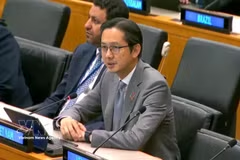
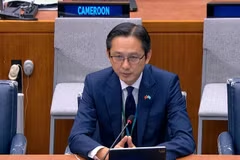
Ambassador Do Hung Viet, Permanent Representative of Vietnam to the UN, speaks at the general debate held by the Economic and Financial Committee (Second Committee) of the 81st session of the United Nations General Assembly in New York on October 14, 2026. (Photo: VNA)

ASEAN reaffirms commitment to poverty eradication, food security

Facing challenges from climate change, biodiversity loss, rising food demand, and price fluctuations, ASEAN is actively implementing its Vision for Food, Agriculture and Forestry towards 2045 and the relevant 2026–2030 action plan to build food systems that are sustainable, inclusive and resilient, said Ambassador Do Hung Viet.

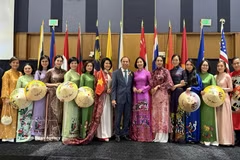
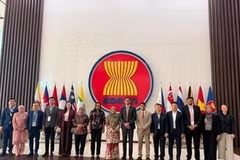
Vietnamese Ambassador to the US Nguyen Quoc Dung and his spouse pose for a photo with delegates at the event (Photo: VNA)

ASEAN Culture Day 2026 in US promotes friendship, peace

Vietnam added a distinctive touch to the event with a Dong Ho-inspired ao dai presentation, combining the elegance of the traditional Vietnamese long dress with motifs rooted in the country’s folk culture. The Vietnamese booth also displayed silk products and traditional handicrafts, helping promote the refined and diverse beauty of Vietnamese culture to international friends.

Timor-Leste speeds up participation in ASEAN digital economic framework

Timor-Leste speeds up participation in ASEAN digital economic framework

For Timor-Leste, joining the ASEAN Digital Economy Framework Agreement will require improvements in institutional capacity, digital infrastructure and public digital skills, while offering domestic businesses opportunities to access broader markets. The move also represents a concrete step towards translating the country's ASEAN membership into tangible economic benefits.

Cambodia pledges to cut greenhouse gas emissions

Cambodia pledges to cut greenhouse gas emissions

Cambodia has reaffirmed its firm commitment to reducing greenhouse gas emissions and addressing climate change through technological modernisation, and pledged to work with the international community to cut emissions to the lowest possible level.

Cambodia steps up crackdown on online scam networks

Cambodia steps up crackdown on online scam networks

The national campaign against online scams has taken legal action against suspected operations, including raids, prosecutions and ongoing investigations into cases before the courts, according to a Cambodian official.

Cambodia spends over 70 mln USD on coffee bean imports

Cambodia spends over 70 mln USD on coffee bean imports

According to the Cambodian Ministry of Agriculture, Forestry and Fisheries, the country imports around 10,000 tonnes of coffee annually, mainly from Vietnam, Thailand, Laos, France, Italy, the US, Malaysia, Singapore, the Republic of Korea and Australia.

IMF-World Bank meetings give Thailand fresh year-end tourism boost

IMF-World Bank meetings give Thailand fresh year-end tourism boost

The events provide an opportunity to showcase Thai culture, performing arts and attractive destinations to international delegates, especially those visiting the country for the first time. The government hopes these experiences will encourage delegates to return to Thailand in the future, helping to raise the country’s international tourism profile.

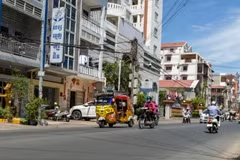
A corner of Phnom Penh (Photo: Pexels)

Cambodia optimistic about economic prospects

Cambodia’s national treasury currently held at least 2.5 billion USD in reserves. In the first nine months of 2026, its state budget revenue exceeded 5 billion USD, averaging 500-600 million USD per month.

(Photo: pib.gov.in)

India, ASEAN step up talks to upgrade trade in goods agreement

India and ASEAN signed AITIGA in 2009 to promote trade liberalisation and expand economic ties. However, changes in trade patterns, supply chains and the global economic environment have created a need to update the agreement to reflect current conditions.