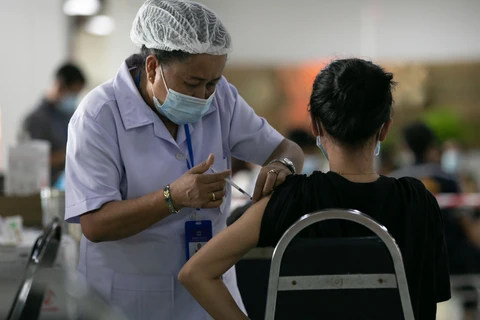
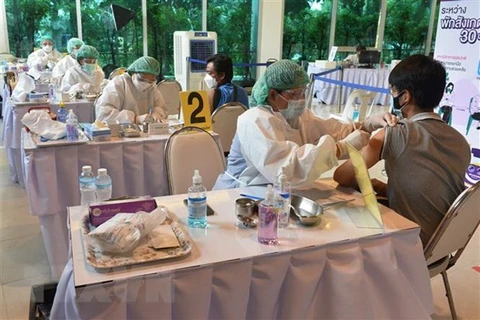
Thailand’s Cabinet has approved a proposal to allow four groups of migrant workers from Cambodia, Laos, Myanmar to legally stay and work in Thailand until July 27 next year (Photo: Xinhua/VNA)
 Bangkok (VNA) – Thailand’s Cabinet has approved a proposal to allow four groups of migrant workers from Cambodia, Laos, Myanmar to legally stay and work in Thailand until July 27 next year, in order to allow them to sort out their employment status and work permits as required by a previous order, according to local media.
The decision was reached at a cabinet meeting on July 13, the Bangkok Post newspaper quoted Labour Minister Suchart Chomklin as saying.
The government had previously resolved to allow migrant workers from these countries to temporarily stay and work in the country through three prior cabinet resolutions dated August 20, 2019; August 4, 2020; and November 10, 2020.
There are also many migrant workers whose work permits expired after they failed to find a new employer within 30 days as required by law, after leaving or losing their previous jobs. Their permit extensions, however, are due to lapse soon, and with borders still closed due to the COVID-19 pandemic, many of these migrant workers risked becoming illegal if no action was taken.
On January 26, the government decided to grant them another extension, which allows the migrants to stay until between July 31 and September 6, depending on the expiry date of their work permit.
However, with the pandemic still showing no signs of easing, the migrants are now again at risk of losing their status as legal migrants in Thailand.
As such, Minister Suchart said, the government decided to allow migrant workers from these countries to stay and work until July 27 next year, to allow them to sort out their employment status and register for a work permit.
The government is trying to take good care of these workers to ensure their safety and good health, which is necessary for ensuring Thailand’s public health in general as well, he said./.
The decision was reached at a cabinet meeting on July 13, the Bangkok Post newspaper quoted Labour Minister Suchart Chomklin as saying.
The government had previously resolved to allow migrant workers from these countries to temporarily stay and work in the country through three prior cabinet resolutions dated August 20, 2019; August 4, 2020; and November 10, 2020.
There are also many migrant workers whose work permits expired after they failed to find a new employer within 30 days as required by law, after leaving or losing their previous jobs. Their permit extensions, however, are due to lapse soon, and with borders still closed due to the COVID-19 pandemic, many of these migrant workers risked becoming illegal if no action was taken.
On January 26, the government decided to grant them another extension, which allows the migrants to stay until between July 31 and September 6, depending on the expiry date of their work permit.
However, with the pandemic still showing no signs of easing, the migrants are now again at risk of losing their status as legal migrants in Thailand.
As such, Minister Suchart said, the government decided to allow migrant workers from these countries to stay and work until July 27 next year, to allow them to sort out their employment status and register for a work permit.
The government is trying to take good care of these workers to ensure their safety and good health, which is necessary for ensuring Thailand’s public health in general as well, he said./.
VNA