Thailand’s exports rise for first time after 10 months

Thailand’s exports in August increased by 2.6% year on year for the first time after dropping continuously in 10 months, Permanent Secretary of Commerce Kirati Ratchano said on September 26.
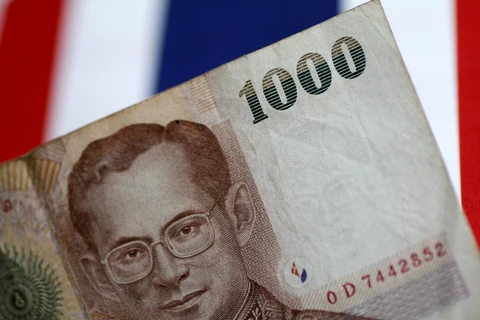
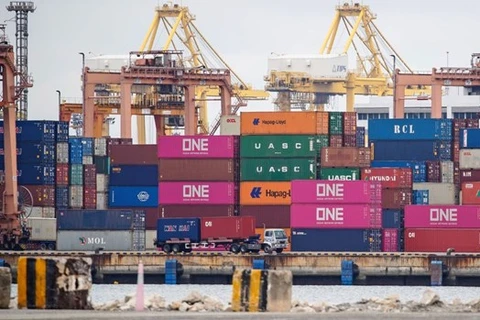
Thailand’s exports rise for first time after 10 months ảnh 1Illustrative photo (Photo: Thaipbsworld.com)

Bangkok (VNA) – Thailand’s exports in August increased by 2.6% year on year for thefirst time after dropping continuously in 10 months, Permanent Secretary of Commerce Kirati Ratchano said on September 26.

Accordingly, the country'sexports reached about 825 billion baht (24.28 billion USD), which is seen as a goodsign after exports fell in 10 consecutive months.

Meanwhile,Thailand's imports during the same period dropped 12.8% to 823 billion baht, resulting a trade surplus of 2 billion baht.

In the first eightmonths of this year, Thailand’s exports reached about 6.38 trillion baht (nearly 187.6 billion USD), down 4.5% year on year,while imports also dropped 5.7% to about 6.7 trillion baht, resulting in a trade deficit of about 353 billion baht.

According toKirati, Thailand’s export rebound is attributable to a 4.2% increase in exportsof farm produce, the first time in four months.

Specifically, itsexports of frozen and dried fruits rose by 99.8%, rice by 10%; canned andprocessed vegetables 26.5%, dairy and dairy products 13.2%, frozen and driedvegetables 22.8%.

In August, Thailand's exports of industrial products rose 2.5% for the first time in three months, including the exports of cars, accessories and spare parts up 5.2%, electriccircuits up 39.8%, machinery and parts up 6.4%, phones and accessories up36.9%, semi-conductors and transistors up 74.5% and transformers andaccessories up 59.1%.

Thailand's exports to itskey markets in August increased by 2.3%, including a rise of 21.7% to the US,15.7% to Japan and 1.9% increase to China. However, its exports to ASEAN, theEuropean Union and CLMV (Cambodia, Laos, Myanmar and Vietnam) fell 1.5%, 11.6%and 21.3%, respectively.

Kirati saidThailand’s exports in September and the last quarter of the year are expectedto rebound./.

VNA

See more

Malaysia’s growing microplastics crisis is largely self-inflicted, driven by domestic waste, weak recycling practices and everyday plastic use, said experts. (Photo: New Straits Times)

Malaysia seeks solutions to microplastic crisis

Microplastics originating from domestic waste and wastewater are increasingly entering the food chain, posing serious threats to seafood safety and the livelihoods of coastal communities.

The new mass emergency alert system SG Alert, which will be used during emergencies such as major fires, chemical or terror incidents, seen on an Apple and Android device on Apr 17, 2026. (Photo: CNA)

Singapore launches new national emergency alert system

SG Alert in Singapore uses cell broadcast technology, enabling alerts to be delivered within seconds without requiring mobile data or collecting personal information. Unlike conventional SMS, which may be delayed during network congestion or depend on internet connectivity, the system ensures fast and reliable message delivery. Alerts can be sent islandwide or targeted to specific affected areas.

Malaysia establishes ‘war room’ to ensure water security

Malaysia establishes ‘war room’ to ensure water security

The establishment of the war room reflects the Malaysian government’s commitment to shift from a reactive approach to a more proactive, data-driven one in managing national water challenges, particularly amid increasingly unpredictable weather conditions caused by global climate change

Indonesia diversifies supply sources to ensure energy security

Indonesia diversifies supply sources to ensure energy security

Indonesia is facing significant supply pressure as crude oil consumption reaches approximately 1.6 million barrels per day, much lower than the domestic production at only around 600,000 barrels per day, forcing the country to rely heavily on imports.

Indonesian-branded cosmetic and personal care products are available at supermarkets and shopping malls (Photo: VNA)

Indonesia aims to master cosmetics industry value chain

Key drivers include its large population, expanding middle class, and rapidly rising demand for beauty products, especially among young consumers. The market has reached billions of US dollars and is projected to maintain strong growth in the medium term.

The Anthropic logo is seen in this illustration taken on Mar 1, 2026. (File photo: Reuters)

Singapore warns of cyber risks from Frontier AI models

According to CSA, advanced AI models – among the most cutting-edge systems today – can significantly shorten the time needed to identify system vulnerabilities and develop exploitation tools, reducing the process from months to just hours.