The Tale of Kieu – a story transcending time and space

The Tale of Kieu is considered one of the most significant works of Vietnamese literature that conquer the heart of many poetry lovers in the country and around the world.
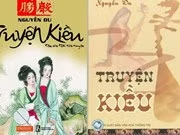
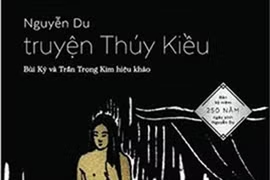
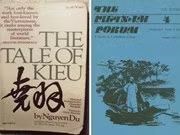
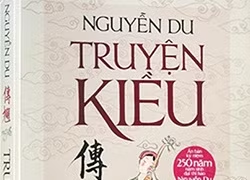
The Tale of Kieu – a story transcending time and space ảnh 1Cover of Korea-translated version by Professor Ahn Kyong Hwan (Photo: VNA)

Hanoi (VNA) - On his historic visit to Vietnam fifteen years ago, former US President Bill Clinton recited a verse from “Truyện Kiều” (The Tale of Kieu) – a masterpiece by Vietnamese poet Nguyen Du (1765 – 1820): “Just as the lotus wilts, the mums bloom forth; time softens grief, and the winter turns to spring” (Sen tàn cúc lại nở hoa. Sầu dài ngày ngắn đông đà sang xuân).

In July 2015, US Vice President Joe Biden quoted another phrase from the poem while welcoming Party General Secretary Nguyen Phu Trong in Washington: “Thank heaven we are here today. To see the sun through parting fog and clouds” (Trời còn để có hôm nay. Tan sương đầu ngõ vén mây giữa trời). The host’s quotation once again created a “fever” among politicians, diplomats, journalists, scholars and those who admire the literary work of Nguyen Du across the globe.

The leading US politicians’ use of these quotations during momentous events highlighted the normalisation of relations between the two countries. It also illustrated the immortal values and significant influence of the tale as a means of intercultural communication and diplomacy.

Originally known as “Đoạn trường tân thanh” (A New Cry from a Broken Heart), the Tale of Kieu is based on the plot of a Chinese prose novel titled “Kim Vân Kiều” written in the 17th century. The poem was originally written in “Nôm” script – the ideographic Vietnamese script that was widely used between the 15th-19th century.

An interesting feature of the Kieu story is that its 3,254 lines were written in “Lục bát” – a traditional Vietnamese verse form that was historically first recorded in “Nôm” script and deeply tied to the soul of Vietnamese culture and people. It consists of alternating lines of six and eight syllables, and is the most popular Vietnamese poem of all time.

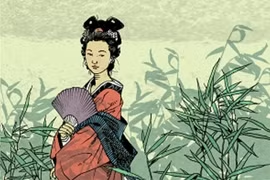
Depicting the arduous life of Thuy Kieu, a beautiful and talented young woman who had to sell herself into prostitution to save her father from prison, Nguyen Du overcame harsh social prejudice to praise Kieu’s physical and soulful beauty, as well as her talents and personality.

Through Kieu’s story, the author wanted to draw a picture of the corrupt, money-dominated, evil and unequal feudal society in Vietnam in the late 18th century and the early 19th century, while reflecting the aspirations for the right to live, and the right to freedom, justice, love and happiness.

The tale is considered one of the most significant works of Vietnamese literature with its flexible, creative utilisation of folk languages such as idioms, folk poems, proverbs and “Hán – Việt” (Sino – Vietnamese) expressions, which laid a foundation for the development of literary art in modern society.

In turn, local people have borrowed the language of characters in the story to create new proverbs and folk songs to express various emotions in their daily lives.

It is undeniable that “Truyện Kiều” has helped international friends understand Vietnamese literature better. It’s rare that literary works in Vietnam and the world at large win the hearts of so many readers. The poem has become a “bedside” book and a “bible” for Vietnamese people over the past two centuries.

The narrative language in the tale is widely used in the cultural life of people of various social strata such as “ngâm Kiều” (a melodic recitation of the verses in Kieu, which can be done solitarily for personal entertainment or in a performance at a gathering), “vịnh Kiều” (refers to the composing of poetry that uses a situation or character in Kieu as an allusion to one’s thoughts and feelings, often concerning one’s present condition), “bình Kiều” (writing commentaries on Kieu), “lẩy Kiều” (changing a word or phrase in the verses to adapt them for one’s personal purposes), and “bói Kiều” (telling someone’s fortune by having the person randomly point at a verse line, whose meaning would then indicate his/her future).

Many of these are popular in Vi-Giam folk singing in central Nghe An and Ha Tinh provinces, which has been recognised by UNESCO as an intangible heritage of humanity.

Many characters in the tale, such as Kieu, Tu Hai, Hoan Thu, and Tu Ba step out the novel, and each symbolises a personality in society.

A number of Kieu verses carry deep philosophies on life, social relations and human destiny. The “magic” of the words is so powerful that readers can see parts of themselves through the plight, fate, happiness and sorrow of the characters.

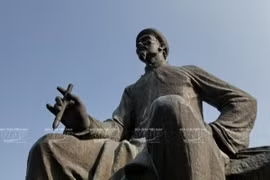
Nguyen Du, also known as To Nhu and Thanh Hien, was recognised by UNESCO as a World Cultural Figure, among 108 others in 2003.

A wide range of activities will be held during Culture Tourism Week in December 2015 to commemorate the 250th birthday of the UNESCO-recognised World Cultural Figure in his homeland of central Ha Tinh province, in recognition of his remarkable contributions to national literature, particularly the Tale of Kieu - an indispensable part of the spiritual lives of Vietnamese people.

By: Huu Chien-Linh Ha-Linh Chi  
VNA

See more

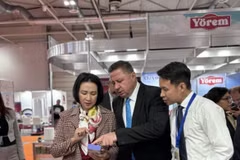
Bulgarian Deputy Foreign Minister Christo Polendakov and Vietnamese Ambassador Nguyen Thi Minh Nguyet at the Vietnamese pavilion. (Photo published by VNA)

Vietnamese products promoted at international food fair in Bulgaria

The Vietnamese embassy, in coordination with the Vietnam Trade Office in Bulgaria, set up two booths featuring coffee, tea, fruit juices, traditional confectionery and natural health supplements. The displays aimed to introduce Vietnamese products to visitors, importers and distributors, while helping Vietnamese businesses seek partners and expand into the Bulgarian and European markets.

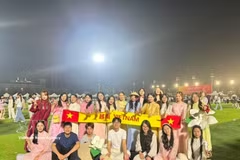
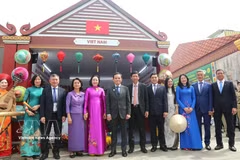
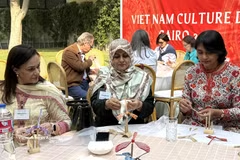
The Vietnamese delegation visits the Village Francophone (Photo: VNA)

Vietnam joins cultural exchange at Village Francophone in Phnom Penh

Vietnam’s presence at the Village Francophone reaffirms Vietnam’s focus on cultural diplomacy and its view of culture as a spiritual foundation, an internal strength and a key driver of sustainable development. Through displays, performances and international exchanges, Vietnam is projecting an image of a country rich in tradition, diverse in identity, dynamic, creative and proactive in integration.

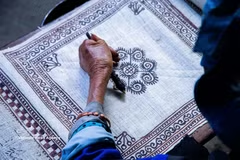
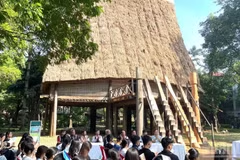
With their skillful hands and innovative thinking, Mong women have transformed traditional flax fiber into a "cultural ambassador". (Photo: VNA)

Mong women turn traditional craft into destination appeal

Alongside local cuisine, traditional attire, and folk games, linen weaving has become a crucial asset in enhancing Lung Tam commune's tourism appeal, creating new livelihood opportunities, and inspiring locals to preserve their heritage.

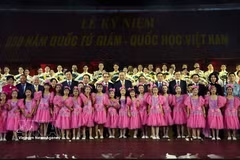
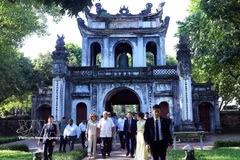
Leaders pose with artists and performers at the ceremony marking 950 years of Quoc Tu Giam (Imperial Academy) on November 13 (Photo: VNA)

Top leader attends ceremony marking Quoc Tu Giam’s 950th anniversary

General Secretary of the CPV Central Committee and President To Lam called for preserving the Van Mieu – Quoc Tu Giam heritage and putting its spirit into daily school life. He asked Hanoi to work closely with culture, education and research agencies to complete open digitised materials on the relic soon.

The opening ceremony for the 2026 Hanoi Creative Design Festival on November 13 (Photo: VNA)

Hanoi Creative Design Festival 2026 opens, targets creative economy

Running from November 13-28, the festival features 150 activities across five cultural, heritage and creative clusters and draws nearly 1,000 domestic and foreign artisans, artists, designers and experts, including nearly 100 foreign artists and overseas Vietnamese from 21 countries.

950 years on, Quoc Tu Giam continues to inspire Vietnam’s pursuit of knowledge ​

950 years on, Quoc Tu Giam continues to inspire Vietnam’s pursuit of knowledge ​

The 950th founding anniversary of Quoc Tu Giam (Imperial Academy), Vietnam’s first national university, is an occasion to reaffirm the enduring values of the country's tradition of learning, respect for teachers, and promotion of talent, which have shaped the nation’s intellectual foundations and continue to support its development in a new era.

Chair of the Canada-Vietnam Cultural & Educational Council (CVCEC) Phan Thi Quynh Trang (first from left) (Photo: VNA)

Vietnam’s learning tradition gets Canadian reboot

The Canada-Vietnam Cultural & Educational Council (CVCEC) is building culture lessons on Vietnamese landmarks, with the Temple of Literature as a core module. Kids will hear stories about teacher Chu Van An, and practice greetings, gratitude to teachers and respect for elders.

Panamanian President José Raúl Mulino and his spouse visit the Temple of Literature (Photo: VNA)

Quoc Tu Giam at 950: A meeting point for Vietnam’s cultural diplomacy

Van Mieu - Quoc Tu Giam is a symbol of Vietnam's culture and education and a regular pick for high-ranking leaders and politicians. That lifts it from national heritage to a valuable platform for promoting cultural diplomacy and showcasing Vietnam's cultural soft power, helping to convey the country's image and cultural identity to the international community.

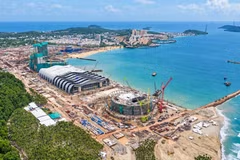
Construction on APEC Phu Quoc Multi-purpose Performance Hall (Photo published by VNA)

APEC 2027: Inside the making of Asia’s landmark theatre

One year in, Sun Group’s APEC Phu Quoc Multi-purpose Performance Hall is taking shape as one of Asia’s largest theatres. It boasts 54,680 sq.m of floor area, 17,250 sq.m of roof, six above-ground floors plus a basement, and 4,030 seats, larger than Hollywood’s Dolby Theatre, the Oscars venue.

Visitors will enjoy free admission to the Vietnam Museum of Ethnology on Vietnam Culture Day (November 24). (Photo: nhandan.vn)

Free admission to museums, historical sites, national parks on Vietnam Culture Day

Organisations and individuals will be entitled to free admission every year on November 24 to eight museums: the Museum of Oceanography, the Vietnam Museum of Ethnology, the Museum of the Cultures of Vietnam’s Ethnic Groups, the Vietnam National Museum of History, the Vietnam National Fine Arts Museum, the Yersin Museum, the Vietnamese Women's Museum and the Vietnam Military History Museum, as well as the Independence Palace historical site.

Vietnamese Consul General in Perth Pham Hai Anh (Photo published by VNA)

Vietnamese community in Australia seen as bridge for bilateral ties

Vietnamese identity and life in Australia are complementary rather than separate. The more successful overseas Vietnamese became in Australia, the greater their ability to contribute to their homeland and bilateral ties, said Vietnamese Consul General in Perth Pham Hai Anh.