Tight control over real estate credit to mitigate risks

The State Bank of Vietnam (SBV)’s decision to tighten control over real estate credit has helped to restrict speculation while making the market transparent and preventing a real state bubble, economic experts have said.
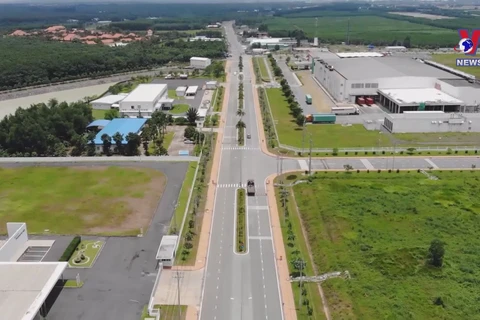
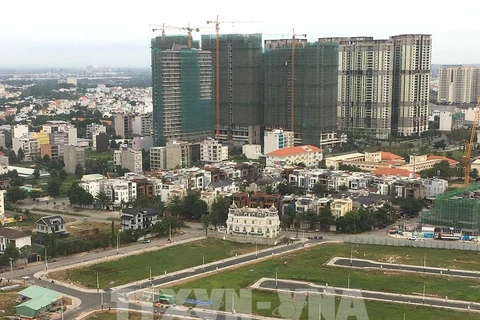
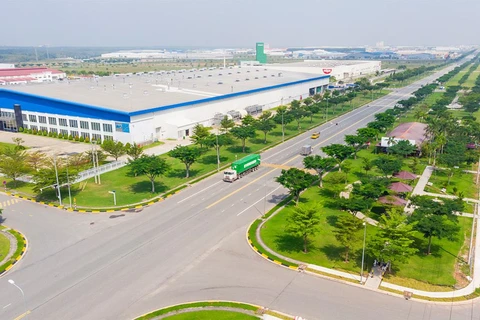
Tight control over real estate credit to mitigate risks ảnh 1The State Bank of Vietnam (SBV)’s decision to tighten control over real estate credit has helped to restrict speculation. (Illustrative photo: VNA)
Hanoi (VNA) - The State Bank of Vietnam (SBV)’s decision to tighten control over real estate credit has helped to restrict speculation while making the market transparent and preventing a real state bubble, economic experts have said. 

Deputy Governor Dao Minh Tu underlined that the move only aims to restrict segments with high risk of speculation in major projects, instead of impeding investment flow in real estate.

Economic expert Nguyen Tri Hieu said control over real estate credit is necessary to purify the market and reduce risks for the economy, especially amid the boisterous development of the sector in the recent past.

According to expert Can Van Luc, data from the SBV showed loans for home purchases and repairs rose by about 15-16 percent, while loans for real estate trading were up 7-8 percent.

Real estate credit growth is forecast to rise 9-10 percent this year, Luc added.

In its latest strategy for the banking industry, the SBV said credit must be channelled into production and business industries to create positive impacts on socio-economic development. It also urged banks to refrain from providing credit to businesses operating in risky areas, such as real estate, securities, corporate bonds, or build-operate-transfer (BOT) and build-transfer (BT) transport projects.

Some banks have temporarily halted loans for the real estate sector in the short term in the wake of the SBV's policy on controlling credit growth in risky areas.

Sacombank has recently required all its branches and transaction offices to focus loans on a number of production and priority industries such as agriculture, rural development, exports, supporting production, small- and medium-sized enterprises, high-tech application, trade, service and logistics.

Sacombank has also directed its branches and offices not to fund the real estate sector until the end of June, except for the bank’s staff and relatives to buy, build or repair houses for living purposes.

Techcombank has recently also notified its business units about controlling the disbursement limit for loans to buy real estate. The bank said it would suspend the provision of real estate loans from March 25, and would consider the disbursement in the second quarter./.
VNA

See more

Ahmad Haikal Hasan, Head of the Halal Product Assurance Organising Agency (BPJPH) of Indonesia, speaks at the seminar (Photo: VNA)

Indonesia ready to cooperate with Vietnam in halal sector

Ahmad Haikal Hasan, Head of the Halal Product Assurance Organising Agency (BPJPH) of Indonesia, described Vietnam as a “potential supplier” of halal products with the capacity to play a larger role in the market, particularly in the fast-moving consumer goods (FMCG) sector. He revealed a plan to visit Vietnam next week to discuss the country’s progress in the global halal industry.

Delegates perform the opening ceremony. (Photo: VNA)

Thailand Week 2026 opens in Hanoi

The event brings together more than 100 companies, including Thai enterprises and Vietnamese importers, across about 120 booths. It features a wide range of Thai products aligned with consumer trends in Vietnam, including food and beverages, health and beauty, mother-and-baby and pet products, fashion and jewellery, household goods and tourism services.

Illustrative image (Photo: VNA)

Vietnam remains Singapore’s third-largest seafood supplier in 2025

Data released by the Accounting and Corporate Regulatory Authority of Singapore (ACRA) show that Singapore spent 125.5 million SGD (97.7 million USD) importing seafood from Vietnam last year, up 10.7% year on year, accounting for 10.3% of the city-state’s total seafood import market.

Workers assemble mobile phone components at Diem Thuy Industrial Park in the northern province of Thai Nguyen. (Photo: VNA)

Electronics exports surpass 107 billion USD in 2025

With an export turnover of 107.75 billion USD in 2025, computers, electronic products and components not only maintained their position as Vietnam’s largest export by value, but also contributed more than half of the overall increase in the country’s export turnover in 2025.

Experts said that Vietnam’s economic outlook continues to be underpinned by stable foreign direct investment inflows and public investment, which is playing an important role in driving growth. (Photo: thoibaotaichinh.vn)

Foreign investors maintain strong confidence in Vietnam’s market

Looking ahead to 2026, prospects remain bright as manufacturing, economic growth and foreign investment in Vietnam are expected to stay robust, with the country forecast to post the highest growth rate in the region this year, according to Adam Sitkoff, Executive Director of the American Chamber of Commerce (AmCham) in Vietnam.

Toy production at a Hong Kong-invested factory (Photo: VNA)

Vietnam targets deeper market penetration in Hong Kong in 2026

Vietnam-Hong Kong trade hit 62.3 billion USD in the first 11 months of 2025, soaring 73.1% annually. Vietnamese exports to Hong Kong amounted to 36.8 billion USD, a 90.6% hike, ranking fourth among Hong Kong’s import sources, while imports from Hong Kong stood at 25.5 billion USD, up 52.9% and ranking third.

Vietnam’s start-up market enters restructuring phase

Vietnam’s start-up market enters restructuring phase

In 2026, venture capital inflows into Vietnam’s start-up ecosystem are expected to recover gradually, though in a more selective manner. VinVentures forecasts that capital will focus on start-ups that have survived the rigorous screening of 2024–2025, possess clear business models, strong commercialisation capacity, and the ability to generate real cash flows.