Tra export companies suffer low profits in mainland China, Hong Kong

Exports of tra fish (pangasius) to China and Hong Kong in the first half of February this year suffered a sharp plunge, according to a report released by the Vietnam Association of Seafood Exporters and Producers (VASEP).
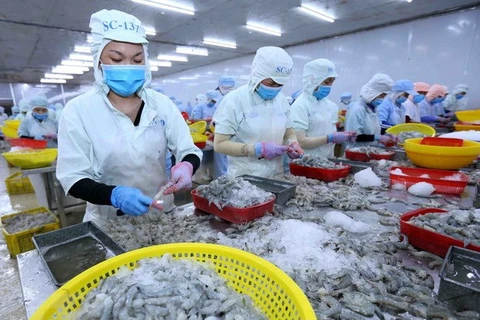
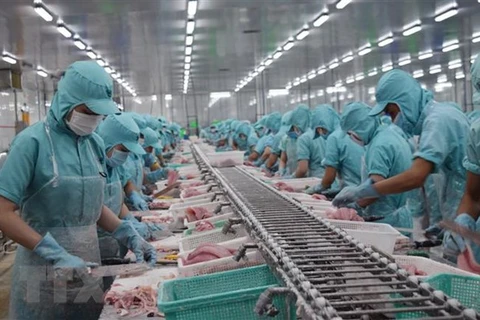
Tra export companies suffer low profits in mainland China, Hong Kong ảnh 1Workers at Vinh Hoan Corp process seafood for export (Photo: VNA)
Hanoi (VNS/VNA) - Exports of tra fish (pangasius) to China and HongKong in the first half of February this year suffered a sharp plunge, accordingto a report released by the Vietnam Association of Seafood Exporters andProducers (VASEP).

The turnover of Vietnamese tra fish exported to China hit 13.55 million USD,down 38.6 percent over the same period last year.

The figure accounted for 8.5 percent of Vietnam’s total outbound sales of thefish during the period. The export value to Hong Kong also fell by 40.5 percent.

VASEP’s market analysts attributed the unexpected decline to many difficulties,including the COVID-19 pandemic and measures used to slow the spread of thevirus.

Early last year, seafood processing factories in China were impacted by thepandemic, which caused interruptions in trade, affecting the export volume oftra fish to this market.  

Early in the third quarter last year, trade between Vietnam and China increasedagain ahead of China's National Day in October. In October last year, the priceof frozen tra fish fillets exported to China suddenly surged to 2.52 USD perkg.

However, China then stepped up efforts at border gates to contain the spread ofthe coronavirus through imported frozen products, affecting Vietnam’s tra fishexports.

According to VASEP, since December last year, Guangxi Province which bordersfour provinces of Vietnam including Quang Ninh, Lang Son, Cao Bang, and Ha Gianghas conducted surveillance, disinfection and origin traceability measures tostrengthen control of all consignments of frozen seafood imports.

Frozen seafood shipments from Vietnam, including tra fish fillets, need acertificate of food testing, certificate of quarantine, certificate ofdisinfection and certificate origin traceability and a negative COVID-19 test.

Frozen seafood goods imported to Guangxi via border gates and seaports must besent to local centralised monitoring warehouses for a nucleic acid test,sterilisation and origin traceability control.

These extra requirement shave slowed exports.

Vietnam exports a diverse range of tra fish products to China including frozenfillets, frozen tra fish stomach, fried/dried fish bladder, frozen whole trafish and frozen tra fish belly, among others.

Last year, 145 seafood companies exported tra fish to the Chinese market and 40others shipped their tra fish to Hong Kong./.
VNA
See more

The exchange of greenhouse gas emission quotas and carbon credits is conducted on the domestic carbon credit exchange through the carbon trading system, which is interconnected with the national registration system. (Photo congly.vn)

Ministry establishes monitoring framework for carbon market

Under a new circular, the exchange of greenhouse gas emission quotas and carbon credits is conducted on the domestic carbon credit exchange through the carbon trading system, which is interconnected with the national registration system.

Le Son Phong, Deputy Director of the Da Nang Department of Science and Technology, speaks at the press conference announcing the Da Nang Venture and Angel Summit 2026. (Photo: VNA)

Da Nang to host international venture capital forum later this month

Le Son Phong, Deputy Director of the Da Nang Department of Science and Technology, said DAVAS 2026 is not merely an investment-matching event for startups, but also demonstrates the city’s commitment to promoting innovation, developing the knowledge-based economy and creating a favourable environment for technology enterprises and startups.

Visitors explore southern Vietnam's products (Photo: vNA)

Vietnam, Cambodia boost supply chain connectivity

Total two-way trade neared 10.1 billion USD in 2024, up 17.5% year-on-year and jumping to more than 11 billion USD in 2025. Vietnam’s key exports to Cambodia include apparel, iron and steel, petroleum, machinery and equipment, chemicals, and processed food. Its main imports are cashew nuts, rubber, farm produce, and industrial raw materials.

Cao Thanh Dinh, founder and CEO of ANPz Co., Ltd (All Nippon Partners) in Japan (Photo: VNA)

Resolution 68 boosts investor confidence in Vietnam’s long-term outlook

Cao Thanh Dinh, Founder and CEO of ANPz Co., Ltd (All Nippon Partners) in Japan, said that after one year of implementation, Resolution No. 68-NQ/TW of the Politburo on private sector development has sent a positive signal to investors by affirming the private sector as a key driver of sustainable and long-term development.

To promote the local lychee brand, expand consumption markets and enhance the fruit's value, Bac Ninh province is organising various trade promotion activities and experiential tourism programmes during the 2026 lychee season. (Photo: VNA)

Bac Ninh promotes lychee tourism with 36 model orchards

According to the Bac Ninh Centre for Culture and Tourism Promotion, the orchards must comply with VietGAP, GlobalGAP or organic production standards while offering suitable conditions for experiential tourism activities. They are also required to connect with nearby tourist attractions, craft villages and historical sites to form integrated tour routes.

Ha Long-Mong Cai Expressway (Illustrative photo: VNA)

Quang Ninh takes lead in public investment disbursement

As of May 13, the northern province had disbursed more than 5.64 trillion VND (213.9 million USD) in public investment capital, fulfilling 24.2% of its annual target and 54% of its disbursement target of 10.56 trillion VND for the year's first half.

Can Tho, Belarus eye trade, investment opportunities

Can Tho, Belarus eye trade, investment opportunities

Belarusian Consul General in Ho Chi Minh City Alexander Sidoruk said his working visit to Can Tho city exposes ample untapped economic potential. The Belarus side brings strengths in exporting fertilisers, crop protection chemicals, agricultural equipment, and high-tech products, and is interested in importing Vietnamese rice, coffee, rubber, seafood, and dairy products.