Hanoi (VNA) - In addition to the highland markets that have existed for a long time, the newly opened ones are also attractive destinations for visitors who want to explore the cultural identities and traditional customs of ethnic minorities.
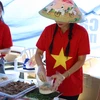
 Noodles made by local people attract many visitors at Sang Thang night market. (Photo: VNA)
 The upland markets are always an attractive experience for visitors. They always leave an unforgettable impression on those who have once called at.
Sang Thang night market - the cultural beauty of the uplands
On Thursday and Sunday mornings, San Thang market, also called by people here as Tam Duong Dat market in San Thang commune, Lai Chau city, Lai Chau province, is bustling with sellers and buyers. From the early morning, people of Lu, Giay, Mong, Giao and Thai ethnic minority groups around the area gathered to buy and sell goods. In the most beautiful clothes, they bring to the market specialties, agricultural products or traditional living things.
On the basis of San Thang upland market, on the evening of December 14, San Thang night market with nearly 100 booths showcasing food, agricultural products and souvenirs opened, attracting thousands of people in the locality and surrounding areas.
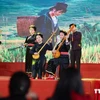
Visitors can enjoy the unique art performances imbued with the national traditional identity performed by the art troupes of the villages and residential areas in the city. They also participated in campfires, dancing, and staggering...
Sang Thang night market includes three main areas: food area, beverage area and souvenir shops. It will be held on every Saturday night from now on.
Coming to Sang Thang night market, visitors will have interesting experiences such as enjoying typical dishes of ethnic minorities such as Thang Co (a famous dish of Mong ethnic people), grilled meat, smoked pork, sour noodles, and many indigenous agricultural products. The souvenir area introduces many products bearing the identities of ethnic minority groups like brocade towels, shirts and dresses and silver bracelets...
Bui Huu Cam, Vice Chairman of People's Committee of Lai Chau city, said that the organization of Sang Thanh night market is a cultural activity to preserve and promote the traditional cultural values of ethnic minorities in the city and neighboring communes; as well as introduce and promote traditional local products and food to domestic and foreign tourists.
It also helps diversify tourism products to serve visitors, creating favourable conditions for local people to develop their economy, boost cultural exchanges, and exchange goods.
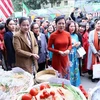
 Sang Thang night market attracts a lot of people and tourists from all walks of life. (Photo: VNA)
 Sin Suoi Ho village market is new but original
Sin Suoi Ho village market, located in Sin Suoi Ho commune of Phong Tho border district, about 30km from Lai Chau city, was formed when Sin Suoi Ho village was recognized as a tourist village in 2014.
According to the seniors in Sin Suoi Ho village, previously there was no market in Sin Suoi Ho commune. To buy goods, people had to go back to the centre of Muong So commune (Phong Tho district) or San Thang market (Lai Chau city), about 20-30km away.
When Sin Suoi Ho village was recognized as a community tourism village, the villagers met to discuss the construction of a market which would serve as a place for locals to exchange and trade goods as well as aim to attract more tourists to the locality.
To do this, the head of the village, Vang A Chinh, voluntarily donated nearly 1,000sq.m of land to build the market. The households were mobilized to plant trees and build stalls in the market.
Chinh said: "Because the market is a common place, everyone was happy to do it. So the market was formed in 2014 and has developed until now. More and more tourists have come to the village."
Like most other highland markets, Sin Suoi Ho village market is held on every Saturday. Products sold here are mainly farm produce and traditional costumes of ethnic minority groups in the area, along with home appliances to serve the needs of local people.
The market is also an attractive destination for tourists when visiting Sin Suoi Ho community tourism village. In particular, the stalls selling the dresses of Mong ethnic people always attract visitors.
In addition to the local specialties, coming to Sin Suoi Ho village market, visitors can easily see young women wearing Mong dresses, and kids carrying their younger siblings on their backs and sharing each candy...
The images imbued with the cultural identities of the upland region have created a unique feature of the northwestern highland markets./.