When British artist Lee Kirby uploaded a Youtube clip featuring himself singing the Vietnamese ballad Diem Xua in 2009, he didn't expect to create a phenomenon in Vietnam.
No one could imagine that a man who spoke a few simple Vietnamese words could perform the famous and emotional song – and with very perfect Vietnamese pronunciation. The clip then attracted hundreds of thousand viewers.
"The great feelings I had for the country and the people of Vietnam, as well as the wonderful song +Diem xua+, inspired me to learn more Vietnamese songs," the 34-year-old singer said.
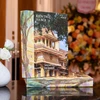
Four years after the "phenomenon", Kirby recently released his debut album which he simply named "Viet Nam oi".
The album features nine Vietnamese songs by famous local composers and songwriters, including Tran Tien, Phu Quang, Le Minh Son and Truong Quy Hai. The ballad Diem Xua, by veteran composer Trinh Cong Son, is included in the album.
The album is a result of Kirby's three-year plan Tra Da with Lee (Ice Tea with Lee), aiming to improve his Vietnamese language, to learn more about Vietnamese culture, and to strongly integrate into the unique culture of Vietnam – which he calls his second homeland.
"Another main purpose of my +big plan+ is to sing for the Vietnamese people across the country," he said.
To implement his plan, travelling with his beloved guitar and some Vietnamese friends from 2010 to 2013, Kirby made several journeys through the country from the north to the south, from northern to coastal provinces, and travelling from the delta to the highlands.
At many places the group travelled to, they received a warm welcome by local residents. Kirby said the journeys through the country gave him some of his life's most wonderful experiences.
"Like a group of backpackers, we travelled to almost every corner and met many modest and warm-hearted people, including farmers, workers, and labourers," he said.
"We sometimes spent overnight in very humble houses of local people or shared tea with a group of people working by the roadside."
Kirby also made a strong impression on the people he met during the trips, especially when he sang for them.
"Looking at their happy faces, seeing them smile, I know that my repertoire brought them some joy. They even sang along with me. I've got so many positive and supportive comments."
After several journeys, Kirby received what he expected: he is now not only able to speak Vietnamese fluently, but he can place himself into a Vietnamese person's shoes.
The British singer said: "A Vietnamisation process is taking place inside myself."
Kirby also spoke of his ambition to promote Vietnamese music and culture beyond its borders by introducing his music to his international friends.
Alongside the release of +Viet Nam oi+ in Vietnam, the album will also be available in the UK. In addition, online versions of the songs in the album are available on iTunes and the online music store CDBaby.
Having first come to Vietnam in 2002 to spend a summer holiday with Vietnamese friends, the young British man decided to come back to the country one year later.
According to Kirby, his extremely strong impression about the Vietnamese people and culture that he received during that trip urged him to return – not for traveling, but for football.
He used to play football for the Fulham FC youth team, as well as semi-professional teams in south London, and in 2003 Kirby obtained a contract with the HCM City Post Office team and moved to Vietnam's largest city, without any thoughts of becoming a singer one day.
After creating the 2009 "phenomenon", Kirby became a regular guest on many TV shows. He also has joined famous songstress Anh Tuyet to perform in several shows dedicated to composer Trinh Cong Son.
Also, in 2010 he was invited by former British Ambassador to Vietnam Mark Kent to create the song clip "Que nha" (Homeland) as a New Year's present for Vietnamese people living in the UK.
Further, Kirby is planning to release his second album – a joint production of himself and young singer Le Cat Trong Ly – by the end of next year.
Several concerts for Vietnamese people living in the UK, as well as for university students in Hanoi and Ho Chi Minh City, are on his 2014 schedule.
Currently a director of operations at the Ashbourne College in Kenshington, London, Kirby has to travel frequently between the UK and Vietnam to pursue his singing dream.
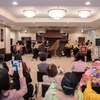
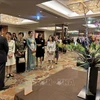
To promote his debut album, Kirby recently had two live shows in Hanoi and central Hue city. Similar shows will be held in Ho Chi Minh City on December 28, and in southern Rach Gia city in Kien Giang province on January 7.-VNA