The acknowledgment of Lam Kinh historical site reflects the deep gratitude of Vietnamese people towards their ancestors for their contributions to the cause of fighting against foreign invaders, protecting the national sovereignty and developing the country. Report by Nhan Dan newspaper.
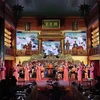
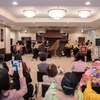
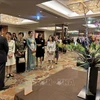
The Lam Kinh historical site in the province of Thanh Hoa received a certificate recognising it as a special national relic at a ceremony on September 26.
Each year, on the death anniversary of Le Loi (the twenty-second day of the eight lunar month), pilgrims across the country flock to Lam Kinh historical site in Thanh Hoa province, the homeland of the national hero.
Located in Xuan Lam commune, Tho Xuan district, the site is also known as the beginning place of the historic Lam Son uprising in the 15th century, which always inspires the national pride among Vietnamese people.
" Although I’m 80 years old, I want to come back to Thanh Hoa province to visit the Lam Kinh heritage complex. Living far from my hometown, I always think of my ancestors’ land and I’m grateful to our predecessors for their contributions to the national construction, " said Nguyen Thi Hue, who is living in Ho Chi Minh City.
After offering incenses to the royal members of the late Le dynasty at the Le temple in Dong Ve ward in Thanh Hoa province, and paying tribute to Le Loi at his monument in the central of Thanh Hoa city, visitors can go along 47 highway in the direction of Thanh Hoa’s mountain areas, which is strongly associated to the Lam Son uprising.
According to Professor Vu Ngoc Khanh, the primitive motivation of the uprising originated from the current situation of the country and the miserable living of the people at that time. This brought together patriots, led by Le Loi, to the Lung Nhai Oath Ceremony in 1416 to announce their mission of liberating the country from the domination of Chinese Ming invaders and brining a peaceful life for their compatriots.
Le Loi and his insurgent army claimed victory in 1427. He came to the throne with the title of Le Thai To in 1428, establishing himself as the first king of the late Le dynasty (1427-1789). He set up the capital in Thang Long (now Hanoi) and renamed it as Dong Kinh. He also advocated to upgrade his birthplace, Lam Son, into the second capital and named it Lam Kinh, alias Tay Kinh.
Along with policies on recovering the country, developing economics, strengthening military and defence, the promulgation of a law code, the late Le dynasty was also highlighted in the history with outstanding achievements in culture and arts, and education and training.
After nearly 600 years experiencing fierce weather condition and wartime, the original value of Lam Kinh now can be found underground as most of constructions built there under the late Le dynasty were badly damaged.
On October 22, 1994, the Prime Minister approved a master project on preserving and restoring the Lam Kinh historical site. Thence, many solutions have been taken to preserve and promote the original value of the complex.
Experts from the Vietnam National Museum of History have conducted six archaeological excavations at this site, which unearthed many cultural layers and numerous relics. These excavations also revealed the foundation and architectural structure of the complex as well as tens of thousands of artifacts dated from the early Le, including worshipping items and daily utensils. The artifacts have provided scientific basis to restore the site true to its origin.
Head of Lam Kinh Heritage Management Board Trinh Dinh Duong affirmed that during nearly 20 years since various researches and restoration work have been implemented under the project; the Lam Kinh complex has unveiled its " hidden " value.
Thanks to the project, tens of the construction items have been restored and upgraded, including five imperial temples, a royal court, Ngoc river, Bach bridge, system of tombs, stele houses and a temple commemorating King Le Thai To in Xuan Lam commune, Tho Xuan district.
A number of new constructions have also been built in the site in on the basis of maintaining its original value and exploiting its advantage in spiritual tourism.
Thanh Hoa provincial authorities have also issued policies on encouraging and attracting investments to the site and have designed tourist services and products to satisfy visitors’ demand.
These efforts to promoting the herniate site were finally rewarded. In the first eight months of this year, the site received 50,000 visitors. In 2012, the complex welcomed around 60,000 visitors, an increase of 20% over the last year, including 700 foreign tourists from Japan, the Republic of Korea, China and the United States.
Visitors to the complex’s exhibition house are introduced to 20,000 antiquities, including big-sizes bricks, tiles, items decorated with dragon patterns, and ceramic artifacts.
On the east side of the complex, they can visit the King’s well, the century-old banian tree, which was recently recognised as the national heritage by the Vietnam Association for Conservation of Nature and Environment in August this year.
On the west side of the complex, the tourists can have a look at the Vinh Lang stele, which featured the life and career of King Le Thai To. The stele, made of sedimentary rock, is 2.79 metres high, 1.94 metres wide and 27 centimetres thick.
Entering the Dragon royal court, the tourists can contemplate the architectural structure of Lam Kinh sanctum, including Quang Duc, Sung Hieu and Dien Khanh palaces, and nine temples commemorating the queens.
In a bid to uphold the value of the historical site, in 2005, under the support of the Ministry of Culture, Sports and Tourism, Thanh Hoa provincial authorities restored the traditional Lam Kinh festival, particularly royal and folklore performances. The site’s management board has actively studied and collected legends about Lam Son insurgent troop and traditional crafts of Lam Son land. Local residents have donated thousands of artifacts dated back to the period to complement and enrich the exhibits of the Lam Son cultural space.
This year’s Lam Kinh festival officially kicked off on September 26 in celebration of the 595th anniversary of Lam Son uprising and the 580th death anniversary of Le Loi.
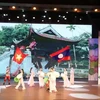
In addition to traditional ceremony, the two-day festival features a stage programme reenacting the heroic and glorious Lam Son upraising as well as folk games of Thanh Hoa province.
Various activities paying tribute to King Le Thai To, cultural and arts performances and sporting events also take place across the province. Documentaries on Vietnamese great men of culture, celluloid films on historical theme and reportages on Lam Kinh complex are screened for audiences during the festival. On the occasion, Thanh Hoa provincial authorities receive a certificate honouring Lam Kinh as a Special National Heritage Site.
Lam Kinh complex, the confluence of heritages in Thanh Hoa province, is not only a tourist site but also provides visitors with an opportunity to study the history, tradition and cultural identities of Vietnamese people.-VNA
The Lam Kinh historical site in the province of Thanh Hoa received a certificate recognising it as a special national relic at a ceremony on September 26.
Each year, on the death anniversary of Le Loi (the twenty-second day of the eight lunar month), pilgrims across the country flock to Lam Kinh historical site in Thanh Hoa province, the homeland of the national hero.
Located in Xuan Lam commune, Tho Xuan district, the site is also known as the beginning place of the historic Lam Son uprising in the 15th century, which always inspires the national pride among Vietnamese people.
" Although I’m 80 years old, I want to come back to Thanh Hoa province to visit the Lam Kinh heritage complex. Living far from my hometown, I always think of my ancestors’ land and I’m grateful to our predecessors for their contributions to the national construction, " said Nguyen Thi Hue, who is living in Ho Chi Minh City.
After offering incenses to the royal members of the late Le dynasty at the Le temple in Dong Ve ward in Thanh Hoa province, and paying tribute to Le Loi at his monument in the central of Thanh Hoa city, visitors can go along 47 highway in the direction of Thanh Hoa’s mountain areas, which is strongly associated to the Lam Son uprising.
According to Professor Vu Ngoc Khanh, the primitive motivation of the uprising originated from the current situation of the country and the miserable living of the people at that time. This brought together patriots, led by Le Loi, to the Lung Nhai Oath Ceremony in 1416 to announce their mission of liberating the country from the domination of Chinese Ming invaders and brining a peaceful life for their compatriots.
Le Loi and his insurgent army claimed victory in 1427. He came to the throne with the title of Le Thai To in 1428, establishing himself as the first king of the late Le dynasty (1427-1789). He set up the capital in Thang Long (now Hanoi) and renamed it as Dong Kinh. He also advocated to upgrade his birthplace, Lam Son, into the second capital and named it Lam Kinh, alias Tay Kinh.
Along with policies on recovering the country, developing economics, strengthening military and defence, the promulgation of a law code, the late Le dynasty was also highlighted in the history with outstanding achievements in culture and arts, and education and training.
After nearly 600 years experiencing fierce weather condition and wartime, the original value of Lam Kinh now can be found underground as most of constructions built there under the late Le dynasty were badly damaged.
On October 22, 1994, the Prime Minister approved a master project on preserving and restoring the Lam Kinh historical site. Thence, many solutions have been taken to preserve and promote the original value of the complex.
Experts from the Vietnam National Museum of History have conducted six archaeological excavations at this site, which unearthed many cultural layers and numerous relics. These excavations also revealed the foundation and architectural structure of the complex as well as tens of thousands of artifacts dated from the early Le, including worshipping items and daily utensils. The artifacts have provided scientific basis to restore the site true to its origin.
Head of Lam Kinh Heritage Management Board Trinh Dinh Duong affirmed that during nearly 20 years since various researches and restoration work have been implemented under the project; the Lam Kinh complex has unveiled its " hidden " value.
Thanks to the project, tens of the construction items have been restored and upgraded, including five imperial temples, a royal court, Ngoc river, Bach bridge, system of tombs, stele houses and a temple commemorating King Le Thai To in Xuan Lam commune, Tho Xuan district.
A number of new constructions have also been built in the site in on the basis of maintaining its original value and exploiting its advantage in spiritual tourism.
Thanh Hoa provincial authorities have also issued policies on encouraging and attracting investments to the site and have designed tourist services and products to satisfy visitors’ demand.
These efforts to promoting the herniate site were finally rewarded. In the first eight months of this year, the site received 50,000 visitors. In 2012, the complex welcomed around 60,000 visitors, an increase of 20% over the last year, including 700 foreign tourists from Japan, the Republic of Korea, China and the United States.
Visitors to the complex’s exhibition house are introduced to 20,000 antiquities, including big-sizes bricks, tiles, items decorated with dragon patterns, and ceramic artifacts.
On the east side of the complex, they can visit the King’s well, the century-old banian tree, which was recently recognised as the national heritage by the Vietnam Association for Conservation of Nature and Environment in August this year.
On the west side of the complex, the tourists can have a look at the Vinh Lang stele, which featured the life and career of King Le Thai To. The stele, made of sedimentary rock, is 2.79 metres high, 1.94 metres wide and 27 centimetres thick.
Entering the Dragon royal court, the tourists can contemplate the architectural structure of Lam Kinh sanctum, including Quang Duc, Sung Hieu and Dien Khanh palaces, and nine temples commemorating the queens.
In a bid to uphold the value of the historical site, in 2005, under the support of the Ministry of Culture, Sports and Tourism, Thanh Hoa provincial authorities restored the traditional Lam Kinh festival, particularly royal and folklore performances. The site’s management board has actively studied and collected legends about Lam Son insurgent troop and traditional crafts of Lam Son land. Local residents have donated thousands of artifacts dated back to the period to complement and enrich the exhibits of the Lam Son cultural space.
This year’s Lam Kinh festival officially kicked off on September 26 in celebration of the 595th anniversary of Lam Son uprising and the 580th death anniversary of Le Loi.
In addition to traditional ceremony, the two-day festival features a stage programme reenacting the heroic and glorious Lam Son upraising as well as folk games of Thanh Hoa province.
Various activities paying tribute to King Le Thai To, cultural and arts performances and sporting events also take place across the province. Documentaries on Vietnamese great men of culture, celluloid films on historical theme and reportages on Lam Kinh complex are screened for audiences during the festival. On the occasion, Thanh Hoa provincial authorities receive a certificate honouring Lam Kinh as a Special National Heritage Site.
Lam Kinh complex, the confluence of heritages in Thanh Hoa province, is not only a tourist site but also provides visitors with an opportunity to study the history, tradition and cultural identities of Vietnamese people.-VNA